I was sitting on my couch last Tuesday, scrolling through my feed, when I saw it. A pair of high-end running shoes I’d wanted for months was listed for $29. Normally, they’re $160. My heart actually sped up. I almost grabbed my credit card right then.
But then I paused. Something felt off. The website looked okay, but the "Limited Time" timer was ticking down every second. It felt like someone was pushing me. I took a breath, closed the tab, and started digging. I’m glad I did. I found out the site was registered only three days ago.
It’s getting harder to tell what's real. We all want to save money, especially with prices rising in the US lately. But a "deal" that steals your data or your hard-earned cash isn't a bargain. It’s a disaster. I want to share what I’ve learned about staying safe while still getting those great discounts.
Why Fake Online Deals Are Everywhere Now
Shopping online is just part of daily life now. I do it. You do it. It’s fast, convenient, and usually cheaper than driving to a store. But that convenience has a cost. Shopping deal scams are everywhere, and they’re getting harder to spot.
Scammers aren’t sending obvious spam emails anymore. They’re running polished ads on Instagram and TikTok. They use clean photos and trendy language. Sometimes the ad looks exactly like something a brand I already trust would post. When you’re trying to stretch your budget, it’s easy to let your guard down. That’s how online shopping scams slip through.
I see fake deals pop up in social feeds all the time, often pretending to be small boutiques or “closing sales.” Some fake sites even pay to appear at the top of Google search results. On big marketplaces, sellers can vanish overnight. The pressure is always the same. Act now. Don’t miss out. But real sales don’t disappear in five minutes. If a deal makes you feel rushed, that’s usually the first warning sign.
Common Types of Shopping Deal Scams to Watch Out For
I’ve seen it all lately. From fake online deals on air fryers to discount scams online for winter coats. It’s not just one type of product.
The most common one is the "Ghost Store." You buy something, the money leaves your bank, and the store vanishes. You never get a tracking number. You never get the shoes. Another big one is the "Clone Site." These look exactly like the Nike or Lululemon site but the URL is slightly wrong.
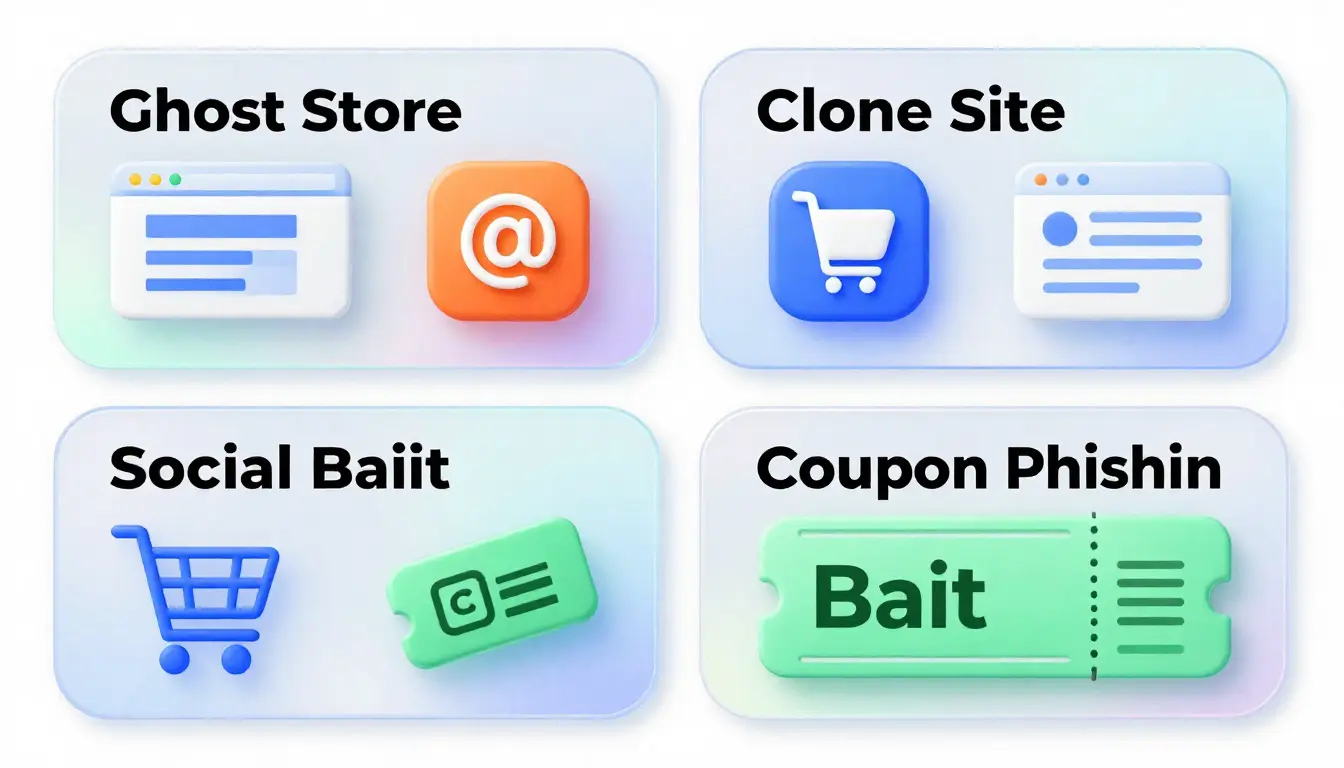
- The Look-Alike: A site that looks like a big brand but has a weird web address.
- The Social "Bait": Seeing a viral gadget for 90% off in a Facebook ad.
- Coupon Phishing: Sites that ask for your email or phone number just to "reveal" a code.
I remember my friend tried to buy a weighted blanket from a random ad. The site looked great. Two weeks later, she got a tiny plastic trinket in the mail instead. That’s a classic "bait and switch." They ship something cheap just so they have a tracking number to show the bank.
Red Flags That Signal a Fake Online Deal
I shop like a detective now. Every unfamiliar site gets a quick scan before I even think about checking out.
Price is always the first clue. If one site is selling a laptop for a fraction of what everyone else charges, it’s not generosity. It’s a trap. Scammers love using words like “outlet” or “clearance” to justify unrealistic prices.
I also look closely at the contact information. If the site hides behind a basic form with no address or phone number, I leave. The URL matters too. Long, awkward web addresses filled with extra words are rarely official. Payment methods are another giveaway. If a site won’t accept credit cards and pushes Venmo or wire transfers, that’s a hard no.
I always read the return policy and the About page. If the language feels robotic or vague, I don’t argue with my instincts. When something feels off, it usually is.
How Scammers Imitate Real Brands and Coupon Offers
This part still annoys me. Scammers don’t create new ideas. They steal trust. They copy logos, fonts, colors, and layouts from real brands. That’s how scammers use fake coupons to get people comfortable fast.
I’ve seen ads pretending to be from major US retailers like Target or Amazon. They promise gift cards or “hidden clearance” links. Some even fake comment sections filled with praise. It looks convincing until you slow down and look closer.
Urgency is always baked in. Low stock alerts. Countdown timers. “Last chance” messages. Fake coupon pop-ups push you to log in or confirm your account. Once they have your details, the deal is done. I never click links from texts or random emails now. I go straight to the official site. That tiny pause makes a big difference.
How to Verify an Online Deal Before Buying
I have a simple routine before I spend money online. It doesn’t take long, and it saves me stress later.
First, I check the domain name. Sometimes I use a Whois lookup to see how old the site is. A brand-new site claiming decades of history is a red flag. I also search the store name with words like “scam” or “reviews.” Reddit and Trustpilot usually tell the truth fast.
I avoid clicking ads when possible. I search for the store manually instead. I check social media to see if real people interact with the brand. I compare prices with trusted retailers like Amazon or Walmart to see if the discount makes sense.
Verification isn’t paranoia. It’s confidence. Taking one extra minute protects your budget and your peace of mind.
Safe Ways to Use Coupons, Discounts, and Promo Codes
I still love coupons. I just use them differently now.
I stick to well-known coupon platforms and official brand newsletters. I ignore pop-ups that promise secret codes or ask me to download files. A real promo code is simple text. It never asks for sensitive info.
I also use cashback tools that have a track record. They work quietly in the background and don’t pressure me. If a code shows up in a random text message, I delete it. I test codes directly on the brand’s official checkout page. If it works, great. If not, I move on.
I even keep a separate email just for shopping. It’s cleaner and safer. Small habits like that add up.
What to Do If You Already Clicked or Paid
If you’ve been scammed, take a breath. It happens more often than people admit. I’ve made close calls myself.
Call your bank right away. Credit cards offer strong fraud protection in the US, which is why I never use debit cards online. Freeze your card through your banking app. Change passwords if you created an account on the site. Report the scam to the FTC so others don’t fall into the same trap.
There’s no shame here. These scams are designed to trick smart people. Acting fast matters more than beating yourself up.
Smart Shopping Habits to Avoid Scams Long-Term
Over time, my shopping habits shifted. I slowed down. That changed everything.
I avoid boredom shopping now. That’s when mistakes happen. I keep a list of what I actually need. If a deal doesn’t match that list, I skip it. I use one credit card for online purchases so odd charges stand out. When a deal feels urgent, I wait a day. Most of the time, the excitement fades and the red flags appear.
Smart shopping isn’t about chasing the lowest price. It’s about safety, value, and control. When you buy with intention, you protect your budget and your peace. And that’s the kind of savings that really lasts.
Conclusion
Finding a great deal feels like a win. I love that feeling of saving $20 or $50 on something my family needs. But the real win is keeping your money and your identity safe.
Fake deals are everywhere, but they don't have to catch you. By slowing down and checking the facts, you can shop with total confidence. Awareness is your best tool. You can still enjoy the hunt for a bargain, just make sure the bargain is real.
Remember, your peace of mind is worth more than any discount. Stay safe, shop smart, and keep your budget on track. You’ve got this!
FAQs For Shopping Deal Scams
How can I tell if an online deal is legit?
Check official websites, real reviews, and secure payments.
Are online discounts and promo codes always safe?
They’re safest when sourced from trusted platforms and retailers.
What’s the biggest red flag of a fake deal?
Extreme urgency paired with very low prices.
What should I do if I think I’ve been scammed?
Contact your bank fast and secure your accounts.