Standing in the aisle of a home goods store—or scrolling through an endless list of options online—you’re faced with a surprisingly loaded question: Do you just want to know how much you weigh, or do you want a data-driven breakdown of your entire biology?
A scale was a plain digital display or a spring-loaded box that was used ten years ago. Nowadays the smart scales are being offered to help you know even your bone density as well as the weight of water in your left leg.
You can quickly get the sense that you are lagging behind when you are not monitoring 16 different metrics daily in the morning but as someone who enjoys health-related data and the power of simplicity, I have discovered that more technology is not always the solution.
The best scale is not the one that has the most features, but rather one that in fact can help you accomplish your goals without introducing any unnecessary stress in your morning routine. We will peel off the marketing veneer and examine the real advantages and disadvantages of the two.
The Normal Scale: The Case for Simple Reliability
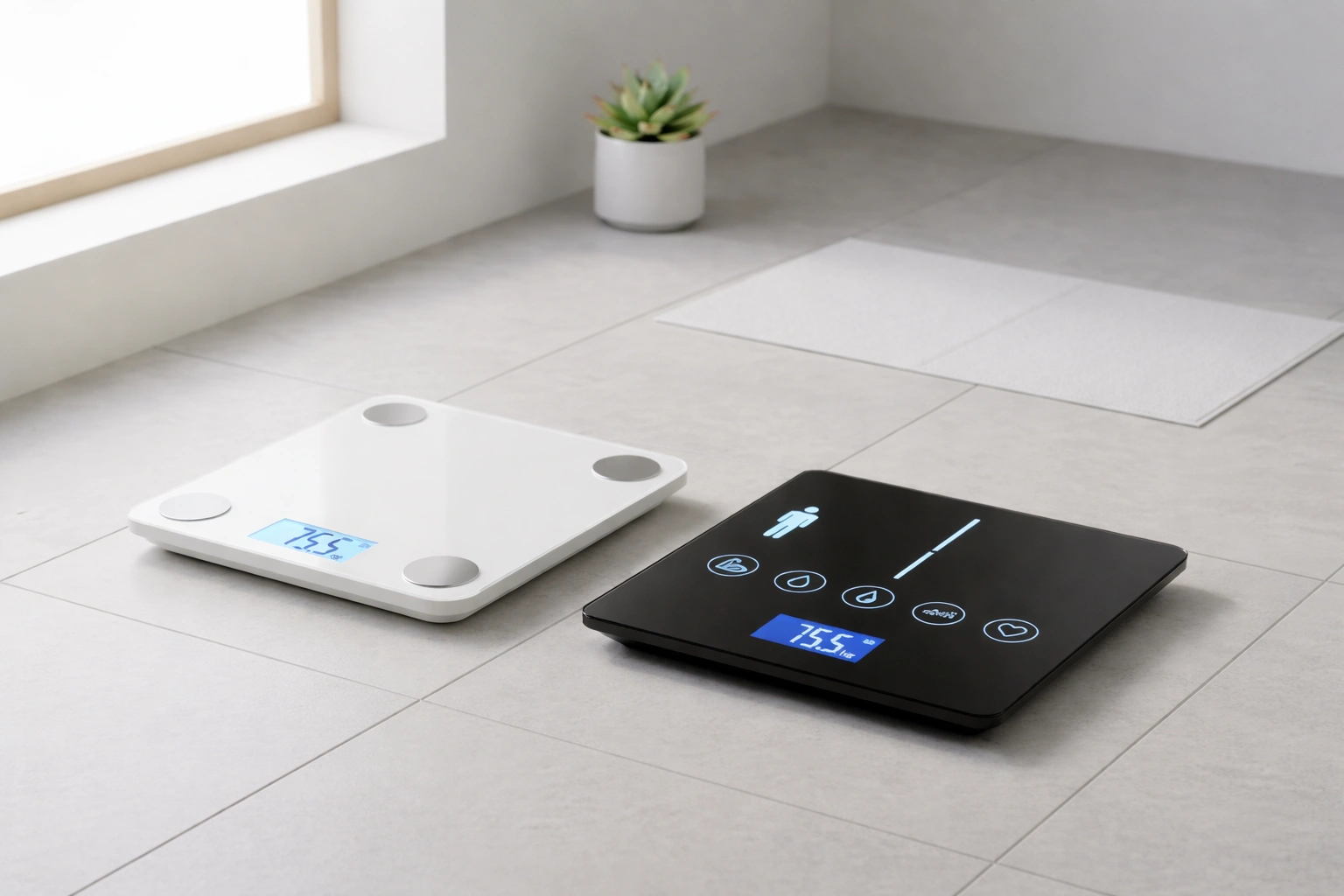
A simple digital or analog scale has something of the Zen about it. You get in it, it assigns you a ticket, and you get out of it.
Updates on the firmware are not available, no issues with Bluetooth pairing, no notification that the battery is low every two weeks since the Wi-Fi chip is consuming the battery.
Understanding the Types of Normal Scales
We should not overlook the fact that not every normal scale is created equal before we reject the so-called basic scale. They are usually divided into two categories.
Analog (Mechanical) Scales
These make use of a spring system to gauge weight. As you step on, the dial is doing the spinning.
Advantages: Does not need batteries, very sturdy, easy reading, visual dial to those who like it.
Disadvantages: Have a tendency to lose calibration with time (manual reset to zero is required), and are less precise than their digital counterparts on average.
Basic Digital Scales
They are operated by electrical sensors known as strain gauges and give an LCD display that gives a numerical result.
Advantages: Accurate (usually to 0.1 lbs.) and slim, and cheap.
Cons: Battery-powered, and eventually, after ten or so years of operation, the sensors may break down.
Why It Might Be Your Best Bet
The scale is an instrument of overall responsibility to many of us. A basic scale is all you need in the event that you only want to remain within a five-pound range of your desired weight.
You do not have to search your phone or use an application and view your progress. This ease of friction is a blessing in the dizzy minutes following the awakening.
Your weight is not being uploaded to a cloud, it is not being stored on a server or is it being given to third-party advertisers. In the era when all appliances are interested in our information, it is something detoxifying to have a device remain offline.
The simplicity scales may take decades. There is no software to be outdated. There is no need to worry whether the manufacturer will support the app 5 years later.
A basic digital scale that is highly accurate can be obtained at a cost of 15-25. That will give you more cash to spend on food that is of high quality or gym membership- activities which actually make a difference in your health.
The Downside of "Just" Weight
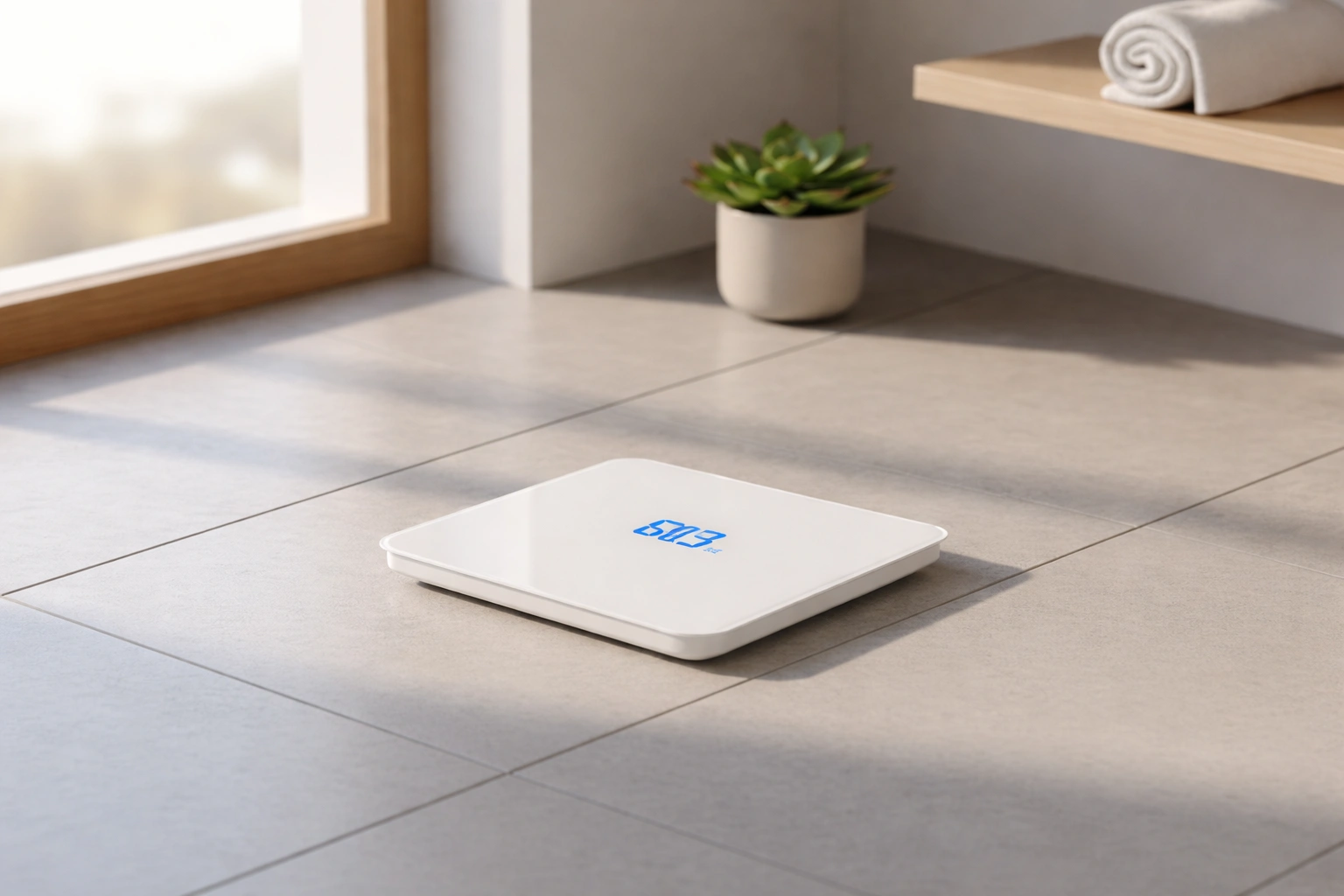
The main reason why the normal scale is not the best tool is that weight is a blunt instrument. It does not differentiate pound of fat and pound of muscle.
When you are beginning a heavy strength-training program, then a normal scale would indicate that the number remains the same- or even increases. This is motivating when you are not aware that you are losing fat and building body (body recompositing).
The Smart Scale: A Lab on Your Bathroom Floor?
Smart scales apply the technology of Bioelectrical Impedance Analysis (BIA). A small painless electrical shock is applied through your body when you step on the metal plates with bare feet.
As fat, muscle, and water are different conductors of electricity, the scale approximates your body make up using the resistance (impedance) it experiences.
The Science Behind the Data
To determine whether a smart scale can be beneficial to you, you should be aware of the functioning of BIA.
Muscle contains approximately 70-75% water which is a good conductor of electricity. Fat on the other hand has minimal water and is a resistor.
The internal algorithm of the scale measures your percentages by your height, age and gender by estimating the speed of the current.
The Data Junkie’s Dream
A smart scale makes you feel like a superpower if you are an enthusiast of a so-called quantified self.
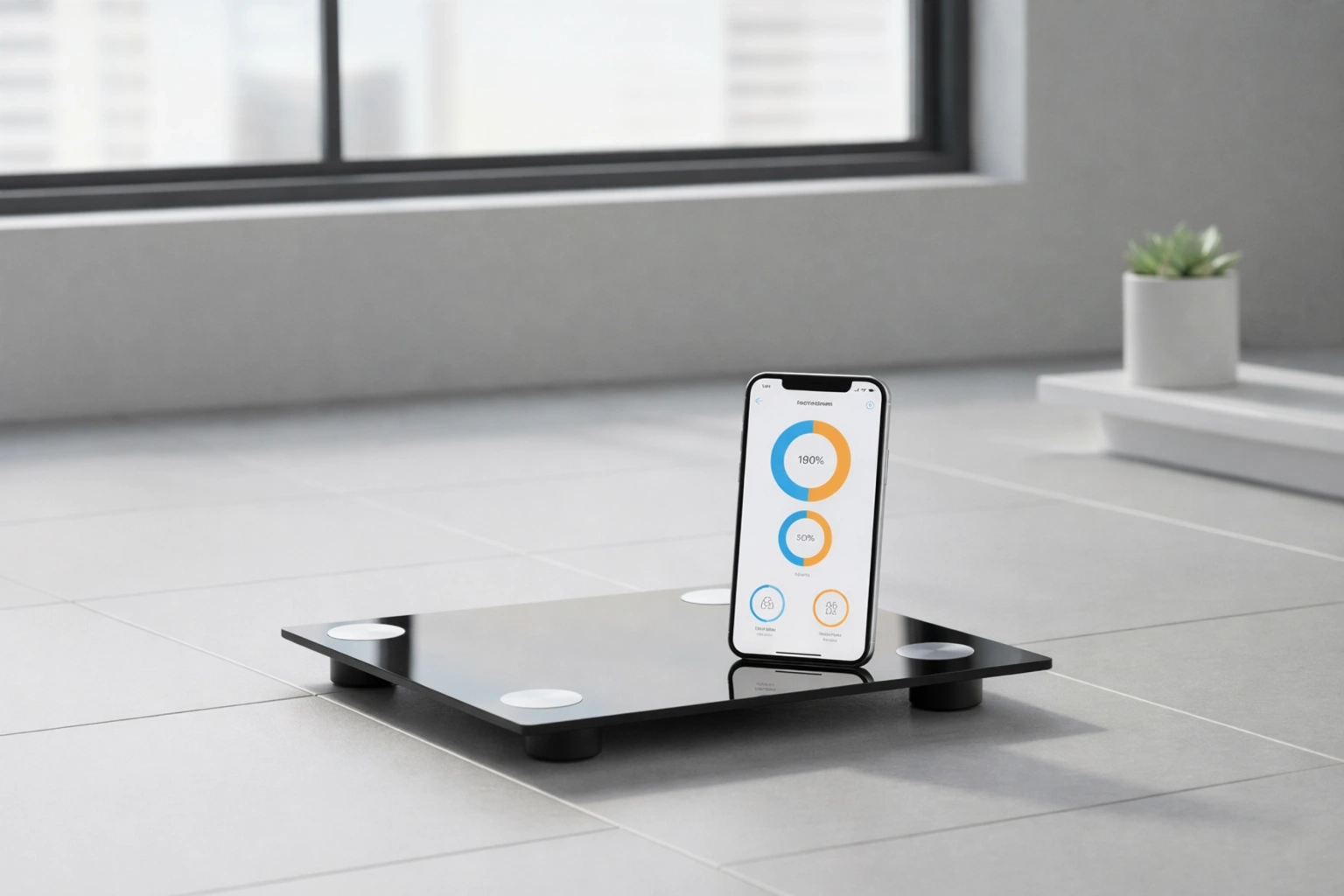
It measures indicators that a normal scale would not be able to detect: body fat percentage, muscle mass, visceral fat, basal metabolic rate (BMR), and mapping long-term trends via automatic links to apps such as Apple Health, Google Fit or Fitbit.
This makes a weight-check every day an easy to read graph of the beauty of your progress in months or in years.
The Reality Check: Accuracy and Reliability
The greatest misconception is that the more data you have, the more accuracy you have. The fact of the matter is that smart scales are approximators but not scientific tools.
The Finicky Nature of BIA
The BIA technology is a sensitive one. The percentage of hydration, physical activity performed recently, wet feet, or eaten food, all these may affect the readings as they change the amount of electricity that is conducted through your body. The golden rule of smart scales is to use the metrics as trends, and not truths.
When the scale indicates that you are at 22% body fat, it may actually be at 19 or 25. But in case the scale indicates that your body fat percentage is declining not by two percent but by three months, not by five percent but by three months, then that is probable and something to rejoice.
Maintenance vs. Transformation: Which Phase Are You In?
The practicality of a scale can be determined by your position in your health process.
1. The Transformation Phase
The Smart Scale acts as an amazing motivator when you are already in the process of changing your body that is, you are dropping 50 pounds, are preparing to be in a bodybuilding competition, or you are recuperating after a sedentary lifestyle. When the scale does not change, watching your "Muscle Mass" marker check off is the psychological victory you need to make sure you stick with it.
2. The Maintenance Phase
When you have already achieved what you wanted to do and simply want to maintain it, then the intelligent functions are not always necessary. When you have known your overall body composition and you are already in the habit of doing it, a quick visit to a Normal Scale each week is typically all you need to make sure you are not going outside of your healthy range.
The Psychological Impact: Data vs. Peace of Mind
This is a factor that is ignored mostly. For some, data is empowering. To others, it gives them anxiety.
- The Case for Normal Scales: There are individuals who have difficulty with number obsession. You might find it psychologically demanding to look at a 0.5lb change and have an otherwise nice day because of it, so you can see a ten pound increase in the metrics (such as metabolic age or share of water) to worry about that day. A normal scale will provide an experience that is frictionless and does not require your focus.
- The Case for Smart Scales: On the contrary, there are those individuals who experience less anxiety as they can see the big picture. When you know that you gain weight due to mere water gains or even building of muscle, you will not be as panicked. The automated logging also eliminates the burden of manually monitoring your weight.
The Middle Ground: The "Low-Tech" Smart Approach
To receive a smart data, you do not really need a $150 smart scale. The best results are achieved by a simple group of health enthusiasts using a simple scale along with a simple measuring tape.
The waist measurement at the end of each week is a dead giveaway of your fat loss and cardiovascular condition as well as any BIA scale can be.
When the scale remains unchanged and your waist circumference shrinks by an inch then you know with certainty what is happening: you are getting lean. This technique is 100 percent, battery-free, and it is approximately two dollars.
Technical Lifespan: A Warning for Tech Lovers
The app factor has to be taken into consideration. An analog scale of high quality may be a buy it for life (BIFL) product. It will function similarly in 2040 as it does in the present day.
An intelligent scale is, however, software-dependent. Unless the manufacturer provides further updates to the app, or if Bluetooth technology used in your old scale has changed to a new standard to which your old scale is no longer compatible, then the scale you consider to be smart will actually turn out to be a very costly regular scale. By purchasing a smart scale, you are not only purchasing hardware but a software firm with which you will be having a lasting relationship.
Who Should Choose What? (The Final Verdict)
Choose a Normal Scale if:
- You want a device that lasts 10+ years without any tech issues.
- You value your digital privacy and don't want your health data in the cloud.
- You find that tracking too many metrics leads to stress or "paralysis by analysis."
- You are on a budget and want to invest your money elsewhere.
Choose a Smart Scale if:
- You love gadgets and find data visualization motivating.
- You are focusing on body recompositing.
- You already use a health ecosystem and want automatic syncing.
- You can look at the numbers objectively as trends.
Final Thoughts
Finally, scale is merely a reflection of what you do on a daily basis. It may be a 15 dollar analog dinosaur or a 150 dollar Wi-Fi beast, but it is still up to you to do the work.
The best scale is just the one that causes no friction to your life. When information inspires you, become intelligent. In case you are more simple and want your privacy, be traditional. It is not what is in the difficulty of the machine beneath your sink that makes or breaks your health but what you do in the kitchen and the gym. Do not select the tool that makes you feel like you are being forced to do it. Select the one that gives you the strength to continue on.
FAQs
1. Are smart scales more accurate for weight?
No. For raw weight, both are equally accurate. Smart scales simply add extra estimates like fat and muscle.
2. Who should avoid smart scales?
People with pacemakers or pregnant women should avoid them because of the tiny electrical current used to measure data.
3. Why do smart scale readings fluctuate?
They are highly sensitive to hydration and timing. For best results, weigh yourself at the same time every morning before eating.
4. Can I use a smart scale without an app?
Yes, but only for weight. You need the app to see body fat, muscle mass, and progress trends.
5. Does floor surface matter?
Yes. Both scales must be on a hard, flat surface (not carpet) for an accurate reading.