1. The Hook: The Silent War Against the "Snooze" Button

The Problem: We all have the same 24 hours, yet some people seem to build empires while others struggle to finish a single task. Procrastination isn't just about being "lazy"; it’s a psychological battle between your present self (who wants comfort) and your future self (who wants results).
The Solution: You don’t need a specialized degree to be productive. You need a system. By understanding the psychology of time and applying actionable rules, you can transform from a "procrastinator" into a high-impact "producer."
2. The "Why": The Deep Science of Procrastination
Before we fix the clock, we must fix the mind. Procrastination is often caused by several hidden factors:
- Fear of Failure: If you don't start, you can't fail. This perfectionism often keeps people frozen in place.
- Analysis Paralysis (Overwhelm): The task looks like a massive mountain instead of a series of small, manageable steps.
- The Instant Gratification Trap: Your brain’s limbic system prefers a 5-minute social media reel over a 2-hour deep work session because it offers an immediate dopamine hit.
The Philosophy: Productivity is not about doing more work; it’s about doing the right work at the right time.
3. The "How-To": Core Time Management Strategies
A. The 2-Minute Rule
If a task takes less than two minutes (like answering an email or hanging up your coat), do it immediately. Delaying these tiny tasks creates mental clutter that drains your energy throughout the day.
B. Time Blocking (The Secret of High Achievers)
Don't just make a list; give every task a "home" on your calendar.
- Deep Work Blocks: Reserve 90-minute slots for your hardest, most cognitively demanding tasks.
- Shallow Work Blocks: Group administrative tasks like emails, phone calls, and filing into one specific hour
.
C. The Pomodoro Technique
Break your work into high-intensity intervals:
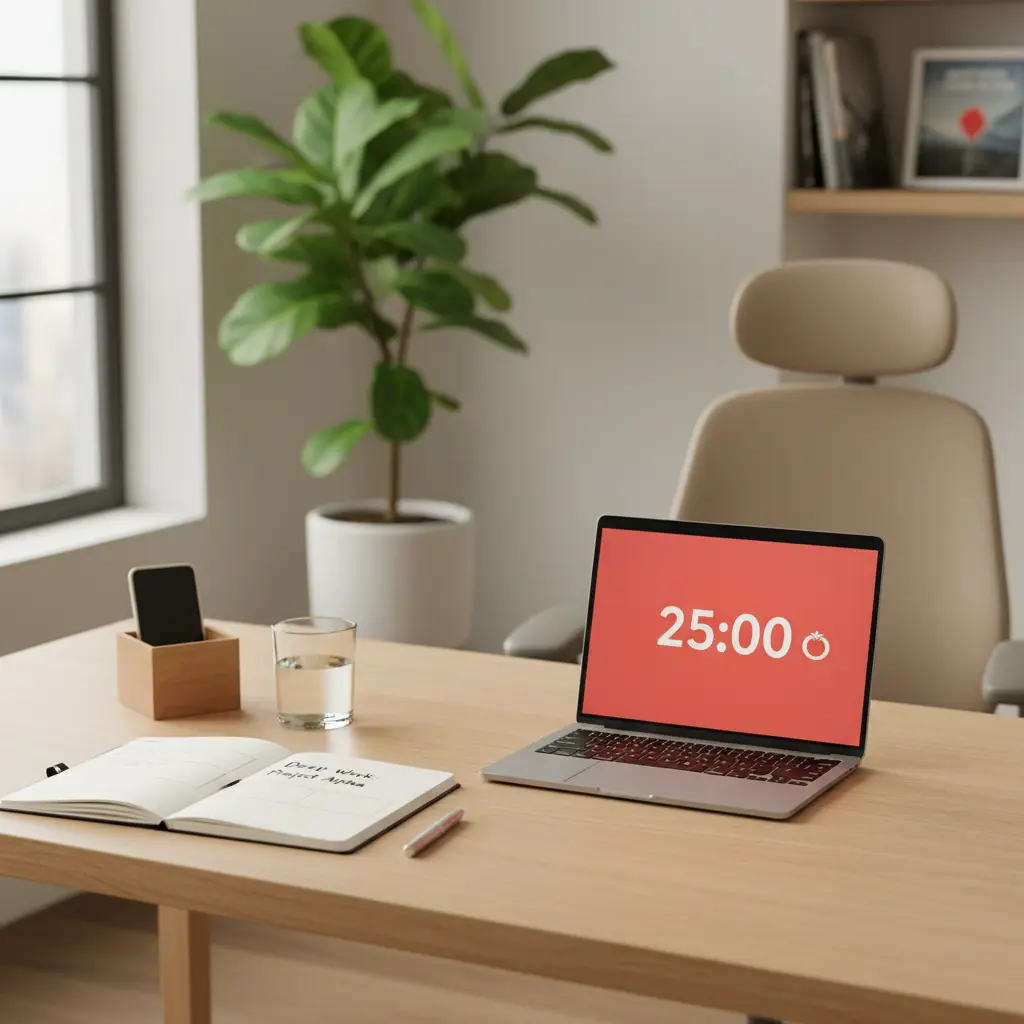
- Work for 25 minutes with absolutely no distractions.
- Take a 5-minute break to stretch or hydrate.
- After four cycles, take a longer 15-30 minute break.
4. Categorized Productivity Advice
The "Hero" Tools (Budget Friendly)
- A Physical Planner: Research shows that writing tasks by hand increases memory retention and commitment.
- Focus Apps: Use digital tools like Forest or Freedom to block social media during work hours.
- Noise-Canceling Headphones: These help create an instant "Deep Work" environment regardless of your surroundings.
Renter & Small Workspace Tips
If you work from home, Physical Anchoring is critical. Never work in your bed, as this confuses your brain's sleep/work signals. Create a dedicated "Work Zone" to tell your brain, "Now it is time to produce."
5. The "Expert" Section: DIY & Design Rules for Your Day
Zero-Cost Productivity Ideas
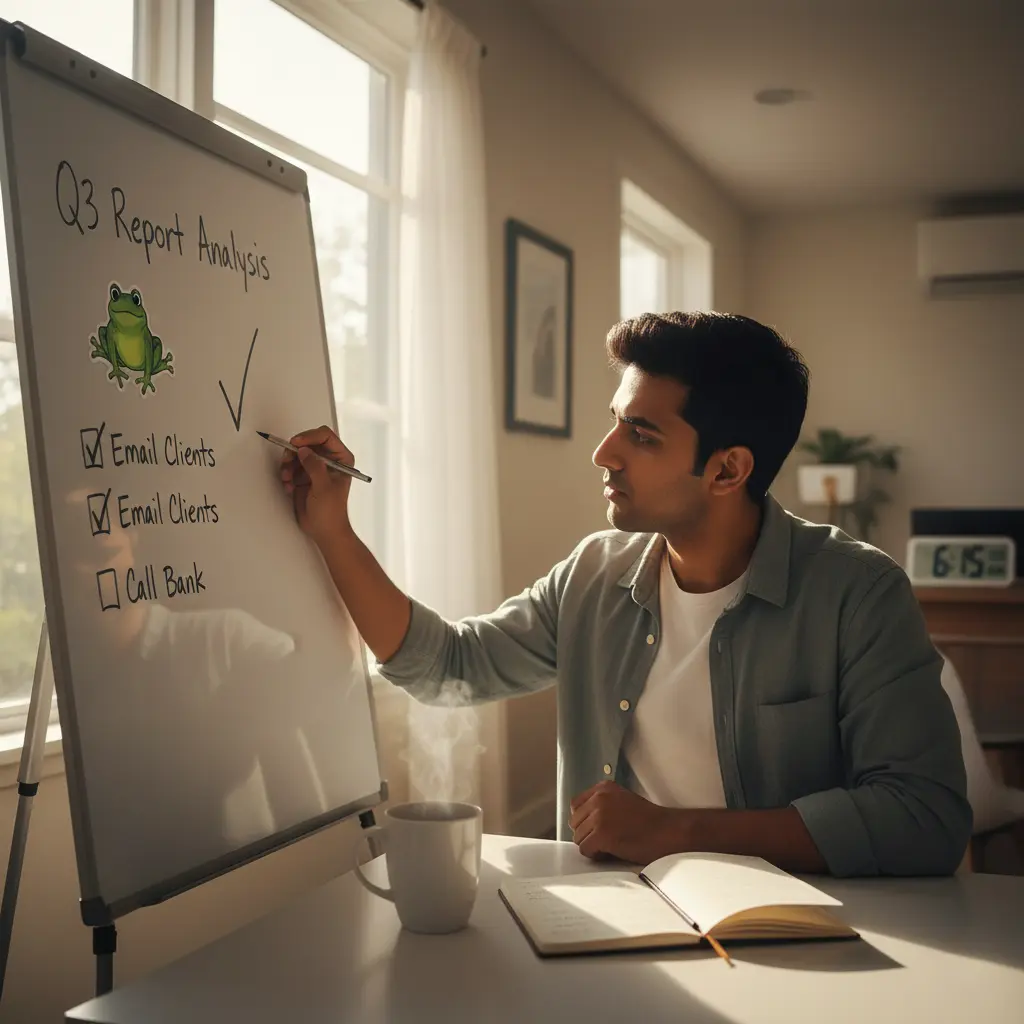
- Eat the Frog: Do your most dreaded, difficult task first thing in the morning. Once the "frog" is eaten, the rest of your day feels lighter and easier.

- The "Rule of 3": Avoid the trap of the infinite to-do list. Write down only three main goals for the day. Finishing three things perfectly is better than starting ten things poorly.
The Golden Rules of Personal Design
- The Environment Rule: Your environment dictates your behavior. If your phone is on your desk, you will check it. Put it in another room.
- The "Done is Better Than Perfect" Rule: Perfectionism is the mother of procrastination. Start with a "shitty first draft" to break the barrier of the blank page.
- The Evening Reset: Spend the last 10 minutes of your workday planning the next day. This prevents "decision fatigue" the next morning.
6. Smart Shopping & Strategy
Timing is Everything: Invest in your productivity during major sales. Buy ergonomic chairs, planners, or focus software during Black Friday or New Year sales.
The Strategy:
- Audit Your Time: For three days, track every 30-minute block of your life. You will be shocked at how much time "vanishes" into mindless scrolling.
- Task Batching: Don't switch between chores and creative work. Batch all "admin" tasks together to keep your brain in a singular "mode."
Conclusion
Start Small, Finish Big
Time management is not a destination; it’s a lifelong practice. You will have days where you fail, and that’s okay. The goal is to be 1% better than you were yesterday. Stop waiting for the "perfect moment" to start. The perfect moment is now.
Time Management Frequently Asked Questions
Q1: What if I have zero motivation?
A: Don't wait for motivation. Motivation is a feeling; discipline is a habit. Use the 5-Second Rule: Count down 5-4-3-2-1 and physically move toward the task immediately.
Q2: How do I handle constant interruptions?
A: Set clear boundaries. Use a "Do Not Disturb" sign or status on messaging apps. Communicate your specific "Deep Work" hours to family or colleagues.
Q3: Is multitasking good for productivity?
A: No. Science proves that multitasking lowers your IQ by 10 points. It is actually "context switching," which exhausts the brain faster. Focus on one thing at a time.
Q4: Does sleep affect time management?
A: Absolutely. An exhausted brain cannot prioritize effectively. Getting 7–8 hours of sleep is the foundation of all time management.