The act of scrolling through social media once seemed harmless. A few minutes of browsing through Instagram, taking a peek at TikTok, perhaps some entertainment before bed. However, over time, skincare trends on social media shifted this behavior without even realizing it. Inspiration became pressure—the pressure of buying, of upgrading, of incorporating just one more product into an already cluttered routine.
I thought that if my skin wasn’t improving, I just had yet to find the right product for my skin yet. So I continued my search. From one serum to the next, each purchase was perfectly valid, even responsible, as I was “taking care of my skin.”
There was a time when this quest led me to a shelf full of products and more frustrations than findings. It was only later that I realized the cost that this approach had been silently incurred and how it was driven by social media skin trends.
This post is not about bashing skincare and beauty as a whole. It’s about becoming more educated on trends and behavior and why overspending occurs and learning to make more composed and mindful decisions without feeling like you’re missing out.
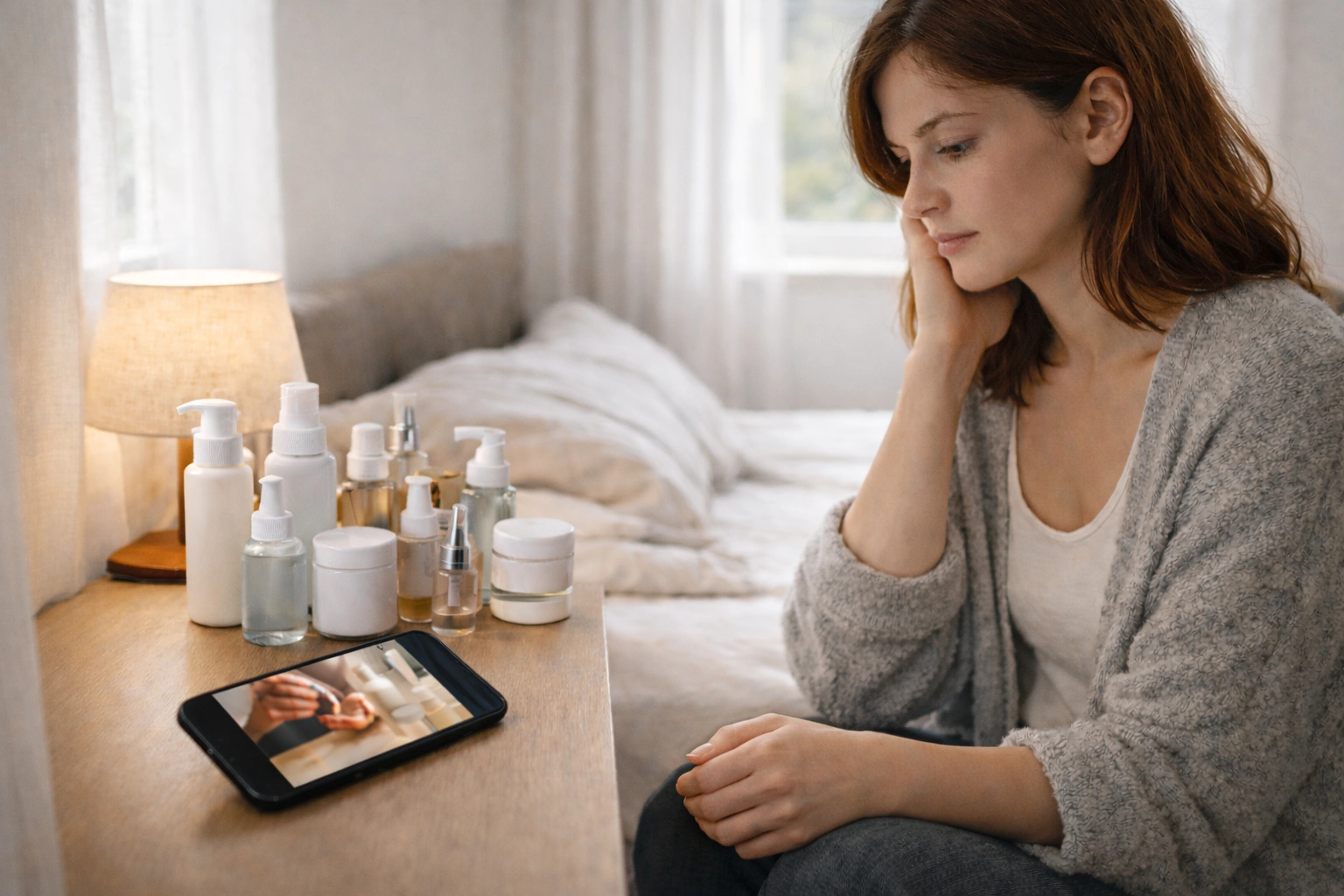
The Quiet Power of Skin Care Related Social Media Content
Beauty trends never come in as an aggressive trend. They just enter your feeds between the recipe video and the travel video and the normal activities of daily life. Someone posts about their nighttime routine. Someone else opens a cabinet just full of different things they say they use essentially. Someone posts about the before and after.
Nothing here feels like advertising. This is personal. This is relatable. This is trustworthy.
“And that,” he writes, “is basically how social media marketing works. It doesn't ask for an audience—it attracts one.” It attracts an audience by familiarity. Through repetition, some products, some techniques, some practices come to feel normal. Even necessary. “If everyone around you is using a specific serum or carrying out a ten-step regimen,” he continues, “to not use or practice these things is seen as neglecting oneself.”
Overspending seldom occurs with a major expenditure. It begins with a series of small, justifiable purchases.

When “Normal” Skincare Becomes Quietly Expensive
A decade ago, a healthy routine included wash, moisturize, moisturize, sunscreen. Now, years of watching aesthetic videos on the Internet, this routine comes off as incomplete. It is almost reckless.
Now, we see routines with ten to fifteen steps that are marketed as self-care. Drawers filled with products are normalized. Restocking every month has started to be seen as maintaining rather than indulging.
We don’t get context; we’re almost never shown how long the products actually last, how much of the ritual gets sponsored, or what happens when the cameras are off. When we’re left without context, our perception of “normal” gets subtly changed. We start to think that spending more money isn’t optional, that excess becomes the norm.
How Skincare Is Particularly Susceptible to Overspending
Skincare is a very unique space emotionally. It is at the crossroads of health, beauty, confidence, and hope all at once. Such a confluence makes it highly susceptible to over-spending.
Unlike fashion and technology, skincare is about gradual improvements. It is a delayed, subtle, and sometimes subjective process. Sometimes, the lack of immediacy leaves room for additional buys.
For example, when one realizes the pace is too slow, it is easy to silently conclude:
- you need one more product
- copolymer mixture isn’t right yet
- you didn’t give it enough time
- your routine still isn’t “complete”
This trend is encouraged by social media platforms, with new innovations emerging that make an established routine appear old-fashioned.
The Psychology of Skin Care Trends
Skin care trends spread because they resonate on a human level. Advice originates with familiar faces instead of brands. Seeing the application of products in real time is reassuring—even when it comes from people without professional knowledge. Eventually, suggestions become akin to well-meaning tips instead of advertising.
The power of repetition is strong. Maybe the first video will go unnoticed, but when the same item keeps appearing, the impression is given that it is the consensus. Then, repetition is confused with proof.
Additionally, there is a prevalent view that hard work equals effectiveness. Longer routines exude a sense of discipline and accountability. Social media favors complexity as this looks good on camera. However, the skin favors stability, suitability, and time, and not the variety of products that can be placed on a shelf.
Trend Cycles and Artificial Urgency
Skincare trends are unusually turning-and-turning at rapid speeds. It might be slugging one month, then skin cycling, and finally a barrier repair balm becomes the need of the hour.
Urgency is never expressed explicitly, though it is continually implied in sentences such as:
- everyone is switching to this
- derm-approved routine of the month
- if you’re still using X, you’re behind”
This is a subtle force that bypasses decision-making. Products are bought, not because of a current need, but out of fear, the fear of missing out, of being left behind.
The Ingredient Obsession
The marketing focus of modern skin care has moved from promoting products to promoting ingredients. Every new ingredient becomes the answer to a particular problem.
Rather, they have many one-task product categories, each explained in and of itself. Eventually, the shelves will be full, the wallet will be bare, and understanding will become cloudy.
THE HIDDEN COST OF “DUPE” CULTURE
A dupe looks very affordable at first glance. Spending $10 on something that costs $70 is an economical choice. However, since each purchase looks economical, it provides the impulse to buy multiple other options.
What begins with cutting expenses can creep into increased spending—on products that may never be part of a regular practice. Savings isn't always discovering a cheaper alternative to something that you never actually needed in the first place.
The Quiet Accumulation Problem
Overspending on skincare products never occurs with a sense of drama. It occurs quietly, moment by moment. Here, a cleanser. There, a serum. And a back-up "just in case."
Because the cost is distributed over time, many people are not aware of how much they are spending on a yearly basis. Things expire, routines get cluttered, and the mental burden increases with the financial one.
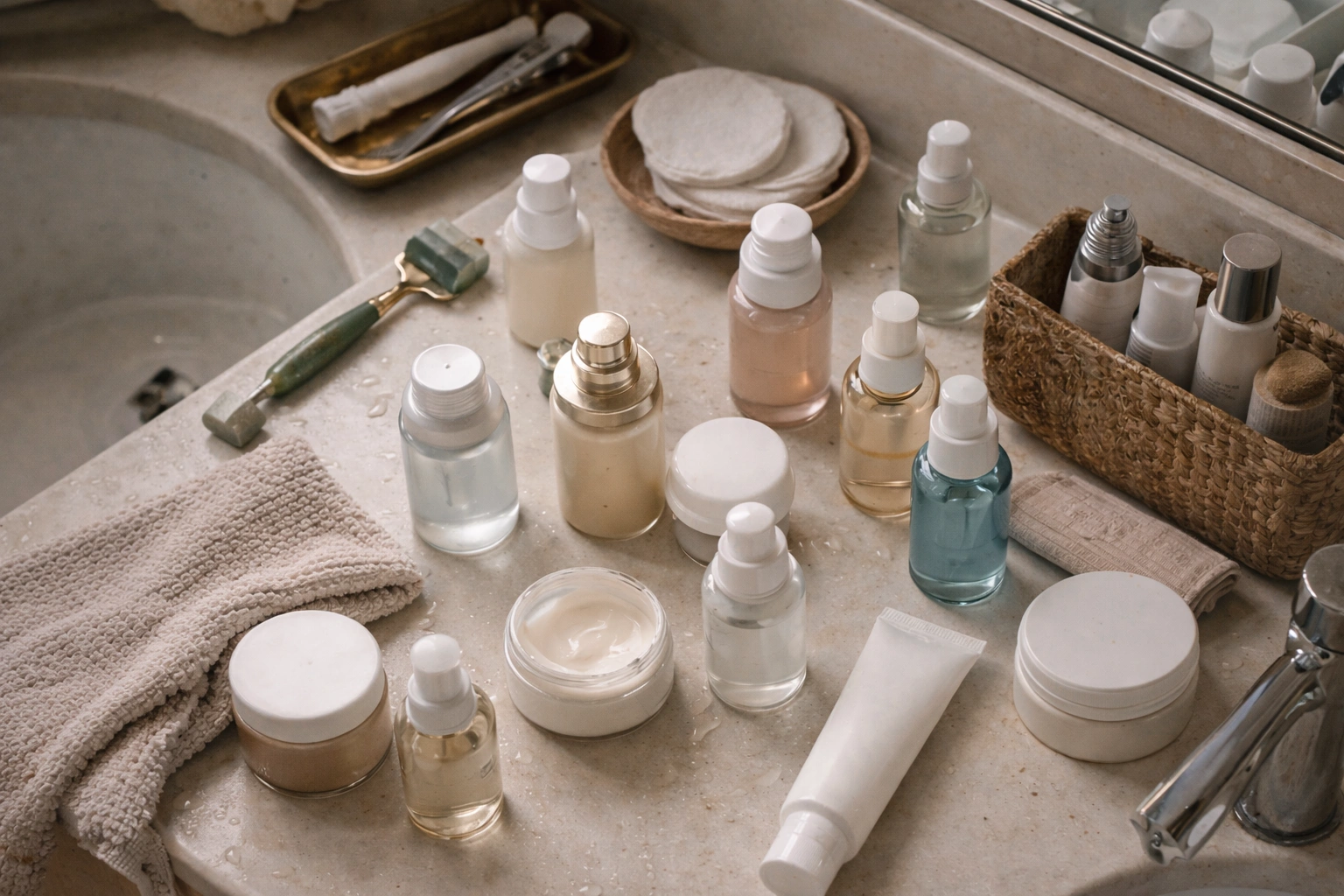
When Self-Care Starts Feeling Like Pressure
Skin care should feel nourishing. However, when skin care regimens become sources of guilt, anxiety, or obligation, they lose their focus on care.
Calm routines don't go viral. Consistency isn't cinematic. But it is what the skin will respond to best.
Why More Products Rarely Lead to Better Skin
The skin is an adaptable body part that prefers stability. It will be difficult to determine what works and what does not work with frequent changes in products.
When irritation emerges, the reaction is to reach for another product, thus continuing in the cycle. Many people find less irritation through simplifying their regimen by focusing on consistency without further addition.
Applying Self-Awareness to Spend Less
Overspending has nothing to do with a lack of discipline. It has to do with moments. Stress, comparisons, scrolling through phones at 2 a.m., or having a breakout can all impair decision-making.
Before purchasing an item, it would be a good idea to stop and think about whether it is a solution to a problem or a reaction to a need.
A Simple Pause Framework
Before reacting to the next trend, you might consider this simple technique:
- Pause, step away from the screen
- Observe: does it address a real, ongoing need?
- Decide: choose based on your skin, your budget, and your timeline
It may be a very short period, but this can be the difference between impulse and intention.
Developing a More Purposeful Skincare Routine
A good routine isn’t the most up-to-date or the most thorough. It’s the one that can be sustained in a steady state with equanimity.
That means there will be less product, a specific reason for every step, and a commitment to consistency. Skin care trends can be appreciated for information or entertainment purposes without becoming a set of instructions. There is no expenditure in learning.
Conclusion: Choosing Calm Over Trends
Social media skincare trends aren’t going away. However, blowing money isn’t a trend, it's a reaction to said trends that happens without rest.
Since the practice of taking care of one’s skin becomes driven by patience and not urgency, a person will spend their money more thoughtfully. The focus will not be on accumulating items, and discovering what really works becomes a goal in itself.
Your skin care should work alongside your lifestyle, not against it. The gentle, affordable, and sustainable routine will always outshine that which is centered on following the trends.
FAQs
How Do Social Media Skincare Trends Cause Over-Expenditure?
Repeat exposures make things feel normal and necessary. Small transactions add up to a significant purchase without any sure outcome.
Overspending on skin care-is it a problem of self-control?
No. It is usually triggered by emotional factors like stress, comparisons, or fear of missing out, rather than poor discipline.
Do more products really enhance the skin?
In most cases, no. The skin favors consistency and regularity over regular alterations of products.
How can I take advantage of skincare content without purchasing everything?
Keep learning apart from buying. It is not necessary to replicate routines in order to observe them. Reducing impulsive purchases can be achieved by pausing before making a purchase.
Are "derm-approved," viral routines always reliable?
Not always. Rather than being indicative of expert medical advice, such names are frequently a type of advertising language.