That slight feeling of triumph at the check out store has been felt by us all. You can finally watch the cashier smiling and telling you that you have just saved 4.12 dollars because you are a Gold Member. You are revealed as a wise customer, a master of the system. However, then you have a glimpse of your shopping bag: a seasonal candy that cost 25 dollars, that you actually did not want, but you bought, just because you had reached the ten-points mark and got a reward.
The retail environment has changed in 2026. The average consumer can now sign up to more than 19 coffee shops through luxury tech stores programs. But we are actually operating in less than half of them. This is what we call the loyalty program fatigue, which is not only an inconvenience that is filling our inboxes but also a strategic waste of our mental capacity as well as our monthly budgets. With the trend of conscious consumption making its way into our lifestyle, the question to ask is hard, yet it needs to be asked: Are these programs working or are we working?
The Psychology of the “Points Trap”: Gamification as a Force of Overspending
Retailers have developed decades of mastering the art of the Points Trap. In its most basic form, the modern loyalty programs rely on the same psychological principles as the mobile games and social media. This is what gamification is called and the major aim of gamification is to avoid your rational budgeting brain.
The Dopamine Loop is no myth—each time a progress bar becomes a little nearer to a Free Perk, your brain is being shot through with reward chemicals. It is not just the purchase of soap anymore, but you are "leveling up."

Intentional living starts with a pause. Is it a genuine need, or just another point on a digital progress bar?"
Loss Aversion and the Endowment Effect
Loss Aversion is one of the strongest retail rewards pitfalls. Human beings are psychologically more motivated to avoid losses twice compared to gaining something. When a brand writes to you a panic email, saying that your 500 points expire at midnight, this information gets encoded in your brain as a loss of 500 points. You will gladly pay more than 40 dollars on something you did not intend to buy to save that 5.
This is closely trailed by the Endowment Effect—the point that we own, we place too much estimation on. We will cover an extra five miles or even spend a little more in a certain store only to make sure that we are making a gain on our purchase, and then we turn a deaf ear to a better offer elsewhere.
The Power of the Cooling-Off Period
The most effective tip in smart shopping in order to fight this is to have a Cooling off period of 24 hours. In case a reward message evokes an impulse to buy, take a break. Having it a day later when the necessity in the item still exists, it is a good purchase. Otherwise, you have avoided the cost of 100% of spending nothing.
Data Privacy vs. The 5% Discount: What in the World Are You Trading?
Your data can be better than cash in the digital economy of 2026. You are entering into an agreement to share your data when you enroll in a free loyalty card. The majority of the latent expenses of loyalty cards are under wraps.
Based on your buying habits, retailers create a behavioral profile which they call your Digital Twin, anticipating your health status, your family milestones, and, above all, how price-sensitive you are. In case the data indicates that you are a loyalist that never changes the brand, the company can actually discontinue sending you their best coupons as they already have your business.
The Supply Chain of Data and Security Risks
Also, it has the Supply Chain of Data. Retailers are free to sell your anonymized data to third-party aggregators with many Terms and Conditions (of which we never read them). This is what creates an endless loop of targeted advertisements that track you throughout the internet, which are specially geared at provoking your personal urge to spend. The security risk is also high; it is another possible point of identity theft for every single loyalty database you sign up on it.
The Guest Checkout Strategy
A power-user action to consider is to use Guest Checkout, which provides those who place conscious consumption importance and privacy benefits. There are numerous online shops that provide everyone with site-wide sales or promotional coupons. When you are a guest, you are guaranteed of the deal, but you do not give a permanent map of your lifestyle habits to a corporate database.

"Data over 'Deals': Comparing Effective Discount Rates (EDR) ensures you’re saving actual currency, not just collecting digital dust."
Math of Loyalty: How to Calculate Your Effective Discount Rate (EDR)
Let’s talk numbers. In order to appreciate the negatives of the loyalty programs, we need to refer to the Effective Discount Rate (EDR). Most of the programs are made to look generous yet they provide a pittance.
As an illustration, one of the typical formulations is: Get 1 point per dollar spent; 500 points will give the 5-dollar reward. Do the math—that is 1% of your return. When you are being asked to pay up 500 dollars to receive a refund of 5, you are basically trying to round off the error.
Identifying Inflated Base Prices
There is also the Inflated Base Prices. This has become a typical retail strategy of increasing the retail price of a product and then giving it a Member Price which reduces it to the actual retail price. When a store has a toaster at a price of 50 when the store offers members a special price of 42, but after a quick search the same toaster is available at 40 in a big-box online store, the loyalty program is a marketing sham.
The simple equation before investing time on a program is:
$$((Reward\ Value / Amount\ Needed\ to\ Spend) \times 100) = EDR$$
When your EDR is less than 5, then the program is possibly a roll-out of real frugal living. Spending your time in clipping digital points is not worthwhile compared to using a price comparison tool to find the lowest baseline price.
How to Perform a Loyalty Program Audit: Strategic Decluttering
When there are no more retail apps left to explore on your smartphone and your Promotions section in your mailbox is being filled with noise, then you have probably fallen prey to the loyalty program fatigue. The time has come to audit strategy. Intentional lifestyle is aimed at alleviating, rather than augmenting, decision fatigue.
The Power Player Rule
Begin with the Power Player Rule. Name the 3-5 stores that constitute 80% of your fundamental expenditure—typically your major grocery store, your favorite gasoline station and maybe one hobby shop. Hold onto these accounts; they are in actuality applicable to your survival fund.
One-In, One-Out and Digital Purging
In all other things use a One-In, One-Out policy. In case you would like to add a new rewards program to one of the boutiques, you have to remove an old one.
It is also essential to deal with the so-called noise to remain mentally healthy. In case you maintain a program, transfer the communications to a specialized email address that you can name "junk." This eliminates flash sales that ping every time you are on your workday or when you are on your family time.
Lastly, do a digital purge: Get rid of any shopping app that you have not used in 90 days. They even have a web site which you can use on a browser in case you really need to make a purchase later—an additional task which usually discourages the compulsive one-click shopping.
Smart Alternatives: Saving Innovations That Do Not Demand Loyalty
The positive aspect is that by 2026, you will not be required to be loyal to a brand to get a deal. Store-agnostic smart shopping tools are the most effective nowadays. Store-specific points may not be as good as Generic Cash-Back Apps or browser extensions since cash is king. Cashback is redeemed anywhere unlike points, and it does not run out with a particular store.
Automatic Coupon Finders and Discounted Gift Cards
Incidentally, one can think of Automatic Coupon Finders—browser extensions that search the entire web as soon as you reach the checkout screen in search of promo codes. These tools tend to get 15 or 20 percent off that is much more appreciable than a 2 percent loyalty reward.
Discounted Gift Cards are another move that is quite old. There are places where you can purchase a gift card of 100 dollars at a price of 90. That is a moment of 10% off what you will spend, whether you are a Member or not. By specializing in these Store-Agnostic tools, you retain your freedom. You will be able to shop at any place that offers the lowest price, not being bound to a particular brand.
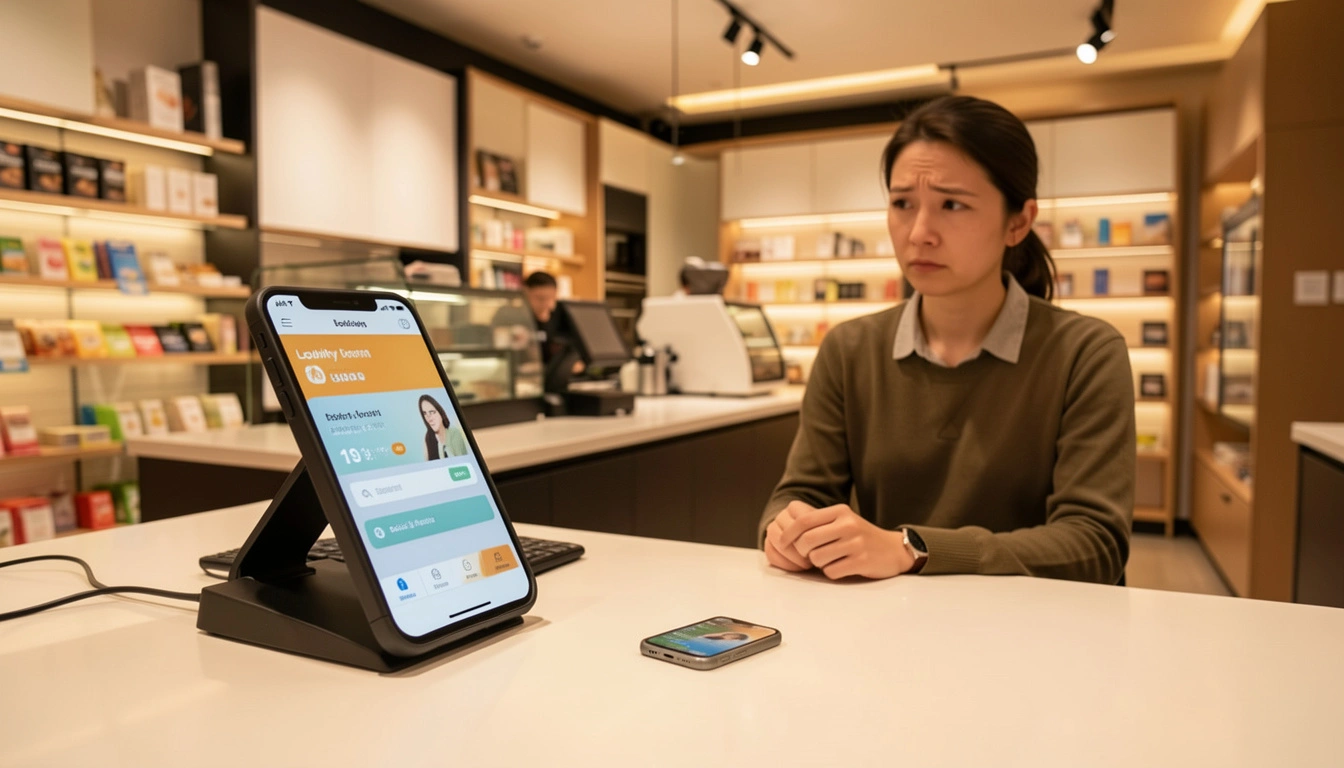
"The moment of truth: Realizing that a $4 saving isn't a win if it required $25 of unnecessary spending."
Conclusion
Loyalty programs are also another weapon in the toolkit of the retailer, but not yours. When you find a program telling you where to make purchases, how much to buy, and how often to look at your mail, it is no longer a perk but it is now a sort of chore.
It is sincere intentional living that means rediscovering the power of the purse. It is all about understanding that a 10 percent discount will never be a deal when it makes you part with 100 percent more money than you had planned to spend. With store-agnostic savings, auditing your rewards, and protecting your data, you can have high-quality, comfortable living without the so-called hidden cost of manufactured loyalty. Select privacy, select simplicity, and keep in mind you are only going to achieve your peace of mind as the reward.
FAQ Section
Do you ever want to pay anything to have a Premium loyalty program?
It has to be mathematical; say, when a 99-dollar a year charge would save you 200 dollars in freight charges on things you are already spending each month.
But, how do I know whether a price that is member only is good or not?
To trust any member label, always consult a third-party price history tool or a quick search on one of the big aggregators to know the "market floor" price.
Will they be able to track my information by removing my loyalty account?
It is not sufficient to delete the app but make an official request in most regions to have your profile scrubbed by formally filing a Data Deletion Request through the privacy portal of the company.
Is cashback credit card superior to store-specific points?
Nearly invariably, since cashback is liquid money which does not tie you to the ecosystem or expiration policies of a single retailer.
What would I do in case my favorite store switches to a Member Only checkout model?
Include the convenience versus the privacy; when the Member wall is too thick, then it is a good indication that you need to seek a more consumer-friendly competitor.