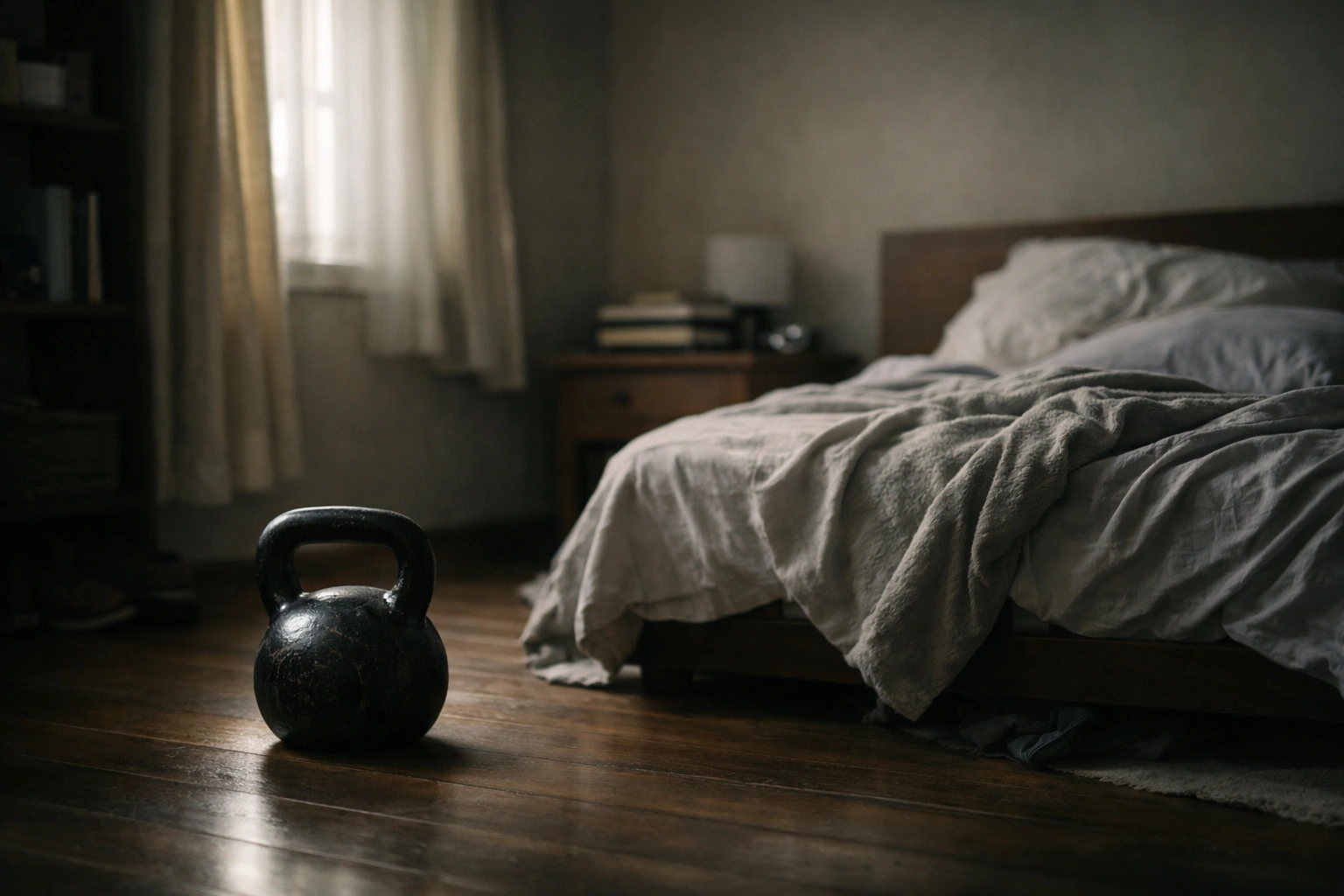
I discovered a bruise on my thumb yesterday which was small and round. I needed several minutes to recall the source of it when I got to the corner of my bedroom and saw the heavy, cast-iron kettlebell that I had purchased three weeks earlier. This was meant to be the crownpiece of a new me - the version of me that rises to get up at 5:30 AM and exhales with physical pain with a Zen-like concentration. Rather, it is, primarily, a very costly, very weighty doorstop on which I stumbled in the darkness.
I did not feel fit or disciplined looking at it. It brought about the same, painfully common, nausea of guilt. It was not only about the money that was used, but it was also about the physical traces of the mood that I had attempted to repair with some credit card.
Retail therapy is a joke that we use a lot, a way to explain why we did go to the mall on the weekend and do some shopping. However, when I sit down, and stare at the things in my life that I have regretted purchasing, I see that it was not merely objects. They were some efforts to fill the gap between the person I am on a stressful Tuesday afternoon and the person I would rather be.
The Aesthetic of a Better Life
Buying Ritual, Not Reality
I have taken much time contemplating the aspirational clutter that my kitchen is full of. It is a certain kind of regret, which is a result of purchasing luxurious kitchen appliances in the kind of life I do not even live.
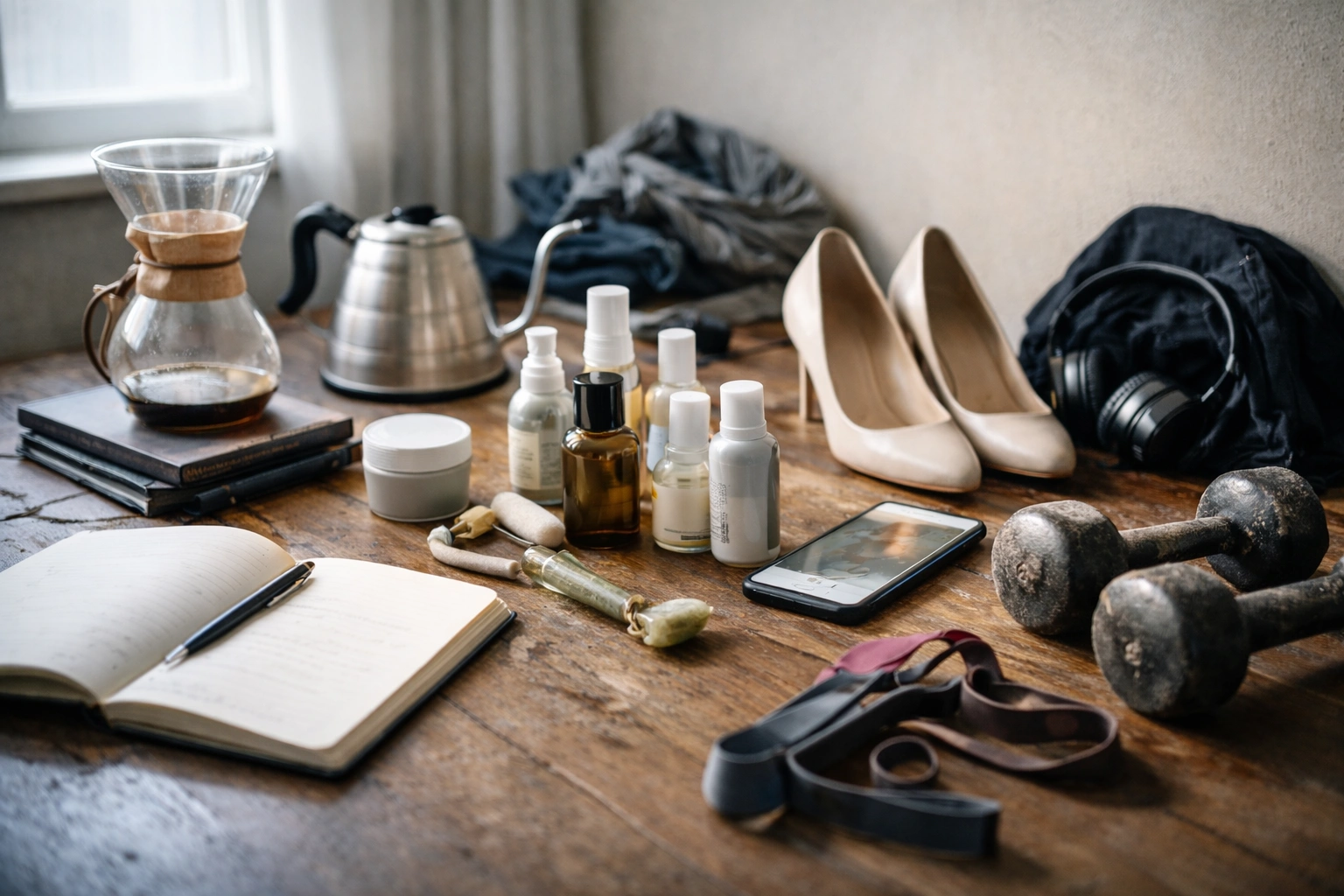
A couple of months back, when I had had a particularly tough week at work, and lived on toast and lukewarm coffee most of the time, I had convinced myself that I was unhappy because my surroundings were not a ritual. I purchased a complicated, manual coffee-making kit the one that needs accurate temperatures, particular filters and a lot of forbearance. I fantasized being in a sunlit kitchen, hand grinding the beans.
When the Fantasy Meets the Morning Alarm
The fact of the matter, of course, is that I am a human being who presses a snooze button three times and can hardly find the hands to pour water into a machine, never mind to conduct a multi-step chemistry experiment before going to work. The set is in the background of the toaster, accumulating fine dust of flour.
At the time of purchase, I was not purchasing a coffee maker. I was attempting to purchase the impression of a person not in a hurry. I was attempting to buy tranquility. And the regrets are not about the item itself is bad it is rather beautiful but because you have discovered that you cannot purchase a personality trait. Stainless steel or hand-blown glass may not be able to compel me to be a morning person when I am not one.
The "Self-Care" Trap
When Kindness Turns Transactional
The line between honest self-maintenance and that which is compulsive spending because we are emotionally emptied is exceptionally fine and blurry. This normally comes in the form of the bathroom cabinet to me.
I am attracted to skincare and wellness product when I feel overwhelmed and maybe even a bit invisible. It is hypnotic in that it promises a revitalizing mask or a relaxing oil. During the buying experience, I feel that I am making a positive health move. It is as though I were doing myself a favor.
The Guilt Hidden in Half-Used Bottles
But glancing at the half-empty jars and the serums which fail to perform to their poetic pictures I can see otherwise. I find myself in situations when I felt alone, or felt tired or felt anxious about aging and rather than sitting there with that feeling, I made myself calm it down with a smell or a touch.
This remorse is more specific since these products are promoted as self-care. To be sorry over them is near sacrilege. However, I have learned that real self-care is free and in many cases very dull too. It is going to bed early, saying no to a social duty I do not have the energy to go to, or just at last tackling the stack of mail on the counter. A $40 candle may fill the room with the aroma of a forest in an hour, however, it does not clear my mental fog that I was attempting to get rid of.
The Wardrobe of a Person I’ll Never Meet
Dressing for an Invitation That Never Came
Probably the most truthful repositories of our emotional expenditure are closets. Reading through mine, I am able to see the time when I was actually insecure about my professional status or when I believed my social life was not improving.
I have a pair of shoes, gorgeous, architectural and not wearable at all, that I purchased to a gala I was not even invited to attend. During that period, I had in my mind that I had to be ready to lead a more advanced life. I was purchasing a ticket to an image of myself that is poised and elegant and is comfortable in four-inch heels.
When Style Becomes a Reminder
As a matter of fact, I am a comfort-conscious person who spends the majority of his time in sneakers or boots. Whenever I look at those shoes, I do not feel a gorgeous fashion selection; I experience the time when I felt inadequate. I purchased them in order to address an apparent shortcoming in my personality. They are now only occupying space and reminding me about the money I could have spent on a weekend outing or a dinner with my friends- things which, in fact, would have made me feel better.
We are purchasing clothes because of the fantasy self. The one that visits wine tastings, or always goes on hikes at weekends, or visits gallery openings. When such clothes are not worn, they are miniature monuments of our dissatisfaction. The regret is never really about the style; it is more about the rejection of our real lives that we are living at the moment.
The Digital "Just-In-Case"
It is not only physical objects either. I have observed an increasing stack of digital remorse. Subscriptions to masterclass I never open, language learning apps that send me passive-aggressive notifications, and productivity things that require more time to install than the actual job does.
I would refer to this as educational hoarding. When I sense myself stuck in my career or I feel I am losing my intellectual ability, my impulse is to purchase knowledge access. It feels like progress. It feels like growth. However, to merely click on subscribe is not learning.
These are my regrets more than the physical objects at times in that they signify stealing of time. They are in my inbox or on my phone screen, and they require my attention that I lack and this is the very stress that I purchased them to reduce. I have purchased them because I want to be intelligent and competent, however, they make me look have no organization and fall behind.
The Weight of "Better"
Why do we do this? Why reach out in the wallet when the heart is the one that is heavy?
I believe it is because the easiest course of action is to buy something which will make us believe that we did something. When I am not content with my health state, purchasing a gym membership or an advanced blender makes me think that I have already resolved half of the issue. It is a dopamine rush and a short-lived cessation of the burdensome effort of making changes.
However, the improvement that we are pursuing, is often an outward solution to an inward irritation. We buy things to feel:
- In Control: When work or life is out of control.
- Prepared: When we are afraid of tomorrow.
- Worthy: When we think we are neglected or average.
- Belonging: It is used when we wish to indicate to a certain group that we belong to them.
The regret comes with the wear-off of the initial high, and finding ourselves with the same internal discomfort, and with a smaller bank balance and more stuff to take care of. The object does not transform the person; it simply remains in the house with the person.
Living with the Remnants
It is a new habit I have developed. I always question myself with the following before I purchase something that I do not need; it is either that I need the tool or I am attempting to purchase an emotion.
To tell the truth, most of my desires are simply the efforts to avoid a painful feeling. I would have the costly notebook since I fear that I am not creative. I would like the luxury bedding since I am tired and I believe that the material will remedy the quality of my sleep.
I still have not disposed of that heavy kettlebell. One side of me would like to keep it to remind me not of my inability to exercise but of that particular Tuesday when I was feeling weak and I thought that piece of iron would make me strong.
I am getting to be more candid in regrets. I would rather not put the "mistakes" in the back of the closet or the bottom of the drawer but rather, I am attempting to see them and accept the mood that motivated the purchase. It has a certain weird bliss in the confession, I have purchased this as I felt down and it was not successful.

A Quieter Way Forward
It is a silent fact, yet an effective one. It makes the regretting a lesson to self-awareness. I am seeing that I do not need to make my house look like a museum of a superior me. It ought to be a home to the person I really am the one who likes a plain mug to fancy coffee ware, who likes a good book to an elaborate skincare regimen and who is gradually discovering that it is in the silence when I cease to attempt to purchase my way to being human.
The next time I get that same itch to make my day better by going out and buying something I believe I will simply walk around. It will not be accompanied by a receipt and there will be nothing to put in the closet after that. And that seems to me quite sufficient at the moment.
Frequently Asked Questions
So how come we get down to purchasing stuff that we do not really need?
We tend to purchase the emotion that a product is going to provide us with such as control or confidence and not the physical object. It is an easy way to relax or get insecure with a fast dose of dopamine.
And what is Aspirational Clutter?
They are the things that we purchase on behalf of our fantasy self (i.e., a treadmill to a person who detests running). They serve as tangible reminders of guilt and unfulfilled objectives when not used.
What can I do to prevent emotional expenditure?
Prior to purchasing, inquire: Am I purchasing an instrument or an atmosphere? The time period of waiting (24 hours) will often indicate that the desire was motivated by some fleeting feeling as opposed to the actual need.