To most, the colorful ambiance of a street market, with its artisanal products and local tastes, is ruined by the fear of the markup. It is typical that customers will feel like being a target instead of a customer, and they may be wondering whether their local knowledge deficit is causing a considerable price markup. These markets, however, offer a different cultural touch and value, which can hardly be explored by conventional retail. To reap these advantages without necessarily going bankrupt, the individual would need to transform into a mere window shopper, to become a tactical purchaser.
Marketplace success is a matter of system. In the last ten years, with my share of trial and error experience and the acquisition of fake goods, as well as being a victim of false labeling, I have worked out a procedure for getting the genuineness of value. The secret of conquering the contemporary market is twofold: Traditional Negotiation: Learning the social indicators and psychological stimuli of face-to-face bargaining.

Digital Integration: Making use of the price-comparison apps and the digital promo codes to ensure that the value is checked in real-time. Integrating the intuition of the old world with the power of the modern financial instruments, this means that all purchases will be not only a cultural victory but also a financial one.
How Street Market Prices Really Work
Market prices are not like the tags at a Target in the suburbs. They are living things that change based on who is asking and what time it is. When you walk up to a stall, the vendor is doing a quick mental calculation based on your appearance and confidence. If you look like a tourist who just hopped off a bus, the "starting price" might be significantly higher than usual.
The Psychology of Market Pricing
Prices move based on supply and demand. If a vendor has fifty woven baskets at noon on a hot Sunday, they might hold firm. But if they have two left at 4:00 PM, they want them gone. Understanding this helps you stay calm; you aren't being "ripped off" if you know the first price is just an opening offer. Knowing these "unspoken" prices is a lot like knowing when to wait for a clearance sale online.
Smart Pricing Strategies
I've learned that vendors naturally lower prices when they have too much stock, so keep an eye on those crowded stalls near closing. Your "vibe" also matters, as how you present yourself often changes the starting price before you even speak. Don't forget seasonality, since fruit is always cheap in its peak season just like scarves are a steal in the summer. Finally, remember that volume is your friend; buying more always gives you more power to ask for a better deal.
Best Time to Go Street Market Shopping for Deals
Timing is everything when you want a bargain, and your alarm clock is your best friend or your worst enemy. If you want the absolute best quality, go early—"vendors are still unpacking" early. But if you want the absolute lowest price, go late. I remember a rainy Tuesday at a market in Seattle where I waited until thirty minutes before closing. The vendor didn't want to pack up his heavy handmade ceramics, so he gave me two for the price of one.
Weekdays vs. Weekends
Weekdays are almost always better than weekends in the US. Places like the Rose Bowl Flea Market or local farmers' markets get crowded on Saturdays. Crowds mean the vendor doesn't need to work hard to make a sale. But on a quiet Wednesday morning, you are their best friend. They have time to talk, and they are much more likely to give you a discount just to keep the momentum going.
Timing Your Savings
The early bird usually gets the rare finds but will almost always pay a bit more for the privilege. If you are a late arrival, you can scoop up the "I don't want to carry this home" discounts as stalls close down. I also look for mid-week magic because fewer tourists mean more room for negotiation. Even a rain discount is real; bad weather keeps people away, making vendors very eager to make any sale they can.
How to Negotiate at Street Markets Without Feeling Awkward
A lot of us feel weird asking for a lower price because we don't want to seem rude or cheap. I used to be so shy about it, but then I realized that in most markets, the vendor expects it. If you pay the first price, they are actually surprised! The trick is to keep it light and friendly. I usually start by asking, "Is this your best price for this?" It’s a soft way to open the door without being pushy.
Using Body Language and Voice
Body language matters a lot too. If you hold an item like it’s a long-lost treasure, the vendor knows you want it. I try to stay casual. I’ll look at an item, put it back, and then ask the price. If it’s too high, I just smile and say, "Oh, that’s a bit more than I planned to spend today." Often, they’ll call you back before you get five steps away. Think of bargaining as the physical version of a promo code.

Closing the Deal
I find that using the bundle method—asking "how much for two of these?"—is the easiest way to save without a struggle. Always be ready to use the walk-away move, as it is truly your strongest leverage. Just remember to play fair and avoid lowballing an artisan who clearly spent twenty hours on a single craft. If you want to be really effective, show your cash power by holding a twenty-dollar bill and saying "this is all I have," which often closes the deal instantly.
What Items Are Cheapest at Street Markets
Not everything at a market is a deal; some things are actually overpriced compared to a store like Marshalls or IKEA. I’ve found that fresh, local produce is almost always a win. In the US, hitting a local market for berries or greens in the summer will save you a ton compared to the "organic" aisle at a fancy grocery store. I also look for basic home goods like wooden spoons, linen napkins, or handmade soaps.
Market Wins and Misses
On the flip side, I usually avoid "brand name" electronics or perfumes at markets. Those are almost always fake or old. If I need a new pair of headphones or a specific beauty product, I’ll stick to my trusted online retailers using a coupon. It’s all about balance. Use the market for the unique, the fresh, and the handmade. Use your phone and your favorite deal sites for the technical and the branded stuff.
Shopping by Category
When you shop for fresh produce, always buy what is in season to get the best price possible. Textiles like rugs and linens are also great market finds if you know what to look for. You can find custom gifts that are much cheaper than buying "handmade-style" items at a mall. Just make sure to avoid things like electronics, high-end skincare, and anything with a "designer" label that seems too cheap to be true.
How to Spot Overpriced or Low-Quality Goods
The biggest fear is buying something that breaks the moment you get it home or realizing you paid $50 for a $5 item. I always look at the details. If I’m buying a bag, I check the stitching. Is it straight? Is the zipper plastic or metal? If I’m buying fruit, I smell it. Real food smells like food. At many "tourist" markets, you’ll see ten stalls all selling the exact same "handmade" statue. That’s a red flag.
Verifying Authenticity
I also like to do a quick "sanity check" on my phone. If a vendor tells me a rug is a "one-of-a-kind antique" for $200, I’ll do a quick image search. If I see the same rug on a big retail site for $80, I know it's a trap. Being a smart shopper means using all the tools you have, even when you're standing in a dusty market aisle.
Quality Indicators
I follow the "same item" rule, meaning if every stall has it, it probably isn't unique or worth a premium. I also do a material check because real leather has a specific smell and feel that plastic just can't mimic. Your nose is your best guide for food and soaps, so always use the smell test. Don't forget to check the edges of items for fraying or hidden glue where there really should be proper stitches.
Cash vs Digital Payments: Which Saves You More?
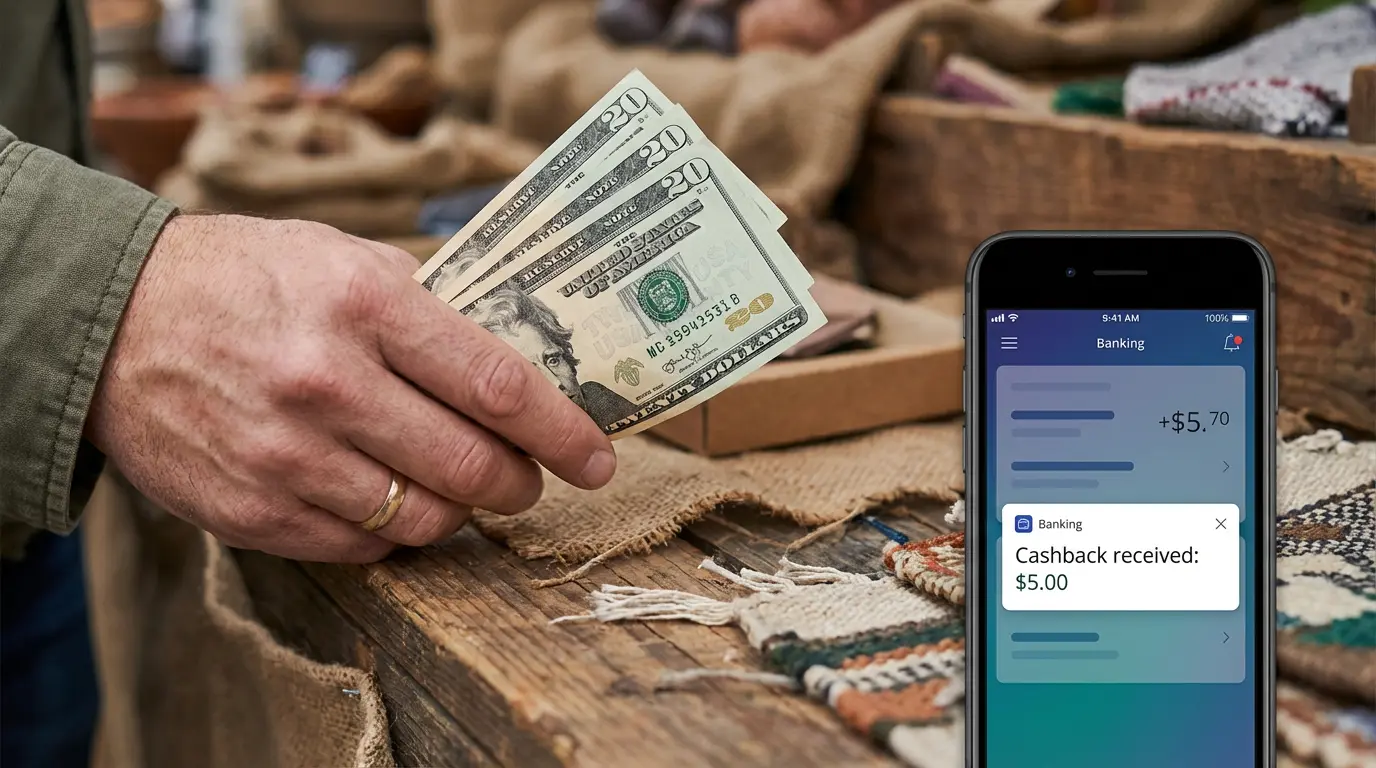
Cash is still the king of the market, but digital is catching up fast in the US. I always carry a mix. Cash gives you a huge advantage when you are bargaining. There is something very persuasive about holding out a ten-dollar bill. Vendors also love cash because they don't have to pay credit card fees. Often, if you ask "Is there a cash price?", they will knock off the sales tax or a few extra dollars just to keep it simple.
Embracing Modern Payments
But don't ignore digital entirely. Many modern market vendors use tools like Square or Venmo. Sometimes, your credit card might have a "cashback" offer for local small businesses. I always check my banking app for those "local offers" before I start shopping. Even though cash is king for haggling, I still look for digital deals like card-linked offers or cashback that might apply to local boutiques.
Practical Payment Tips
Make sure to carry exact change so I'm not trying to buy a two-dollar item with a fifty-dollar bill. For safety, I always keep my cash tucked in a front pocket or a secure cross-body bag while I'm moving through crowds. Digital payments can be great for record-keeping, but for the absolute lowest price, having green in your hand is the ultimate bargaining tool.
How to Compare Street Market Prices With Online Stores
It’s okay to stand in a market and look at your phone. In fact, I highly recommend it. I do this all the time. If I find a cool-looking cast iron pan at a flea market, I’ll quickly check the price of a new Lodge pan online. If the market vendor wants $40 for a rusty one and I can get a brand new one for $30 with a promo code and free shipping, the choice is easy.
Intentional Comparison
This is where being an "intentional" shopper comes in. You aren't just buying things because they are there; you are buying them because they offer the best value. I keep a few tabs open on my phone for my favorite coupon sites. Before I pull the trigger on a big market purchase, I do a 30-second search to see if there’s a better deal waiting for me online.
Value Beyond the Price Tag
I use my phone for instant comparisons by scanning barcodes or searching for similar items. It is important to factor in shipping because sometimes a market item is five dollars more, but you still save ten dollars by avoiding delivery fees. Remember that warranty matters for things like kitchen gear, so online might be better for the return policy. However, if an item has unique value and you can't find it anywhere else, the price is really what you make of it.
Budget Planning for Market Shopping
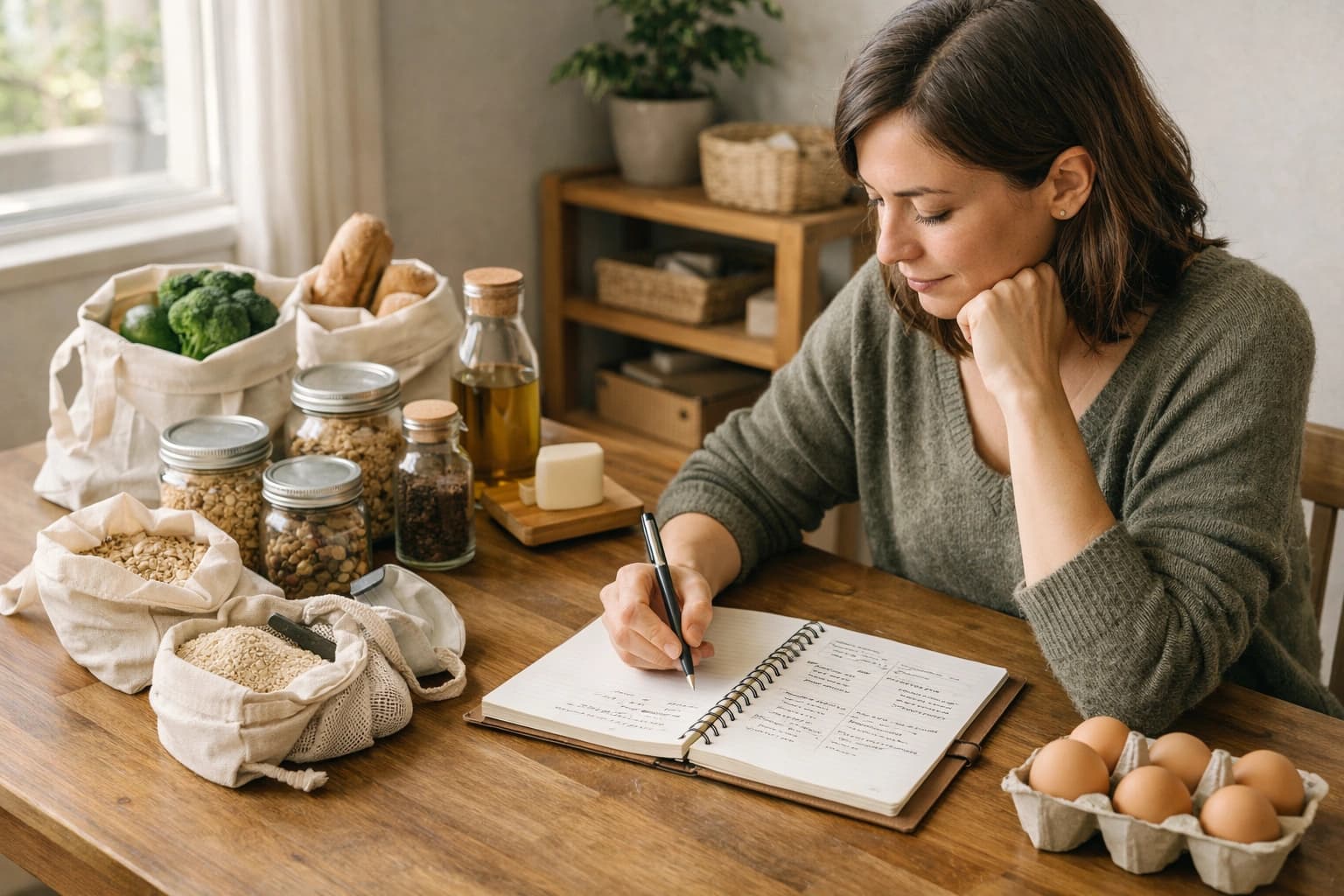
The easiest way to overspend is to go to a market "just to look." I’ve learned to set a hard limit. I’ll take $50 or $100 in cash and tell myself, "When this is gone, I’m done." It turns shopping into a fun game. I have to decide: do I want this vintage vase, or do I want to save that money for some fresh bread and cheese? It forces me to prioritize what I actually love.
Essential Lists and Tracking
I also keep a list on my phone of things I actually need for my home. Having a list keeps me from buying "junk" just because it’s cheap. I treat the market like a treasure hunt with very specific rules. It keeps my house from getting cluttered and my bank account from getting drained. I love writing down how much I saved compared to retail prices.
Avoiding the Spend Trap
Setting a cash limit is the best way to ensure that when the money is gone, the shopping ends. I always stick to my "needs" list so I shop for essentials before I look at things I simply want. If I find something I love that isn't on the list, I use a ten-minute impulse buffer and walk around the market before I decide to buy it. This small pause has saved me hundreds of dollars over the years.
Street Market Shopping for Home, Food, and Gifts
Some of my favorite things in my house came from a street market, but they are mixed with smart online buys. For home decor, I love finding one-of-a-kind pieces like old wooden crates or hand-woven baskets. They add a "soul" to a room that you can’t get from a catalog. For gifts, markets are the best. A jar of local honey and a handmade tea towel feel much more special than a generic gift card.
The "High-Low" Strategy
But I don't try to buy everything at the market. I’ll get the unique decor at the flea market, but I’ll buy the basic shelving or the rug pad from a big retailer using a coupon. By mixing "market finds" with "deal-found basics," my home looks expensive and curated, but I actually spent very little. It’s all about that high-low mix that balances character with cost-effectiveness.
Market Essentials
I think gifts with soul, like local items, always feel more personal than something from a big-box store. Embracing seasonal eating will make your grocery bill drop significantly if you eat what the market grows. I also focus on home accents at markets because those small details make a huge impact on your living space without requiring a massive financial investment.
How to Avoid Impulse Buying While Bargain Hunting
The word "bargain" is a dangerous one. Just because something is cheap doesn't mean you should buy it. I used to be an impulse-buying pro. I’d see a $5 shirt and think, "It’s only $5!" But after five of those, I’ve spent $25 on shirts I’ll never wear. Now, I ask myself a simple question: "Would I buy this if it cost the full retail price?" If the answer is no, I usually put it back.
The Tools of Mindfulness
I also try to remember that my "deal tools" are always there for me. If I don't buy that item today, I can probably find something similar online later with a discount code. Knowing that there are always more deals out there helps me let go of that "fear of missing out." It makes shopping feel like a choice, not a rush.
Staying Disciplined
I live by the ten-minute rule; if I really want something, I walk the rest of the market first to see if I still care about it later. I always put items to the retail test to see if I would pay full price for them. Practicing intentionality helps me decide if an item has a specific purpose or place in my home. Ultimately, I remember that a "deal" that just sits in a closet and creates clutter is actually a waste of money.
Conclusion
Shopping at a street market should be a joy, not a source of stress. It’s a chance to step away from the screen, talk to real people, and find things that have a story. By knowing how the prices work, timing your visit, and not being afraid to ask for a deal, you can live that "luxury" lifestyle on a very real budget.
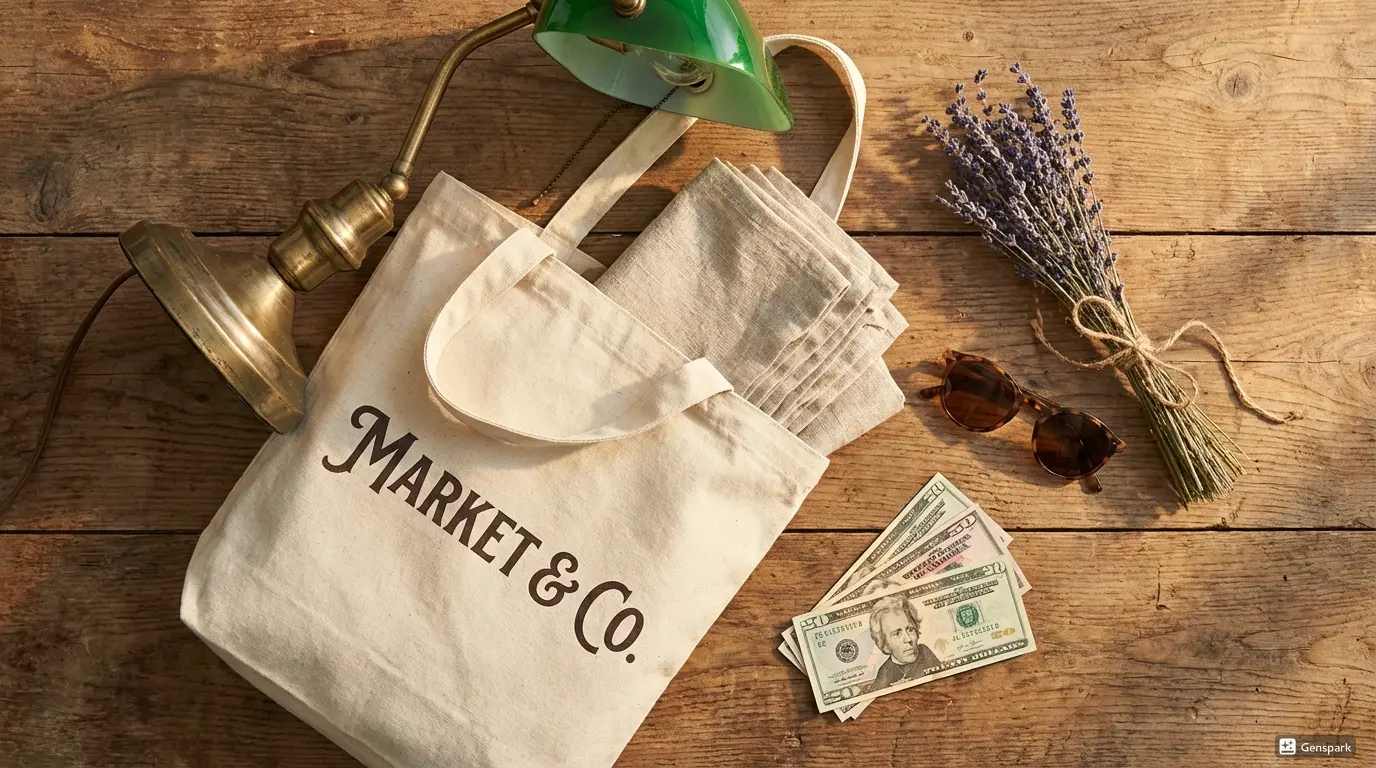
And remember, you don't have to choose between the old way and the new way. You can love the charm of a dusty market stall and still be a pro at using promo codes and price-comparison apps. When you combine the two, you aren't just saving money—you’re shopping with intention. So, next time you see a market popping up in your neighborhood, grab your reusable bag, a few twenty-dollar bills, and go have some fun. You’ve got the tools now!
FAQs
Are street markets cheaper than stores?
Sometimes yes. It depends on timing, item, and price checks.
How much should you bargain at a street market?
About 20 to 40% below the first price works well.
What’s the best way to avoid overpaying at markets?
Compare stalls and check online prices.
Are street markets worth it for budget shoppers?
Yes. They mix value, culture, and comfort.