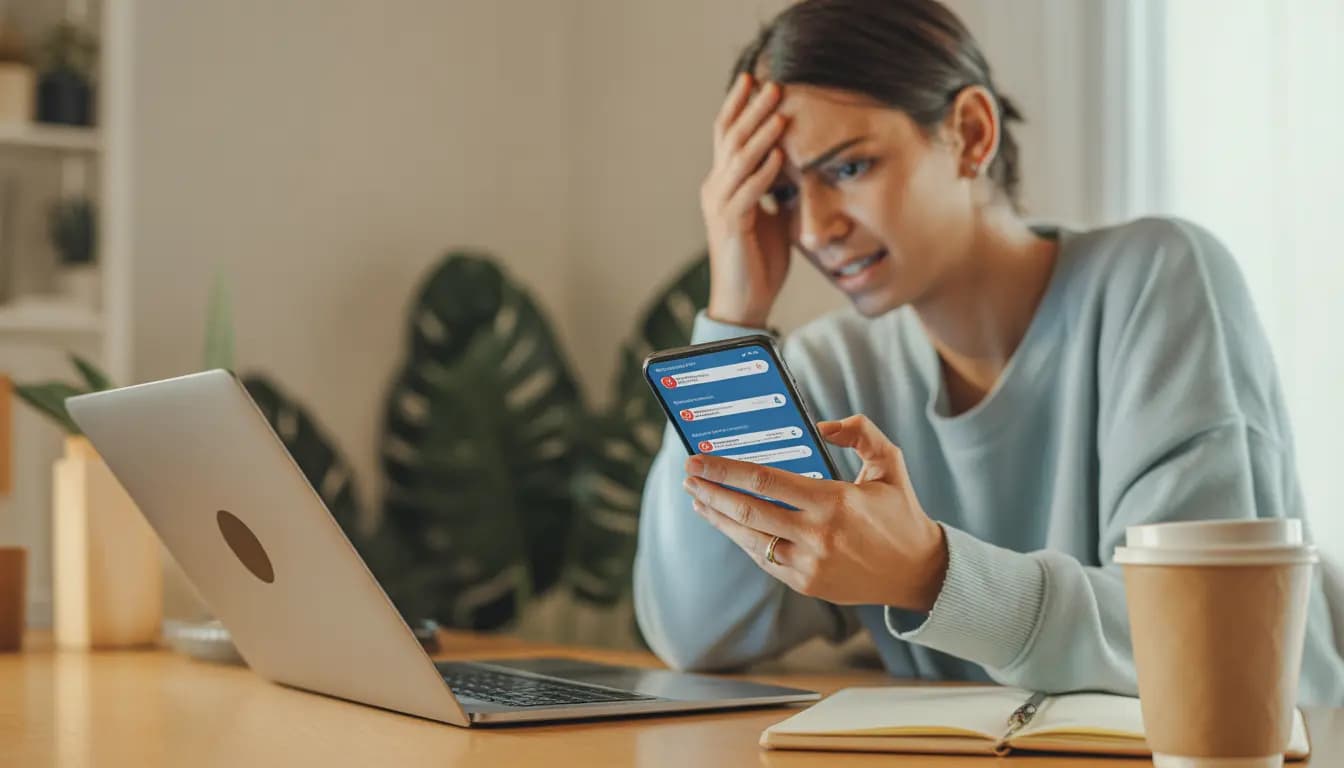
You open up your virtual wallet to flush out. The balance says $22.40. You enter the transfer button, verify, and after a few seconds you can see that the balance has been changed to $21.90. Nothing of a dramatic nature—fifty cents lost. Or maybe it is a group dinner, you pay the bill, and when your friends repay you via an application, a hidden 3% charge will be taken away from your portion. They are micro-frustrations, the ones that do not spoil your day but make you strangely irritated.
By the year 2026, we have an almost cashless society. Digital wallets have been embedded into grocery shopping, rent payments, e-commerce, and travel provisions. They save time and save friction—but have also brought with them a new type of cost: the convenience tax. These barely noticeable little fees drain up what might have been coffee money, weekend outings, or tranquility.
This is not a guide that is focused on worrying about pennies or foregoing modern tools. It is about knowing the costs of using a digital wallet in order to reclaim financial margin—the breathing room that allows you to spend on things that actually bring comfort and joy rather than spending on the processing of transactions.

Why Patience is a Virtuous Budgeting Habit
P2P payment applications are speedy. The freedom to transfer funds immediately is a liberating experience, and it has been more so when it comes to the payment of bills or even social demands. However, the price of that speed is typically high: an instant fee of 1.5% to 2%.
The Psychology of Speed
Instant transfers appeal to the psychological need to have an immediate resolution. We want the task done now. The charge is little now—here, perhaps a dollar and a half; at the other place, a dollar and two. Over time, though, it adds up. Two dollars a week silently amounts to over one hundred dollars a year. It is not a mere fee, but a weekend vacation, a month of on-demand entertainment, or a couple of carefree grocery shopping sprees.
The Power of Standard Transfers
Normal transfers that require a period of one to three business days are usually free. They need a certain degree of patience, yet they also introduce a certain compartment that enables conscious spending. When money does not move instantly, you are less likely to move it around on the spur of the moment.
One of the most useful changes of lifestyle is to consider your digital wallet as a weekly holding tank. Keep the money there all week, and carry it to your bank on a fixed day—on Sunday night, say. A single free transfer rather than five immediate ones could do away with an entire group of charges. Popular wallets have now been integrated with some digital-first banks and savings platforms to provide quicker transfers with no fees. It is worth checking to see whether you have these integrations in your current accounts before defaulting to the paid speed.
Credit Cards vs. Debit Inside Your Wallet
The charge of around a 3 percent surcharge, which comes out when you charge peer-to-peer payments using a credit card as a source of money, is one of the most bewildering fees of the digital wallet. This is technicality but not very difficult: credit card networks impose interchange charges and the apps make the user pay that.
The "Double Dip" Danger
The actual issue is the so-called "double dip." Various cashback credit cards have 1 to 2 percent cashback. You are paying a 3 percent app fee to get 1.5 percent rewards, which means that you are losing money while thinking that you are making money.
It is possible to have times when such a fee is worth it. When you are attempting to meet a minimum spending requirement or credit card sign-up bonus, the numbers can play your way. In any other situation, however, debit cards tend to be the wiser application in remitting cash to friends, flatmates, or family.
Setting Up Your Wallet on Purpose
One of my habits is to set up my wallet on purpose. Use your debit card or bank account as the default in peer payment and use your credit card in merchant tap-to-pay purchases where the processing charge is not charged to you, but rather to the merchant.
This is also where the digital wallets can just silently work in your favor. There are numerous applications with card-linked promotions or boosts in particular stores. Even a 5 per cent to 10 per cent discount at a coffee shop or grocery store can easily offset any insignificant charges at other places, unless you are paying extra merely to transfer money.
CBDCs, Travel Wallets and FX Markups
Borderless shopping and sending money has never been easier, but it is also where some of the most in-the-dark digital wallet charges lurk. Travel wallets, stablecoins, and even a primitive version of Central Bank Digital Currencies (CBDCs) have become part of the mainstream in 2026. Although effectiveness is assured by these tools, most of them use foreign exchange markups instead of apparent costs.
Managing the Currency Spread
A wallet can give you a poorer rate of exchange rather than charge you directly. It is that small "spread" where they earn their money, and you are likely to overlook it unless you shop around. This is important to an international shopper or traveler. Purchasing items in foreign stores, funding designers in foreign countries, or remitting money home can be very expensive without much notice.
You can also keep in check by carrying several currencies in wallets where you can store a variety of currencies. You can lock in a rate when it suits so that your budget is not subject to a sudden turn. It is also clever to consider digital-first banks which integrate with Apple Pay or Google Pay and feature the message of "no foreign transaction fees." When combined with seasonal sales or shopping abroad offers, such accounts could make the actual price of shopping around the world much lower.

The Invisible Leak: Inactivity Fees and Subscription Creep
Not every digital wallet charge is reflected in active usage. Some occur when you cease to pay attention. Loyalty fees or inactivity fees can apply to accounts that have not been accessed in several months, gradually eating away at lost balances.
Conducting an Online Spring Cleaning
Then there is subscription creep. It is fantastic that digital wallets enable recurring payments to be frictionless—until you forget that there are bills accumulating in the app for services you barely use. These are the zombie costs of contemporary life: tiny, consistent, and unexpectedly disheartening.
Once every quarter, an online spring cleaning would make a difference. Check your wallets every couple of months. When you have not used one within 90 days, save the balance and make a withdrawal. Fewer tools translate to fewer leakages of money. A large number of wallets also have a lock card feature or pause feature. A temporary switch can show which subscriptions are trying to charge you, making it easier to find and cancel the cost of items that are no longer relevant to your lifestyle.
Safety as a Savings Strategy: Breaking Bank Secrets
The costliest of all hidden fees is fraud. Illegal transfers do not only cost money; they cost time, energy, and even peace of mind. In 2026, phishing and fake wallet updates are more believable, as they are often done with AI-driven systems.
Cost-Effective Security Features
Security features are not only protective but also cost-effective. Two-factor authentication, transaction notifications, and biometric logins are a few extra steps, but these steps pay back in the long term.
This can be achieved through putting thoughtful notifications in place. You can be alerted to a low balance (e.g., $20) without having to check it every minute. You should also have a high-transaction alert (such as $100) to be automatically alerted in case of unusual activity. Such an arrangement enables you to spend mindfully and not worry about peeking into your wallet. When your money is safe, you will not spend money in haste or panic. In that regard, security is a component of a wellness-related financial practice.
The Cheat Sheet of The Smart Shopper: What Wallet to Choose
There is such a plethora of possibilities—Apple Pay, Google Pay, PayPal, Venmo, Cash App—so it is difficult not to pursue the "best" one. As a matter of fact, the perfect wallet is the one that goes unnoticed in your life.
Focus on Habit Alignment
There are those that favor quick transfers at a fee. Other ones have good ATM networks or cashback promos. Stop focusing on the optimization of all features; focus on alignment. What wallet suits your habits? Which of them allows you to move, spend, and save money with minimum mental effort?
Even the most basic examination, such as the comparison of standard vs. instant transfer rates, access to the ATM, and the offers provided by merchants, may help you understand what wallet is necessary to be chosen first. You don’t need all of them. Fewer, better-known tools tend to result in fewer charges and less stress.

Conclusion
Modern life is driven by digital wallets. Just like any other engine, they require tuning to perform. The convenience tax is avoided by the use of standard transfers, preference for debit-linked payments to fellow transactors, and by remaining conscious of foreign exchange markups and inactivity charges.
Carefulness regarding fees is not equal to being cheap. It is being a mindful consumer—a person who retains his/her hard-earned money to stay comfortable, have experiences, and fund values that count. Once you recognize the digital wallet price system, you will avoid paying fees on friction, and instead, you will be paying for life.
Tap that terminal, go on, sure. You have finally beaten the buried expenses.
FAQs
Is there a fee to use Apple Pay in a grocery store?
No, not normally—it is normally the merchant who pays the processing fee, not the shopper.
Why does it charge me three percent to transfer money to my roommate through a credit card?
In peer payments, the cost of credit card processing is often transferred from the recipient to the sender.
Where am I going to get an ATM that does not charge me for my digital wallet card?
Use the in-app ATM locator to identify fee-free partner networks.
In 2026, will digital wallets become safer than physical cards?
Yes, in most instances, due to tokenization, biometrics, and real-time alerts.