We have all experienced the same thing, when we stand at the trash can over the kitchen sink, and may be reluctantly adding a non-stick frying pan that is not yet eighteen months old. Perhaps the Teflon has begun to peel off in your morning eggs, or perhaps the bottom has become distorted to such an extent that it spins like a top on your glass-top stove. It is not merely a food-related inconvenience, it is a silent, repetitive suck on your bank account and a tax on the planet—this "Kitchen Graveyard" cycle.
A classic illustration of the “boots theory” of socioeconomic unfairness is the hidden cost of cheap cookware, in which by spending $30 a year on a gimmicky pan you will spend hundreds of dollars in a ten-year span only to have a piece of trash at the expiration date. But there is a better way. It is not about being a snob or having a kitchen that resembles a professional showroom, but rather a question of intentionality to go to a Buy It For Life (BIFL) kitchen. The value of heirloom cookware is found in their combination of durability, health, and long-term monetary freedom.
In this manual, we will carry out the complete audit of your cupboards. We will examine why some materials work, which in fact improve with age, and, most importantly, how you can create a world-class kitchen with a small budget through smart shopping techniques and some elbow grease of restoration.
Establishing the Forever Standard: Heirloom vs. Disposable
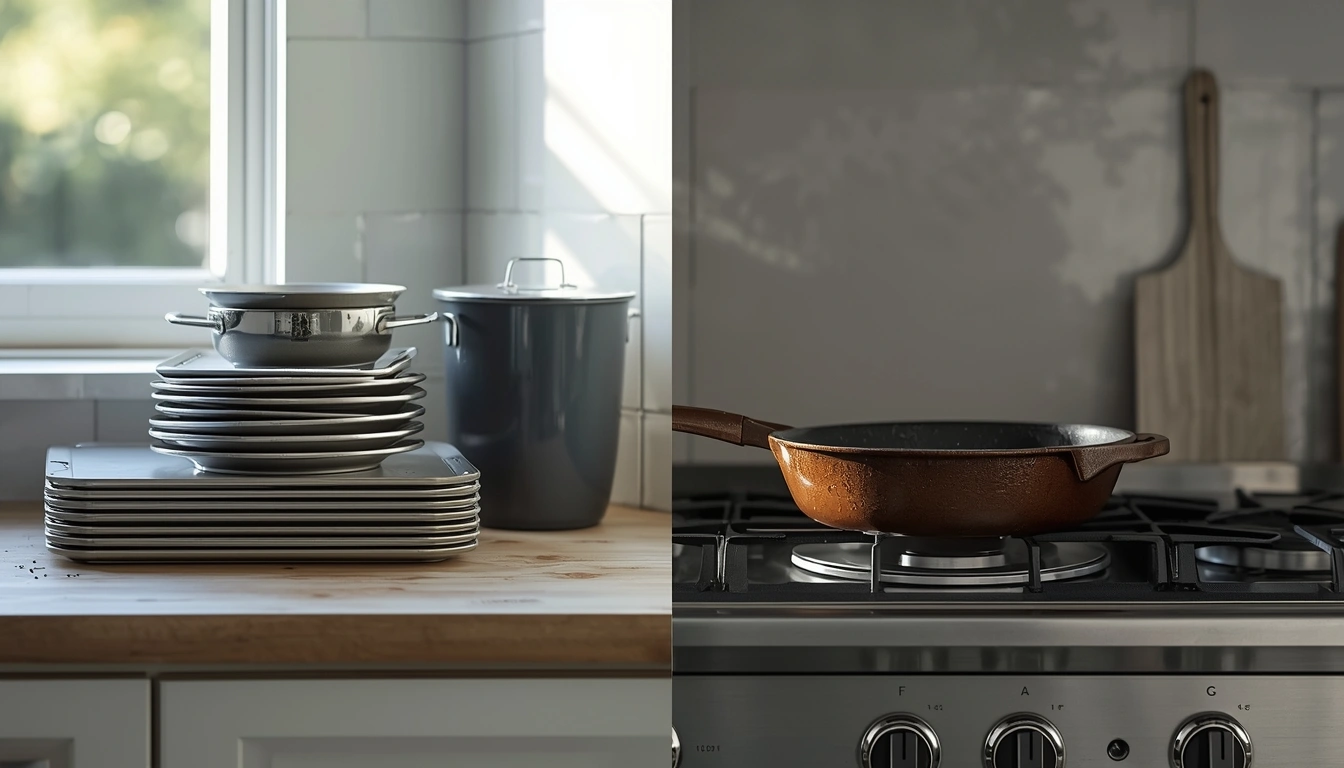
When we refer to heirloom quality, we are not necessarily referring to a $500 hand-made copper pot which sells at a specialty store in Paris. The Triple-D Check of Durability, Degradation-resistance, and Design defines an heirloom in the world of smart shopping.
The Durability and Degradation Test
First, consider durability. Will this pan be able to survive dropping? Will it be able to use a metal spatula or high-heat sear and not lose its integrity? Second is degradation-resistance. This is the point where the majority of the present-day bargain pans falter. Any of the pans which depend on a coating of a chemical, be it the old-fashioned Teflon or the new-fangled "ceramic" spray, has an inbuilt expiratory date. When the pan becomes chipped or loses its slickness, it is essentially dead. An heirloom, on the other hand, does not have a coating to wear off; the material itself is the cooking surface.
Design and Stewardship
Finally, look at design. Is the handle riveted in or is it screwed on and bound to wiggle out? Moving to this standard is one of the pillars of conscious consumption. When you choose to have a minimalist kitchen which only contains functional pieces with a story behind them, you cease to be a consumer of kitchenware and become a steward of it.
Smart Shopping Hack: The Warranty Audit
A Warranty Audit should be carried out before acquiring any new item. Numerous premium brands have lifetime guarantees against manufacturer flaws. Should a costly pot have a faulty rivet, then you could be entitled to a free replacement instead of having to purchase a new one.
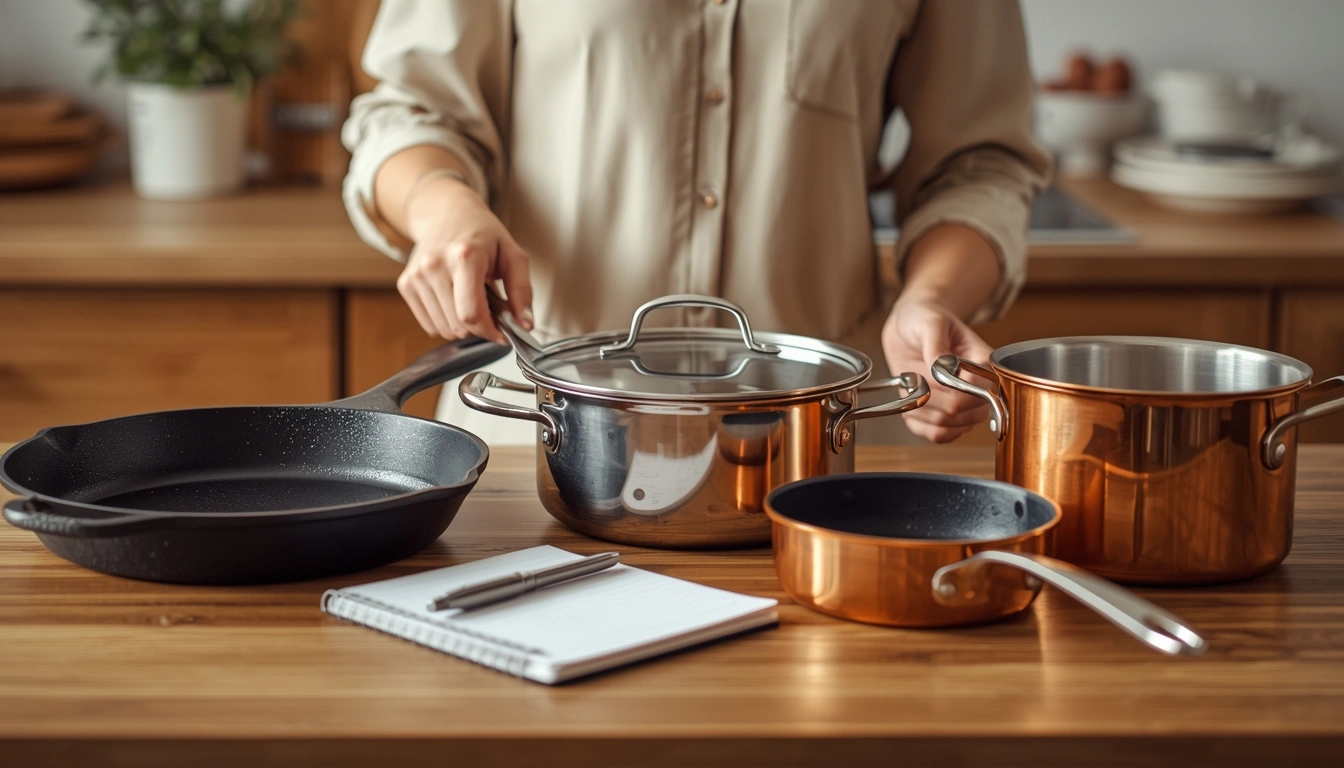
The Metallurgy of Savings: Comparison of Materials
In order to create a long-lasting kitchen, you need to be familiar with the materials. Not every metal is made equal in terms of performance and lifespan.
Cast Iron: The Ultimate Low-End Entry-Point
Cast iron is your new best friend in case you are starting your forever trip on an extremely meager budget. It is, practically, unbreakable and, unlike practically any product in the world, it gets better the more you use it. An experienced cast iron skillet can be used to cook any type of food from steaks to cornbread because it develops a natural, non-toxic layer of non-stickiness. There are also good heritage-brand skillets that can be purchased below 40 bucks and that will be inherited by the grandchildren.
Stainless Steel: The Jack of all Trades
In acidic (such as tomato sauce) or delicate deglazing, stainless steel is everything you need. Nevertheless, seek Multi-Clad construction. This implies that layers of aluminum or copper are placed between layers of steel. Although disk-bottom pans (with the weighty bottom being a plate glued to the pan base) are less expensive, they are subject to hot spots and are likely to separate over time. 3-ply or 5-ply cladding gives the pan a uniform temperature distribution and a long life.
Carbon Steel: The Secret of the Professional
Carbon steel is a combination of cast iron and stainless steel. It is lighter and more reactive compared to cast iron and it gains the same fantastic seasoning after some time. It is the everlasting substitute for the conventional non-stick fry pan that is preferred by restaurant chefs in the entire world.
Copper: Performance and High Maintenance
Copper is the gold standard in heat control and is costly; sales and polishing of the copper are necessary as well as the re-tinning of the copper. Copper-core stainless steel is generally a wiser option to be a middle-ground choice that provides the performance without the high-maintenance lifestyle to the less financially endowed.
The Math of Mindful Spending
Is it worth spending the money on high-end cookware? Let’s look at the "10-Year Math." Consider a scenario where you purchase a non-stick pan that is pro-style and costs $40 in a big-box store. The coating wears out so that every two years, you have to change it. You have used up 200 dollars in a period of over ten years and by the expiry of the decade you would be left with a pan that would be heading to the landfill.
Instead, spending $160 on a high-end, American-produced stainless steel pan is today possible. That pan is in its prime at the expiry of ten years. You have made a saving of 40 dollars in cash, but the asset still in your kitchen, amounting to $160, is what has been made as a profit.
Energy Efficiency and Heat Retention
Moreover, heirloom pieces can make the home energy efficient. Cast iron and heavy-gauge steel are the materials of high quality that are much better at heat-retaining than thin aluminum. It will allow you to cook at reduced temperatures much more frequently and cut power off earlier, leaving some leftover heat to do the work—a minor though regular victory over your energy bills.
Strategic Savings: The Open Stock Strategy
When you find the initial investment in a permanently available item overwhelming, the Open Stock strategy can be used. Do not get the 14-piece sets which contain five pans that you will never use. Rather, purchase a single quality piece after every six months. With the strategy of concentrating your budget on an open-stock individual item, it is usually possible to find deep discounts on a particular size that the retailers are overstocked with.
The Restoration Potential: Saving Trash out of the Bin
Finding heirloom cookware in the trash is one of the most rewarding methods of adding value to the item. Materials such as cast iron and stainless steel are very durable and therefore, they are often discarded by individuals who are not aware that they can be salvaged.
Finding Diamonds in the Rough
Garage sales, estate sales, and thrift stores are gold mines for BIFL kitchenware. An old, rusty cast iron pan would appear as garbage, yet it can be reanimated just by immersing it in a vinegar bath and undergoing another round of the seasoning process in the oven. Likewise, it is often possible to clean up scorched stainless steel to a mirror finish using some Bar Keepers Friend and a non-scratch pad.
Recognizing Dead Cookware
Though there is much to be saved, part of the audit is knowing when to say goodbye. When there is a pan whose bottom is not straight (not flat), it will never cook evenly and may be hazardous to use on a glass-cooker. In the event that a pot of enameled cast iron bears deep chips or cracks on the inside cooking surface, then it cannot be safely used any longer, since glass shards may find their way into your food. These products ought to be recycled in the best way.
Quality at a Budget Price
You do not have to be charged retail to get the best gear. There are a number of hacks Smart Shoppers employ to get high-end brands at deep-discount prices.
Factory Seconds and Holiday Sales
Sale of Factory Seconds: Brands such as All-Clad and Le Creuset have sales of their Factory Seconds several times a year. These products contain small cosmetic flaws such as a small scratch on the handle or a slightly uneven paint finish on the exterior, which have no impact on cooking. They go on sale frequently by 50-70%.
The “Holiday Lag” Strategy: Retailers tend to over-sell high-end sets towards the December holidays. Towards the end of January and early February, these sets are frequently reduced for clearance.
Registry Completion and Promo Codes
Registry Completion: Many stores are willing to give a discount on a registry (typically 15-20%) on goods not yet bought for weddings or housewarmings. Although you may not be getting married, you should be on the lookout for friends who can be open to allowing you to use their discount on a "forever pot."
Promotional Codes: It is important to search for newsletter sign-up promo codes before buying a product. The majority of large culinary stores have 10-15% first-time shopper discounts when you register for their mailing list. Add a cashback browser add-on and in many cases, it can be possible to stack up enough of these savings to bring a premium pan down to the same price as a disposable one.
Conclusion
The Forever Cookware Audit is not about what you possess on your shelves but a change of attitude. It is a shift away to sustainability, improved health with non-toxic materials, and the economic freedom that can be gained by leaving the disposable consumer repetitive cycle.
You need not have a complete set at all now. Even the most purposeful kitchens are constructed gradually. Begin with a single forever item, such as a cast iron or solid stainless steel skillet, and add to it with your available means. You are not only spending money on buying a pot, but a tool that will feed your family over the next several decades by concentrating on quality and applying intelligent shopping techniques.
FAQ
How do I know whether I can make a pan that will last forever just by looking at it?
Weight is a typical indicator, though pay attention to the joints. Seek heavy-duty rivets which join the handle to the pan instead of screws. In addition, make sure that the lid and handle do not contain any plastic components, which will reduce the oven safety and durability of the pan.
Are there really better brands or was I just paying for a name?
You may occasionally be spending money on the brand, but often, it is the cladding. A low-end stainless is a plain piece of steel under one layer with a heavy plate on the bottom. A costly one is lined with heat-conductive metal through to its sides. This results in improved food and reduced burnt meals.
How do I begin my collection of the best pieces?
A 10-inch cast iron skillet. It is the cheapest everlasting object that one can purchase and that can equally be utilized in frying eggs, baking pies, and searing steaks.
Is it safe to purchase used cookware in thrift stores?
Generally, yes. For stainless steel and cast iron, all one needs is a deep clean. Nevertheless, in the case of very old vintage (before 1970s), some individuals would rather use a fast lead-test kit simply as a precaution, though it is not very common to find problems in conventional cookware.