I always thought going green meant spending more money. Every trip to the store proved it—sleek eco cleaners, trendy bamboo tools, and price tags that made me wince. So I kept buying the same paper towels, plastic wrap, and throwaway items because they felt cheaper in the moment.
Then I took a hard look at my bank account. Those so-called “affordable” products were quietly eating away at my budget. Paper towels, plastic bags,
foil—it was a never-ending cycle of buying and tossing. I wasn’t saving money at all. I was throwing it away, week after week.
That’s when I decided to test something different. I wanted to see if spending a little more upfront could actually save me money in the long run. And it did. I found that smarter, reusable products didn’t just help the planet—they paid for themselves. If you’re tired of paying again and again for things you only use once, this is how I changed the game.
The Math of Sustainability: Why Reusables are a Financial Strategy
Switching to reusables isn't just about the planet; it’s about plugging the leaks in your monthly budget.
Think of disposable items like a subscription you never signed up for. You buy them, use them for ten seconds, and throw them away. Then you have to go back to the store and buy them again. It’s a loop that keeps you spending.
When you buy a reusable kitchen product, you shift your mindset. You stop looking at the "cheapest price today" and start looking at the "cost over 1,000 uses. " It’s an upfront investment that pays dividends. Plus, your kitchen feels less cluttered without bulky packs of paper taking up space.
Pro Tip: I never pay full price for my "entry fee" into reusables. I use price-tracking tools to see when a brand’s starter kit goes on sale. Stacking a first-time buyer promo code with a cashback app can move your break-even date up by weeks.
The "Big Three" High-Impact Swaps
These three changes were the heavy hitters for my budget and took almost no effort to start.
From Paper Towels to "Un-paper" Cloths
I used to go through two rolls of paper towels a week. In the US, a decent pack can cost $15 to $20. Over six months, I was spending nearly $150 just to wipe up spills. I bought a 24-pack of cotton flannel cloths for $25. They fit on my old paper towel holder and go right into the wash. I broke even in less than two months.
From Plastic Wrap to Beeswax Wraps & Silicone Lids
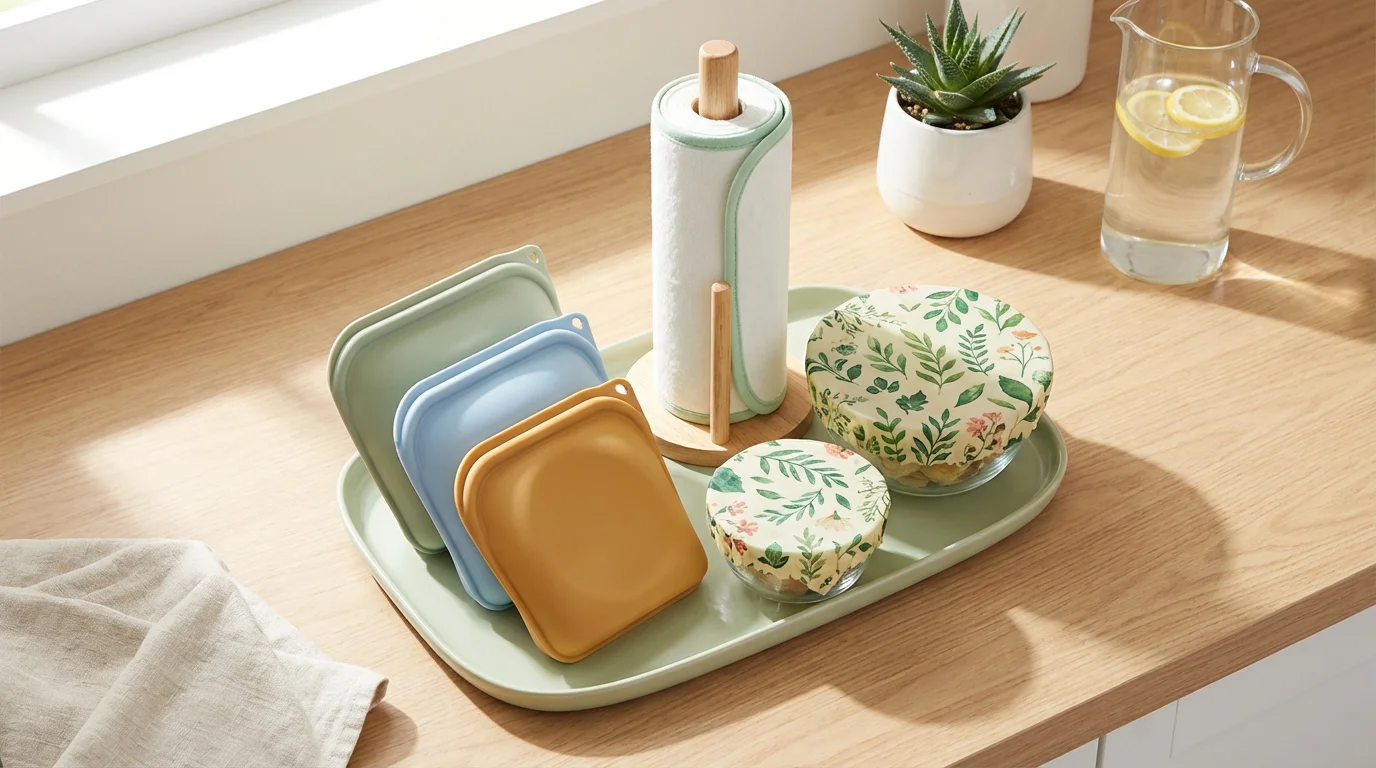
Plastic wrap is frustrating. It tangles, it doesn't stick to half my bowls, and I hate the waste. I switched to a set of stretchy silicone lids and a few beeswax wraps. They keep my leftovers fresher because they actually create a seal.
- Beeswax wraps: Great for bread and cheese.
- Silicone lids: Perfect for bowls of soup or cut fruit.
From Zip Bags to Silicone Storage
This was my biggest win. I’m a big fan of meal prepping on Sundays. I used to use dozens of plastic baggies every week. Now, I have ten high-quality silicone bags. They go in the freezer, the microwave, and the dishwasher. I don't miss buying the giant boxes of plastic bags at the warehouse club one bit.
Hydration & Morning Rituals: Hidden Kitchen Savings
Small daily habits often hide the biggest expenses, especially when it comes to how we drink our coffee and water.
If you use a pod-based coffee machine, you know how expensive those little plastic cups are. I switched to a stainless steel mesh filter that I can fill with my own coffee. Not only is the coffee better, but I'm saving about $0.50 every single morning. That’s $15 a month back in my pocket.
Then there’s the water situation. I see people in my neighborhood hauling giant 24-packs of plastic water bottles from their cars every week. It’s a lot of heavy lifting and a lot of money.
I bought a high-quality water filter pitcher. It fits in my fridge door and the filters last for months. If you like bubbles, look into a sparkling water maker. I found mine on sale during a holiday weekend, and it paid for itself in three months compared to buying cans of seltzer.

The 6-Month Cost Comparison
Seeing the numbers on paper made me realize just how much I was overspending on "trash."
| Item | Disposable Cost (6 Months) | Reusable Cost (One-Time) | Savings After 6 Months |
| Paper Towels | $120.00 | $25.00 | $95.00 |
| Plastic Zip Bags | $45.00 | $35.00 | $10.00 |
| Coffee Pods/Filters | $90.00 | $15.00 | $75.00 |
| Plastic Wrap | $18.00 | $20.00 | -$2.00 (Breaks even soon!) |
As you can see, most of these items pay for themselves incredibly fast. By month seven, every time you wipe a counter or pack a lunch, you are doing it for free.
Savings Strategy: If you find a manufacturer promo code or a site-wide sale at an eco-store, use it to grab your "Big Three" all at once. It slashes your upfront cost and makes that "break-even" day come much faster.
Renters & Small Kitchens: Strategic Zero-Waste
You don't need a huge pantry or a permanent compost system to make these swaps work in a small space.
When I lived in a tiny apartment, I was worried reusables would take up too much room. I looked for collapsible silicone items. They fold flat, so they don't take up any drawer space. It's a lifesaver when you only have two cabinets.
If you share a kitchen with roommates, things can get tricky. I labeled my reusables with a permanent marker on the bottom. I also made sure my roommates knew they could use them, as long as they didn't throw them away! It actually helped us all save money as a group.
The best part for renters is that these aren't permanent fixtures. When you move, your savings tools come with you. You aren't investing in the landlord's property; you're investing in your own lifestyle.
How to Source Quality Reusables for Less
The goal is to save money, so you shouldn't go broke trying to buy "green" products.
I follow the "Slow Swap" rule. I never throw out a perfectly good roll of foil just to buy a reusable lid. I wait until I have one or two sheets left, then I start looking for a deal on the replacement. This keeps my cash flow steady.
Watch the sales cycles. In the US, Earth Day in April is a massive time for discounts. Many eco-brands offer their best prices of the year then—sometimes even better than Black Friday.
Always choose quality over how a product looks. A glass jar from a pasta sauce you already bought is just as good as a $15 designer jar. Don't fall for "greenwashing," where a product is expensive just because it has a pretty bamboo lid. Focus on stainless steel, glass, and LFGB-certified silicone.
Common Pitfalls: When Sustainability Costs Too Much
It is very easy to get excited and overspend on things you don't actually need.
I once bought a 50-pack of reusable produce bags because they were on clearance. Guess what? I only ever use four of them at a time. The rest just sit in my trunk. I wasted money by trying to be "too" prepared.
Another mistake is not taking care of what you buy. If you put a beeswax wrap in a hot dishwasher, it's ruined. If you don't dry your silicone bags properly, they can get a weird smell. Read the care labels. These items are meant to last for years, but only if you treat them right.
Don't buy things just because they look "Instagrammable. "If your kitchen is a mix of mismatched jars and old towels, that's fine. A kitchen that is paid for is much more comfortable than one that looks perfect but costs a fortune.
Creating a Low-Waste Kitchen on a $0 Budget
The best reusable product is the one you already have in your house.
Before you go out and buy a "zero-waste kit," look in your recycling bin. Glass jars from pickles or jam are perfect for storing leftovers or bulk dry goods like rice and beans. I use them for everything. They are non-toxic and free, and they look pretty cool on a shelf.
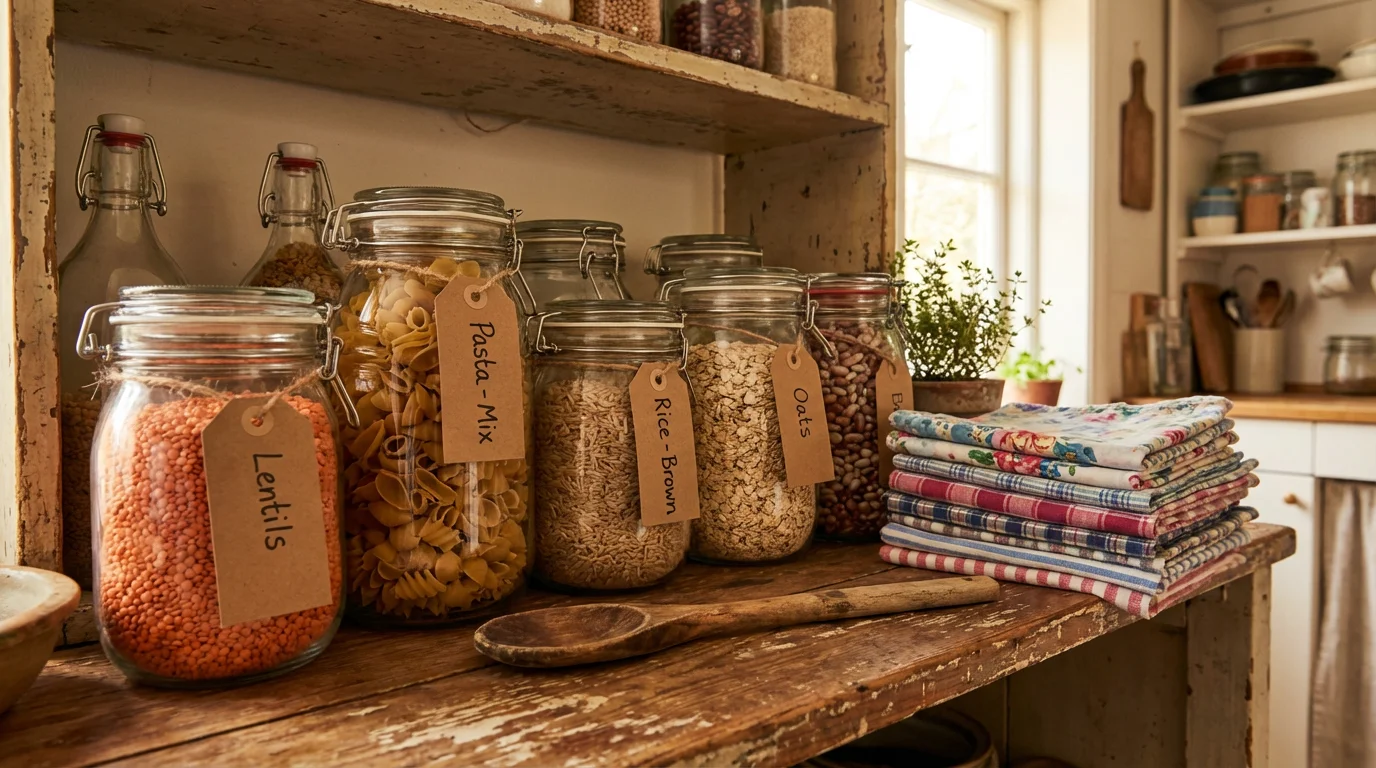
You can also turn old, stained T-shirts or towels into cleaning rags. I cut mine into squares and use them for the "dirty" jobs where I don't want to use my nice paper towels. It's a great way to save your "good" reusables for kitchen use.
When you do need to buy something, check the bulk bins at your local grocery store. Use your own jars or bags. Often, the "per ounce" price is much lower because you aren't paying for the fancy box or the marketing.
Conclusion
Switching to a zero-waste kitchen isn't about being perfect. It’s about being intentional. When I stopped buying things just to throw them away, I noticed something amazing. My kitchen felt calmer, my trash was lighter, and my bank account started to grow.
Small changes really do add up. You don't have to do it all today. Start with the one thing that annoys you the most—maybe it's the cost of paper towels or the struggle with plastic wrap. Find a deal, grab a reusable version, and start your own 6-month countdown to savings.
A fulfilling lifestyle is built on these smart, quiet choices. You deserve a home that works for you, not one that drains your wallet every time you need to clean up a spill.
FAQs
Are reusable kitchen products really worth the upfront cost?
Yes, when they replace items you use every day.
How long does it take for reusable swaps to pay off?
Most break even within a few months.
What’s the best place to start?
Paper towel replacements and food storage.
How do I avoid low-quality eco products?
Check materials, durability, and real reviews.