A few months earlier, I was browsing through a pile of old receipts, those that pile up in the bottom of the so-called miscellaneous drawer, and I realized that there was a trend that had nothing to do with high-end products. It was not the fixes on the car, the sporadic technological update that caught my attention; it was the metrical, near metronomic repetition of the minor details. The filters, the cleaning solutions that were specialized, those cheap replacements of the things that broke, and the perpetual subscriptions to convenience.
These small leaks can be easily disregarded. We have a tendency to perceive our money in terms of the big prizes - the pay increase or the big savings targets - and the hum of the same spending over and over again passes mostly unnoticed. We purchase the five-dollar replacement because it is convenient at the time, and we hardly ever bother to tally the number of times we have purchased this five-dollar product within the past ten years.
It is somewhat reassuring that we have the same transaction, that we are merely risking a little capital at any one time. However, recently, I have been considering the silent respectability of the one-time buy: the products which, once installed in the house, practically preclude any further expenditure on a particular product range in the future, or indeed, ever.

The Friction of the Recurring
Recurrent expenses have a slight psychological burden. In addition to the literal money going out of the bank account, there is the logistics of it such as remembering to replenish it, the literal journey to the store and the plastic packaging, and the incessant reminder that you are enslaved to a supply chain of such a fundamental need. When we turn our minds away out of "What does this cost today? to how soon will I ever think of that again, the mathematics of our life starts to vary.
A long-lasting, high quality variant of a daily tool is not necessarily a matter of maximizing a budget but rather a matter of re-taking mental capacity. It is the distinction between having a tool and renting your lifestyle. Most of us would be scared with a bigger initial cost price as we have been trained to value instant cash. We are offered a hundred-dollar counterfeit of a ten-dollar product and are even safeguarding our earnings. However, the ten-dollar object is usually made with an expiry date in it, so that we shall find ourselves once again in the same aisle, making the same decision, as before, and before, and before.
The Quiet Strength of Durability
Among the most significant changes is one where we leave the refill culture and go onto products which just remain. When we select means that will put an end to a certain kind of expenditure, we establish local strongholds of permanency in our lives:
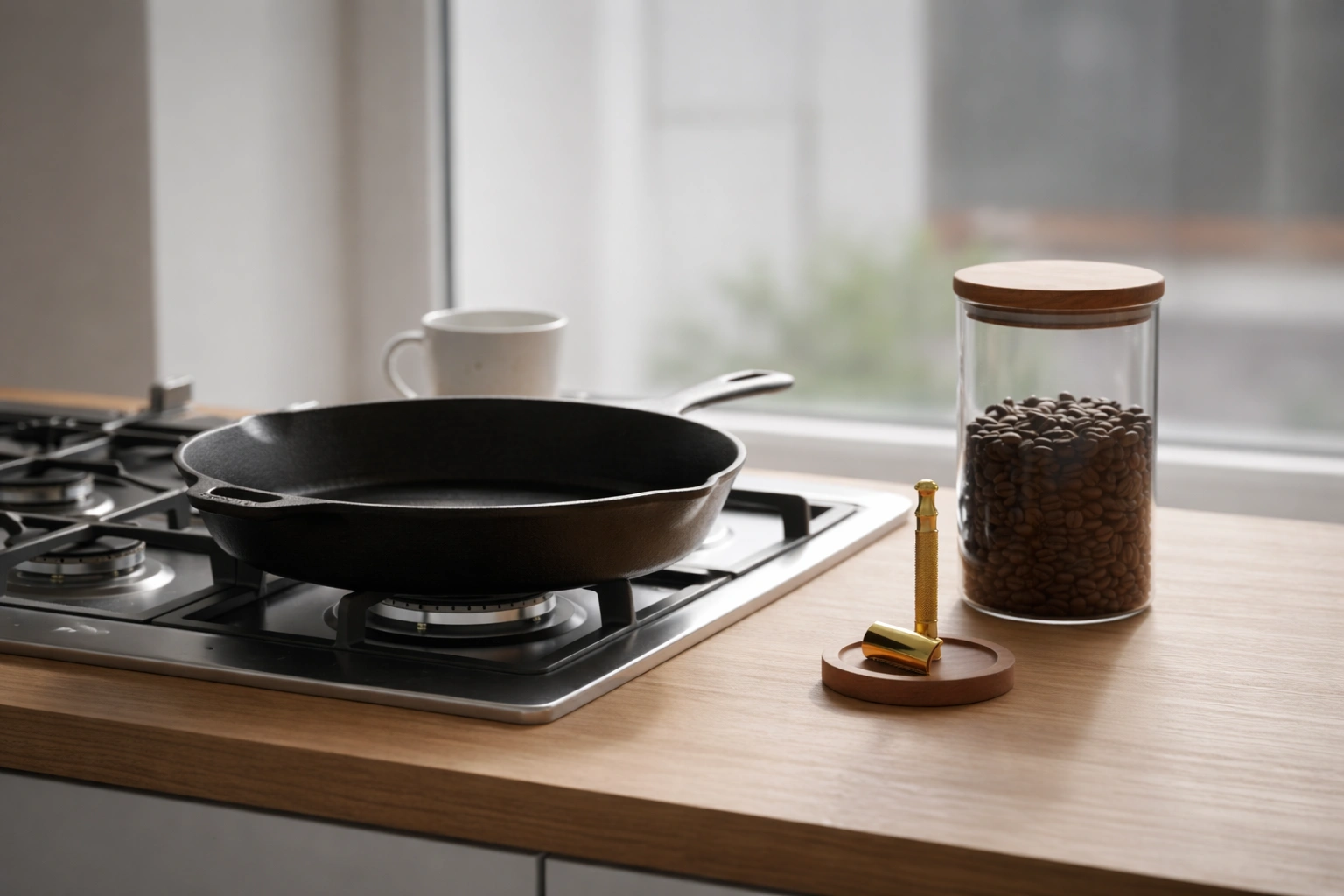
- Basic Kitchenware: The replacement of thin non-stick pans by heavy-gauge stainless steel or cast iron terminates the never-ending process of purchasing new pans every two years. They are not just tools but they are here to stay in the home as permanent infrastructure.
- Permanent Household Goods: Replacing such disposable barriers as parchment paper or plastic wrap with high-grade silicone mats and glass storage eliminates the out of stock panic as well as the repeatable expenses of kitchen disposables.
- Quality Personal Care: A solid brass or steel safety razor will substitute a lifetime supply of a very costly plastic cartridge. It transforms a repeating subscription into a single buy, in which the sole continuing expense is pennies on a blade.
- Maintenance Tools: A solid basic toolkit serves as a warranty policy against maintenance charges. The ability to loosen a faucet or replace a cabinet handle by your own does away with the minimum call-out fee to perform small repairs.
This reasoning goes up to our capabilities. An initial financial outlay on a core competency such as a basic sewing lesson or a home-care handbook will pay off indefinitely. It transfers the weight of making the money out of your wallet directly onto your hands, so that you can fix and upkeep more than throw away and replace.
Personal Care and the End of the Refill
The most outrageous location of repeat spending is likely to be the bathroom. We are conditioned to believe in terms of refills. Obvious example being razors, which is a low-cost handle that is meant to lock you into the world of high-cost, heavy cartridges made of plastic. Replacing an awkwardly-shaped safety razor with a well-designed one of solid brass or steel is like revelation of purposefulness. The blades are only a penny and the handle endures 100 years.
Next to the price, it produces a tactile pleasure in the use of an item that had not been created to be discarded. It transforms the morning ritual of consumption to the preserving ritual. This is evident in other personal care products as well, like a high-quality hair shear that lets you easily do some trimming yourself, or even such a simple item as a high-quality refillable fountain pen, which still means a lot to those who believe in the written word. They are an alternative to the eternal flow of useless cheap disposables that litter our drawers and our mind.
Tools That Grant Independence
One type of one time purchase is the type that earns dividend by getting rid of the necessity of external services. I do not mean complicated machine work, which needs a degree to learn, but the heavy hand tools which enable us to keep our own places in order.
Good tools must be kept up to standard; a good set of hand tools - wrenches, screwdrivers, a good hammer, etc. - is not a store of metal; it is a warranty against the minimum service fee. When a handle on a cabinet is wobbling or a faucet leak is only a loose nut, the correct tool will save a fifty or hundred-dollar bill spent on a professional call.
Likewise, think of the appliances that we go by their habits. To the coffee drinkers, the road is usually filled with high priced pods or visits to café on a daily basis. A pour-over system, or a sturdier, fixable espresso machine, is a huge initial investment. But it is essentially transforming your relationship with that luxury. It transfers cost of a service you purchase on a daily basis to a craft you are engaged in. The money you are no longer spending is not the marketing, or the plastic cup, but only the bean.
The Skill as a Purchase
The one-time buy is not always a tangible product, sometimes the one-time buy is an investment in learning a basic skill. We tend to outsource them since we do not believe we have competency in doing so and this amount to another form of ignorance tax.
Spending a little money on a good cooking course, a simple sewing lesson or even a book on how to maintain your home is a one time investment that will happen to pay throughout your life. The ability to sew a ripped garment rather than throwing it away, the knowledge of what is correct when it comes to sharpening a knife so that you avoid the need to buy another one changes how you feel about what you own. It ceases to be a mere consumer of goods, but a custodian of goods. This mentality of purchasing new to taking care of what we already have is perhaps the best solution to the hue and cry of continuous purchasing.
The Psychology of the Upfront
So, why are we so unable to make these decisions? The obstacle is nearly never anything but psychological. We instinctively dislike to lose, and when we are looking at a big amount passing out of our account we feel like we have lost, though it averted a hundred little losses in future. We are human beings too, creatures of habit. When we have been used to purchasing the two-dollar sponge, the purchase of a twenty-dollar quality brush will seem luxurious, although the cost of the brush will last longer than fifty sponges.
The other one is the perfection trap. We are afraid of spending a fortune on a permanent product and making a misjudgment. This causes a kind of analysis paralysis as we have to keep purchasing the cheap, short-term variant, as the stakes are less high. What we are really gambling away in the long-run is our own future and future income, we are forfeiting our future time and future income to the present indecisiveness.
It takes a degree of confidence to learn how to appreciate the price at the register and the cost per use. It involves leaving your future-self to appreciate the item and take good care of it. It is an act of believing in yourself that you are safe.
The Calm of a Finished House
You get the absolute feeling of serenity of visually surveying a room and realizing that nearly everything is finished. Once you have things that are durable and functional, then you do not scan circulars and websites to find replacements. You are not in the market of a toaster, or a vacuum, or a winter coat since you have already solved those issues.
This produces an alternate form of lifestyle, where your salary is not being continuously dissipated to seal leaks in a leaky bucket. Rather than spending that money on the unforeseen or keeping yourself cushioned against the unexpected, you can spend the money and get to have adventures that will actually give your life color. Planned expenditure does not mean being deprived; it means completing the consumption activities in order to proceed to the business of living.

A Quiet Inventory
You should take time and have a mere, observant eye on the recurrent items in your life. What are some of these things that you keep on purchasing time and again? There are cases where spending more on something that will not have to be replaced is the most deliberate decision.
The constant contentment in working with a tool that you are certain to have in ten years is constant. It is an indication that your requirements are fulfilled and you are not merely a cog in a replacement process anymore. We will know when we do not purchase items that are designed to fail, then it will not be the case of seeking the cheapest method of living but the most permanent. The best things that we possess are those that ultimately no longer cost us anything.
FAQs
How would I be able to afford high initial expenses on a budget?
Unless you are going to take on everything at once, narrow in on one category. Determine the little thing that you change the most and make those replacement expenses you save until you can buy the permanent one.
Will an increased price necessarily ensure durability?
No. Do not pay attention to brand, but pay attention to materials. Use solid metal or wood or glass instead of plastic, and use things that can be repaired instead of glued together.
But what in case I regret the buying afterwards?
Stick to old time standards that have been in existence. Such quality goods do not lose their resale value unlike the cheap disposables in the event that you may want to dispose them.