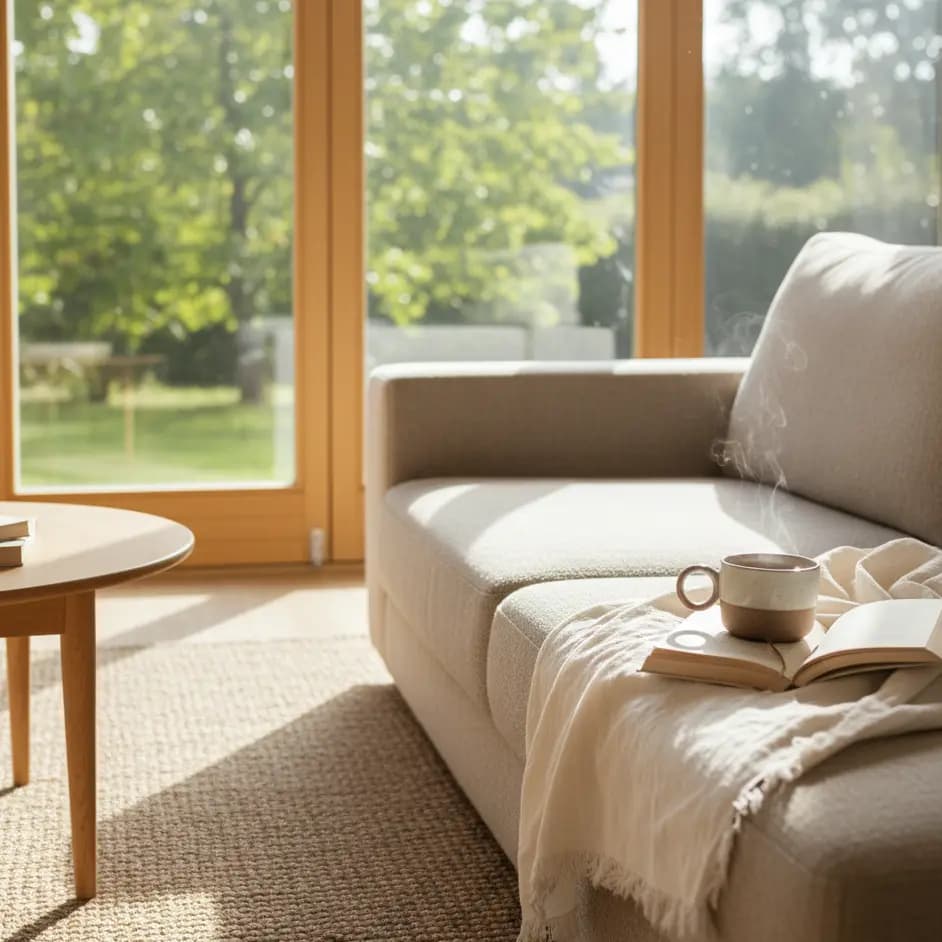
Last Tuesday, it was raining—the kind of relentless, grey drizzle that makes the living room feel smaller by the hour. One of the youngest was putting a tower together with the sofa cushions and the oldest was staring at the screen, clicking through menus without really playing anything. I experienced that old, familiar pressure; the pressure to entertain.
However, throughout the years I have come to see that my best days with the kids were not the ones that I had spent forty dollars on craft kits or three hours in the car running to a theme park. These are the days when we can be impromptu in uncomplicated things. Entertaining kids does not involve the role of a cruise ship director; it involves giving them the spark to allow personal imagination to take the reins.
The following are some of the activities that I have resorted to over and over again. These are not hacks or even refined social media initiatives. They are cheap and practical methods of spending some time together that really capture their interest for more than five minutes.

Creative Indoor Activities
When we are at home confined, the pressure is to rely much on online entertainment. Although there is a need in that, I have discovered that creative projects that involve touch offer a sorely needed mental break to everyone.
1. The "Living Room Gallery" (Ages 4–10)
I do not simply draw a picture but provide the kids with a theme such as The Secret Life of Our Cat or The City in 100 Years. We had a timer of half an hour. When the art is complete we hang the pieces on the hallway using masking tape. We hold an actual gallery opening, and they describe their work to me as we drink the juice in fancy glasses.
- Setup: 5 minutes.
- Engagement: 45–60 minutes.
- Why it is effective: It provides a sense of purpose and pride to a regular coloring session.
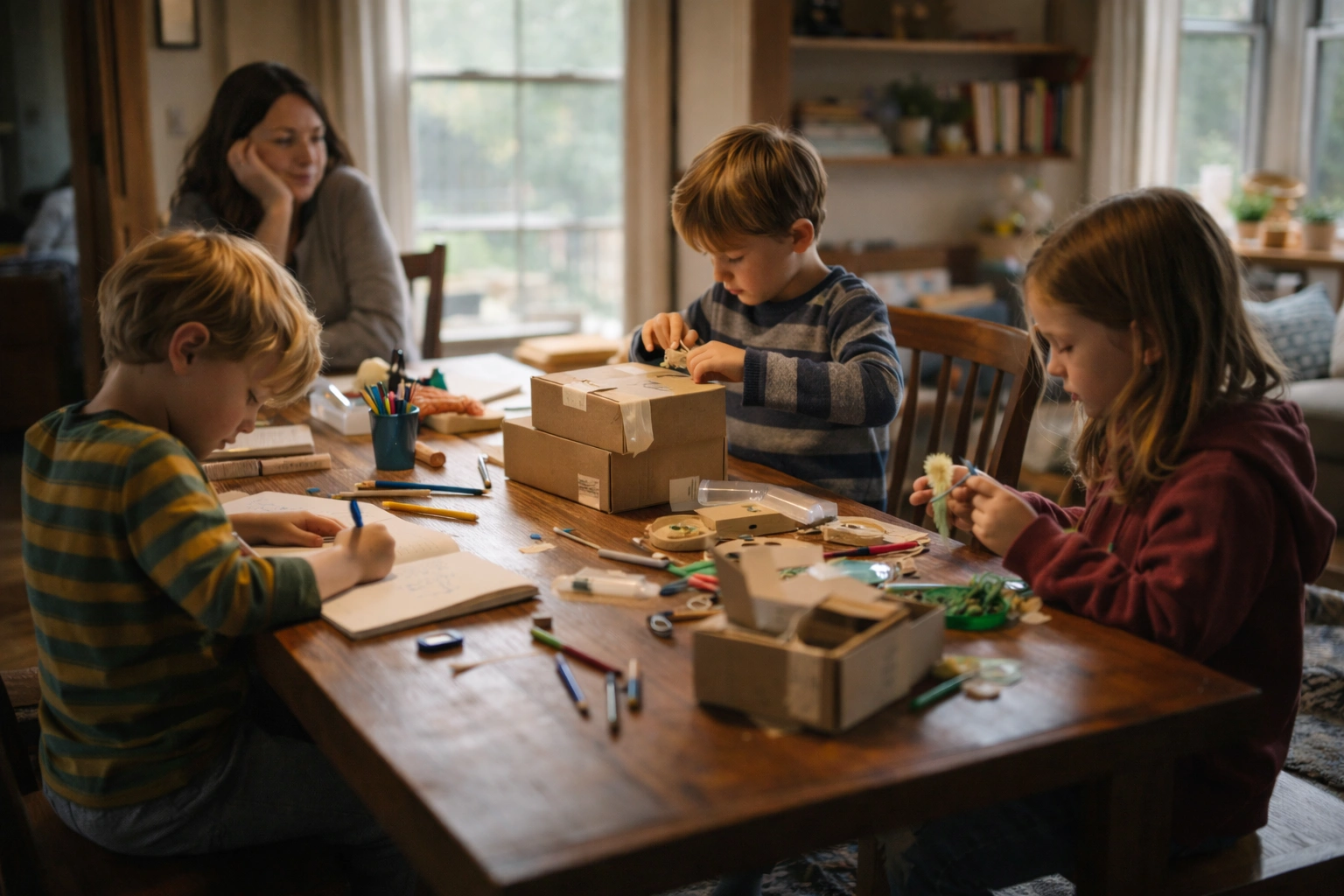
2. Cardboard Box Engineering (Ages 3–12)
I store a reserve of boxes used to deliver on the rainy days in the garage. A box is a boat or a space ship to little children. To the older ones, I ask them to come up with something useful: a marble run, a snack vending machine, or a multi-story doll house.
- Practical Hack: Use masking tape as opposed to clear tape which is simpler to tear and does not need a scissor after every two seconds.
- Engagement: Hours, provided you bring plenty of tape and markers.
3. Stop-Motion Animation (Ages 7+)
Provided that you hold a tablet or a smartphone, you may access several free and easy to use stop-motion applications. I used LEGO figures or clay to create a set up on the kitchen table which I referred to as a studio. It makes them patient and teaches them filmmaking fundamentals. One of my ten-year-old's made a three minute movie during one afternoon of a dinosaur eating a banana during the break.
- Setup: Minimal (only a tripod or a pile of books to place the phone on).
- Benefit: It makes screen time creation time.
Outdoor and Movement-Based Fun
The universal reset button is fresh air. As soon as the power in the house is too high or we are too short-tempered, we go outside.
4. The "Micro-Hike" (Ages 5–12)
A long walk can become a burden to a child sometimes. A micro-hike is different. We choose some tiny section of the back-yard or a local park, say not longer than ten feet, and walk it on our hands and knees. We search for bugs or various kinds of moss or interesting rocks. I carry a magnifying glass most of the time.
- Interaction: 30 minutes of full concentration.
- Development: It creates the ability to observe and to have an authentic relationship with nature.
5. Backyard Olympic Games (All Ages)
This does not involve equipment. We create things using what we have: the "Laundry Basket Toss," the "Spoon and Potato Race" or the "Slowest Bike Race" (where the purpose is to arrive at the finish line last without tenacity). On a scrap of cardboard we make a count.
- Setup: 10 minutes.
- Advantage: Release your physical energy and also be a good sportsman.
6. Puddle Jumping and Mud Pies (Ages 2–7)
We use a lot of time telling kids to be clean. Sometimes I put my head into the mess. Immediately after the rain, put on the old clothes and the boots and go out. It is something quite gratifying to a child to be left to play in the mud.
- Practical Tip: Have a "mud kit" (old spoons, plastic bowls and watering can) in a designated bin outside so they are not lost.
Learning Through Play
I do not attempt to do things that seem to be school at home, and I do enjoy those things that can insert a touch of logic, physics or history without the children noticing that they are learning.
7. The Kitchen Science Lab (Ages 5–11)
You don't need a chemistry set. Some old standards like baking soda and vinegar are not without reason and we also do Sink or Float with objects around the house or Oobleck (cornstarch and water). The challenge that I personally like the most is the one called the Egg Drop Challenge, where they are to construct a protective casing around a raw egg using solely straws, tape, and paper and then throw it off the porch.
- Setup: 15 minutes.
- Time: 1 hour.
- Value: It promotes trial and error and critical thinking.
8. Historical "Time Travel" Dinner (Ages 6+)
We choose a historical time, say the Victorian times or the 1970s and we see what children ate at that time. Our own version of it is a simple one. When we are eating, we discuss how life was without the internet, or how people used to travel. It also makes history an individual experience and not a series of dates.
- Practical Detail: Make it simple. Bread, jam, and tea are referred to as a Victorian tea.
9. Map Making (Ages 8–12)
I will invite the children to create the map of our neighborhood or even the map of our house, except that I will require them to create a Treasure Map. They need to contain landmarks (the big oak tree, the blue fence of their neighbor) and then conceal a little prize that I or their brother or sister will find with their map.
- Skill: Directing/following instructions and locating.
Quiet and Calming Activities
At some points, the nervous system of everyone is fried (usually at around 4:00 PM). These tasks will reduce the amount of activities and make the kids manage their energy.
10. Audiobooks and "Drawing Parties" (All Ages)
This is my secret weapon. I listen to a good audiobook or I listen to a story being read aloud (there are usually a lot of great apps in the local libraries). I envelop the dinner table with butcher paper or simply provide everybody with a sketchbook. We sit quietly waiting and listening to the story and making what we hear.
- Advantage: It creates a sense break and makes one listen deeply.
- Time: 30 to 60 minutes of true peace.
11. The "Indoor Campout" (Ages 4–10)
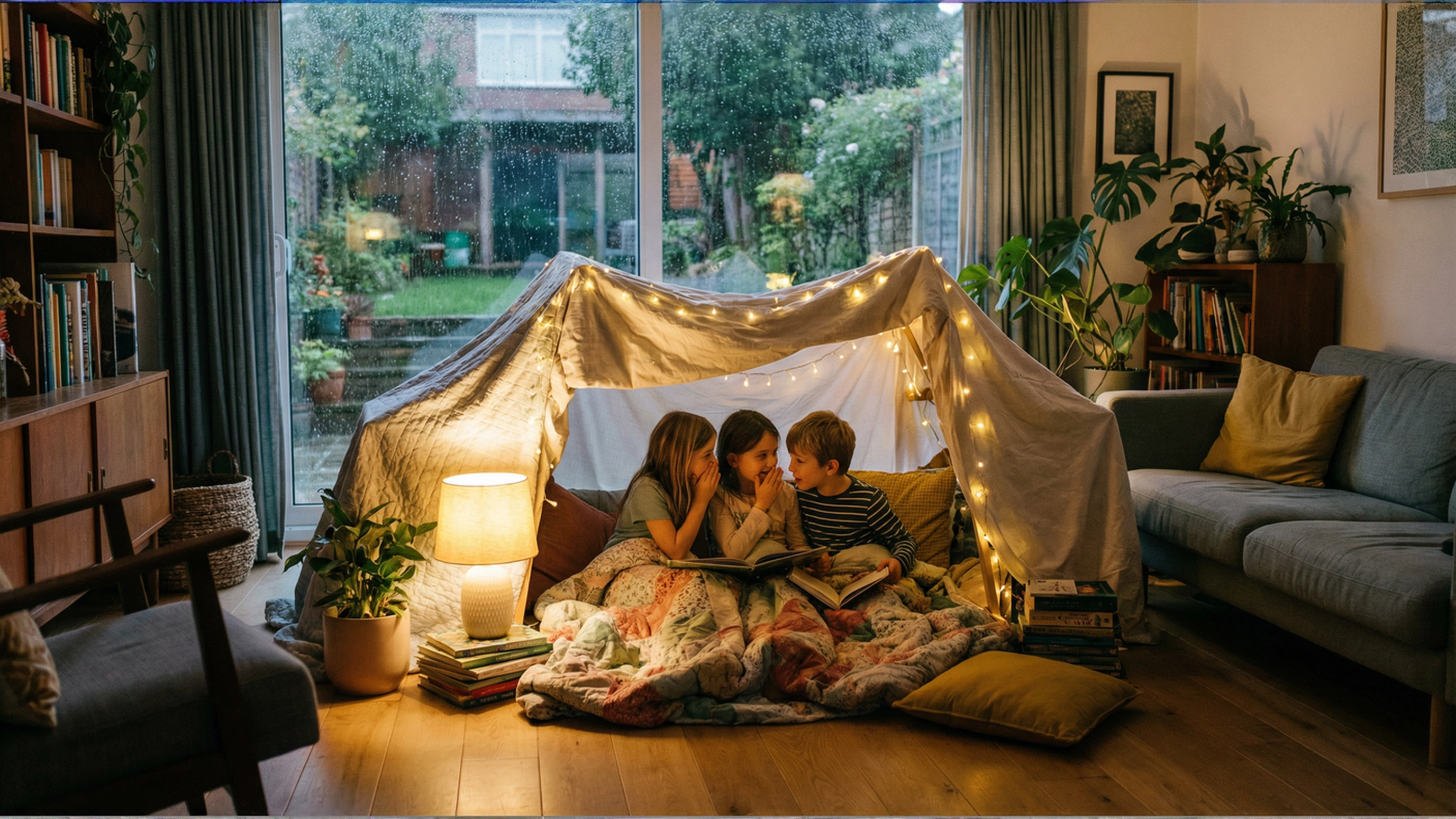
In case the day has been long we camp in the living room. We are tenting with blankets and chairs, and carry with us all the pillows, and we read by flashlight. The snack, in the style of trail mix is sometimes even had in the tent.
- Engagement: Low physical effort on the part of the parent, high magic factor on the side of the child.
12. Sorting and Cataloging (Ages 3–8)
Children at a younger age take repetition very well. I will provide them with a giant vase of mixed buttons, a set of seashells, or even simply the LEGO bin and request them to either sort them by color, size, or texture.
- Setup: None.
- Advantage: Develops fine motor abilities and offers organization.
Low-Effort Ideas for Busy Days
Admittedly, we are too fatigued, work at home, or have simply no bandwidth to conduct a project on other days. These are my emergency ideas.
13. "The Floor is Lava" (Ages 3–9)
It’s a classic for a reason. Put down some cushions and towels. It is a simple rule: one should not touch the carpet. It is a game that can be played instantaneously and I would need virtually no preparation to play, and it keeps them on the move and laughing.
14. Toy Car Wash (Ages 2–6)
I add some soapy water in a plastic tub and clean water in another one. I provide them with a scrub brush or an old toothbrush and all their plastics, cars or animals. They take years to describe their toys.
- Practical Hint: Keep this on the kitchen floor with several towels under it, or in the outside weather, which is pleasant, of course.
15. The "Mystery Bag" (Ages 4–8)
I selected five household objects that were randomly placed in an opaque bag (whisk, a remote, a pinecone, a shoe, a spoon). They are forced to touch one, feel it, and tell what it is without knowing what it is. Then we swap roles. It is an excellent method of communicating with them for ten minutes as you wait until dinner is cooked.
A Note on Boredom
At my home, I have attempted to avoid viewing I am bored as an issue which I am bound to resolve at once. Creativity is normally triggered by boredom. When my children complain that they are bored, I normally agree with them-It is alright to feel bored sometimes and present them with one or two of the ideas above that do not consume much effort. Should they refuse, then I leave it to it.
Sooner or later, within half an hour, I will be discovered playing a new game with a deck of cards or acting in a play with their stuffed puppets. We do not have to pack their days and nights with activities controlled by our hands, but to ensure they are placed in a safe and resourceful space where they can discover how to have fun.
These concepts are not of being the ideal parent. They are all about seeking those little moments of connectedness and just carry on with the day a bit inquisitively. There are days when the "Living Room Gallery" will be an enormous success, there are days when they will need to sit in a blanket fort and whisper. Both are successes.
Goodness, we do not have to do all this list. You just have to choose one that you can handle today. The simplest beginning is sometimes the best beginning.
FAQs
What about the situation when my child does not want to participate in these activities?
That’s normal. I tend to provide a single simple idea and leave them room. Creativity usually comes across boredom unless it is in a hurry.
Are such activities time consuming to set up?
Most don’t. They are planned in the format of everyday products and adjustment to energy needs, particularly to the hectic days.
Is screen time necessarily or not a good thing?
Not necessarily. It assists where screens are utilized imaginatively or collaboratively and not as lifeless scrolling.
Am I anxious when my child informs me that he is bored?
I don’t anymore. The independent play and imagination are usually initiated by boredom.