I used to be terrible with money. Every January, I would sit in my apartment in Denver, look at my bank account, and promise myself that this was the year I’d save ten thousand dollars. I’d cut out my morning coffee, stop seeing friends, and live on beans and rice. By February 14th, I’d be at a bar spending fifty dollars on wings because I was miserable and lonely.
It took me years to realize that the problem wasn't my willpower; it was my plan. I was trying to live a life that didn't belong to me. Here in the USA, we are bombarded with "hustle culture" and advice telling us to save until it hurts. But if it hurts, you won't keep doing it. And if you don't keep doing it, you'll never hit those realistic savings goals.

Today, I want to share how I stopped fighting my own habits. We’re going to look at how to build a financial safety net that feels like a warm blanket, not a cage. You can still enjoy your life and save for the future. I promise it is possible.
What “Realistic Savings Goals” Actually Mean
Realistic savings goals are about finding the sweet spot between what you earn and what makes you feel secure. If you earn $3,000 a month and your rent is $1,500, saving $1,000 is likely impossible. A realistic goal accounts for the fact that your car might need a new tire or your friend might have a birthday. It’s a goal that doesn't break the first time life gets messy or expensive.
To get this right, you have to look closely at your income reality by focusing on your take-home pay rather than your gross salary. You also need to be brutally honest about the living costs in your specific city and check in on your emotional capacity. If the thought of saving money makes you want to cry, the goal is simply set too high for your current situation.
I found that consistency matters way more than the dollar amount. Saving $20 every single week is much better than saving $500 once and then giving up for six months because you're broke. When I redirected small savings from promo codes or seasonal sales directly into my savings "pot," it felt like a game I was actually winning.
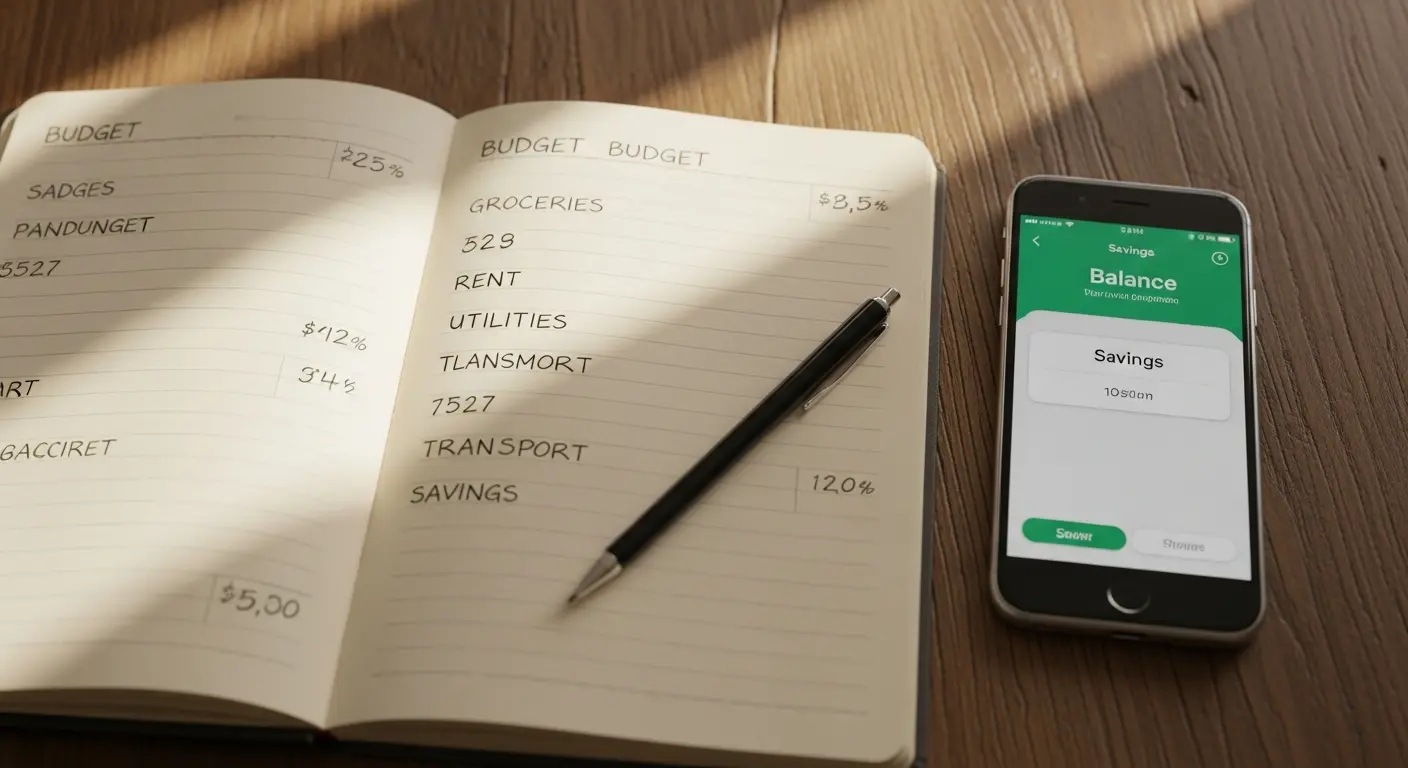
Why Most Savings Goals Fail
Most goals fail because they are built for a perfect version of us that simply doesn't exist in the real world. We often try to copy a plan we saw on TikTok or read in a finance book, but that person doesn't have your specific bills or your daily stress. Why saving money is hard is usually because of "all-or-nothing" thinking where we assume if we can't save a lot, we shouldn't save at all.
This is often fueled by a comparison culture where seeing people "flex" huge savings online makes us feel like we're already behind. When we set these goals, we tend to ignore our basic needs, like needing a haircut or new socks, and if your budget ignores these small joys, it will fail. Eventually, decision fatigue sets in because making a conscious choice to save every single day is exhausting for your brain.
I stopped relying on motivation because motivation is a flakey friend. Instead, I set up systems to reduce the friction in my life. If the money moves to my savings account before I even have a chance to see it, I don't have to be "strong" or disciplined. I just have to be organized and stay out of my own way.
How to Set Savings Goals Based on Your Lifestyle
Setting a goal starts with looking at your actual life, not the one you wish you had on your Instagram feed. Don't start with a "perfect" budget you found online; start with your bank statement from last month to see where the money actually went. This helped me see that I was spending way more on streaming services than I thought, but instead of cutting them all, I just picked the one I liked best and ditched the rest.
When you sit down to plan, you need to account for your fixed expenses like rent and insurance, but also your variable spending for food, fun, and those "oops" moments. It’s also vital to consider your energy levels. If you know you're always too tired to cook on Tuesdays, you should budget for that takeout instead of pretending you'll meal prep every single week.
I started planning my big purchases around seasonal sales to save even more. If I knew I needed a new vacuum, I’d wait for a holiday weekend deal or a Black Friday sale. Using a coupon for a budgeted item felt like a massive win because that "extra" money went straight to my house fund rather than disappearing into a random store's pocket.
Short-Term vs Long-Term Savings Goals
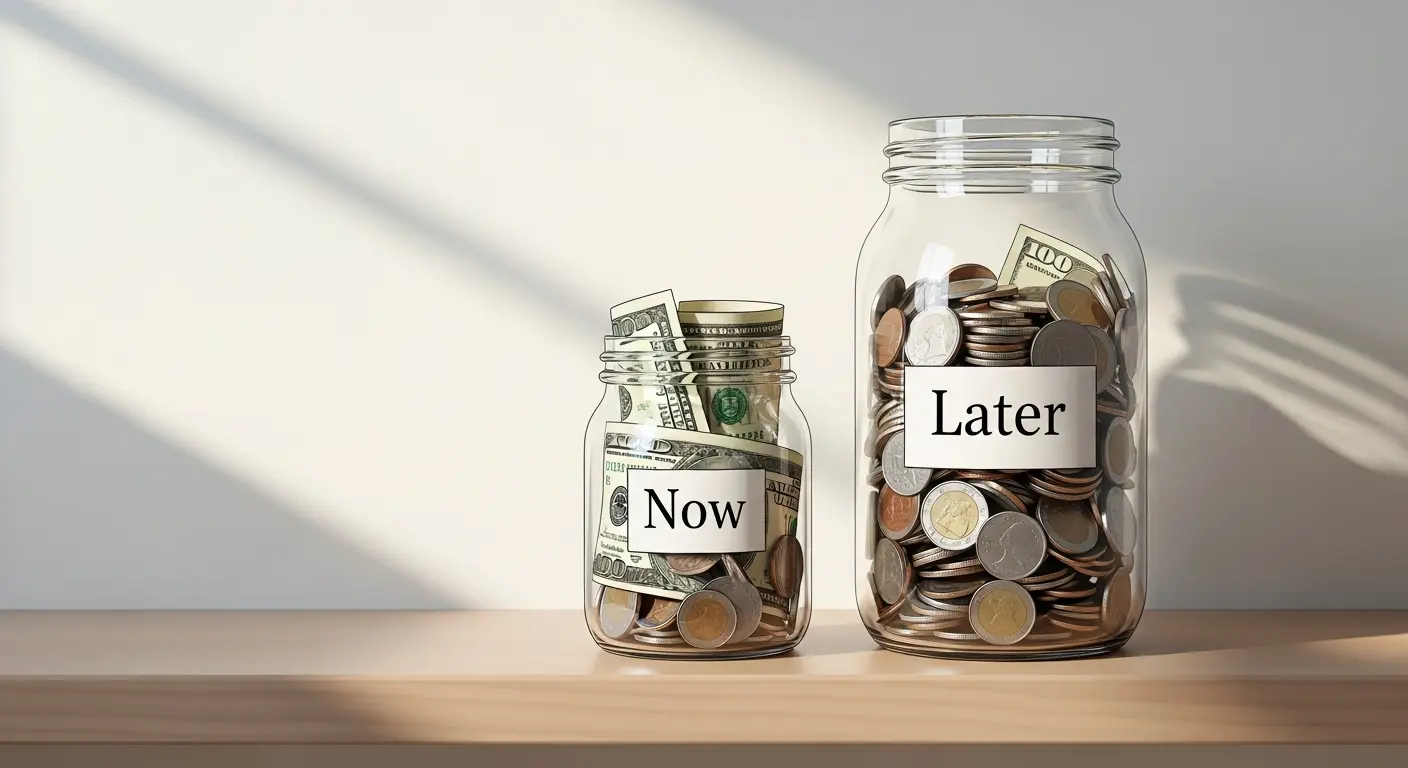
You need to feed your future self without starving your current self of all happiness and comfort. Short-term and long-term savings goals are both vital for long-term peace of mind. If you only save for retirement, you'll be stressed when your sink leaks tomorrow. If you only save for emergencies, you'll be worried about your life in 2050. I learned to split my savings into "pots" so I could see progress on both fronts simultaneously.
My short-term goals usually include things like an emergency fund or "sinking funds" for car repairs, while my long-term goals focus on a house down payment or retirement accounts like a Roth IRA. I try to maintain a balance where even if I am putting 90% of my extra cash toward a short-term need, I still put 10% toward the long-term just to keep the habit alive and well.
Visualizing my progress helped a lot during the slower months. I used a simple app to track my milestones, and seeing a small bar fill up gave me a little dopamine hit that kept me going. I also used cashback from my regular grocery runs to fund my "fun" short-term goals, like a weekend trip to the mountains, which made the savings feel "free."
Savings Goals for Different Life Situations
Your savings plan should look different depending on who you are and where you are currently living. A student in Ohio has very different needs than a freelancer in New York City. I’ve been both a renter and someone trying to buy, and the goals always shift. There is no shame in having smaller personal
savings goals during the lean years of your life.
If you are on a low income, your main focus should simply be building a "Starter Emergency Fund" of $1,000 as fast as possible. For couples, the key is to talk about money often so you stay on the same page. If you are a freelancer, you have to save more during your "high" months to cover the "low" ones that will inevitably come later in the year.
In the USA, being self-employed means you have to handle your own taxes and retirement, which is a lot of pressure. I learned to use smart shopping tools to keep my business costs as low as possible. Every dollar I saved on office supplies was a dollar that stayed in my personal pocket for my future comfort.
How to Track Savings Progress Without Stress
If tracking your money makes you want to hide under the covers, you are definitely doing it too much. Checking your accounts every day can lead to unnecessary anxiety that makes you want to quit. I moved to a monthly check-in instead. It’s enough time to catch mistakes but not so much that it consumes my entire life. Monthly savings goals should be a helpful guide, not a judge.
During your monthly check-in, spend about 20 minutes looking at the big picture of where your money went. I highly recommend using savings pots where you can name your accounts things like "New Tires" or "Holiday Fund" to make the money feel real. Most importantly, celebrate your consistency. If you managed to save anything at all this month, you won the game.
I like to do my check-in on a Saturday morning with a good cup of tea. It makes the task feel less like a chore and more like a routine. I focus on the habit of looking at the numbers rather than the actual numbers themselves. It makes me feel in control of my destiny rather than a victim of my bank account.
Adjusting Savings Goals When Life Changes
Life isn't a straight line, so your savings strategy shouldn't be a straight line either. Inflation has made things tough for everyone lately; my grocery bill went up, and my savings rate went down. At first, I felt like a failure, but then I realized that how to save money realistically means being flexible when the world gets expensive.
When you experience income shifts, like a raise, try to save half of it before you get used to the extra cash. If you face rising costs, like higher gas prices, you might have to save $10 less this month, and that is perfectly okay. Even pausing your savings for a month is a responsible choice if you are facing a real financial crisis.
Reframing these shifts as "pivots" instead of "failures" saved my mental health. I used deals to bridge the gap during tight months. If I could find a discount on my internet bill or phone plan, that extra cash helped keep my savings habit alive when things were hard, ensuring I never completely stopped moving forward.
Smart Ways to Save More Without Cutting Joy
Saving money shouldn't feel like you're punishing yourself for existing or wanting nice things. I am a big believer in intentional spending. I don't want to buy "cheap" things that break in a week; I want to buy quality items that last a long time. This is where how to save money without feeling deprived comes into play.
You should practice intentional spending by buying the things you truly love and ruthlessly skipping the things you don't care about. I also swear by the 72-hour rule, where I wait three days before buying something I didn't plan for. To maximize every dollar, I try stacking deals by using a sale, a coupon, and a cashback app all at the same time.
I still go out to dinner with my husband quite often. We just look for "Happy Hour" deals or "early bird" specials at our favorite spots. It’s the same food and the same fun, but for 30% less than the standard price. That 30% goes right into my savings account, and it feels like a secret wealth hack that doesn't hurt.
Common Savings Goal Mistakes to Avoid
Don't fall into the traps that I did during my early years of "panic saving" and constant stress. The biggest mistake is setting an arbitrary number just because a book or an influencer told you to. If a book says you need $20,000 but you only need $5,000 to feel safe right now, listen to your gut. Extreme frugality almost always backfires eventually.
You should avoid setting huge goals that feel impossible, as you shouldn't try to climb Everest on your very first hike. Never ignore the small luxuries that keep you sane; if a $5 candle makes your home feel better, you should buy the candle. Also, avoid overcorrecting. If you overspend one month, don't try to "starve" yourself the next month to fix it.
I used to be so strict that I’d skip my best friend’s wedding events just to save a few bucks. I saved the money, but I lost precious memories I can never get back. That’s a bad trade. Now, I use promo codes to find affordable gifts so I can be there for the people I love without going broke in the process.

Turning Savings Into a Habit, Not a Challenge
The ultimate goal is to make saving as boring and automatic as brushing your teeth every morning. Challenges are fun for a week, but habits last for a lifetime. I want my personal savings goals to be part of my identity. I want to be "someone who saves," even if it’s just a little bit of money each week.
You can anchor your habits by doing something small, like transferring $5 to savings every time you treat yourself to a coffee. The goal is to make it boring because the less you have to think about it, the more successful you will be. Always remember to support your future comfort by framing saving as a kind gift to your future self.
Automation is truly my best friend in this journey. I have a small amount moved to my savings every Friday morning before I even wake up. I don't even notice it's gone, but at the end of the year, I’m always shocked by how much is there. It’s like finding a $20 bill in your winter coat, but much better.
FAQs
How much should I save each month?
Start with what feels sustainable, even if it’s small.
Can I have savings goals with irregular income?
Yes. Flexible goals work better than fixed amounts.
Should I save or pay off debt first?
A small emergency fund can come before aggressive debt payoff.
What if I keep failing my savings goals?
Adjust the goal—not your self-worth.