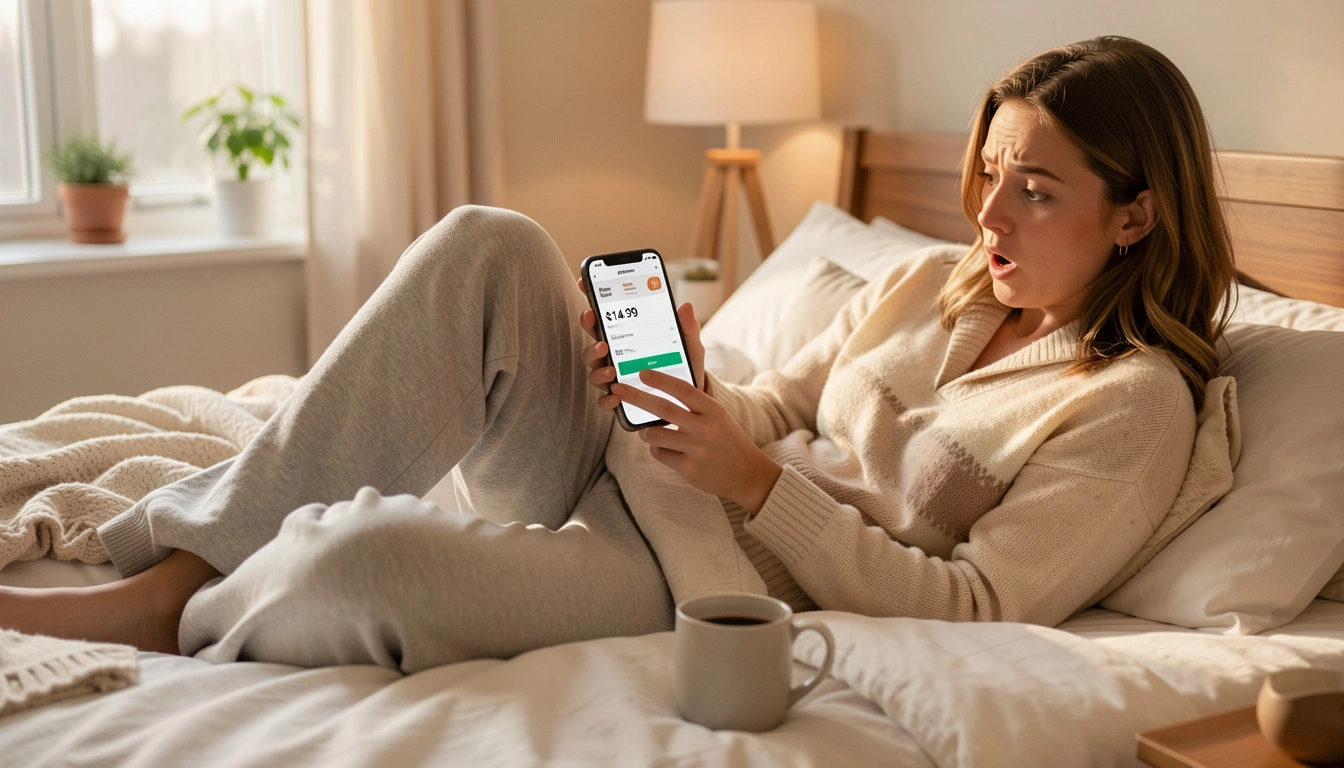
It begins with a muted ping of your phone—notification of your banking application on a Sunday morning when you are too lazy. You look down, and you think there is a fraud warning, and instead you see a familiar, but unfamiliar note, a 14.99 charge. It is that niche documentary streaming platform that you subscribed to in 2024 to view one particular movie. Or maybe it is the premium edition of a meditation app that you last used after you made a promise to yourself on the last New Year.
Here is the age of the Ghost Subscription. By 2026, the subscription industry has swelled to an 860 billion giant around the globe. Although such repetitive services provide unquestionably convenient services, they are based on a phenomenon called subscription creep. According to the recent data, the average consumer is spending more than $200 a month on the automated fees nowadays, in many cases, overestimating how much money they actually spend, over 100. These intangible leaks are not only a waste of budget, but a kind of psychological and financial debris quietly sucking out of your pocket money to spend on the things that really make you happy.
The good news? Being financially well does not mean you have to stop watching your favorite TV shows or morning news. It’s about intentionality. By hacking your digital life and kicking out the ghosts, you can free up hundreds of dollars a year—how much a luxury weekend outing, a quality home improvement, or just a sense of calm security that the leak-proof budget will afford you. This is how you can easily kill those ghost recurring fees once and for all.
The Anatomy of a Ghost Subscription
A ghost fee is any fee incurred over and over again that does not give you any significant pay off on your investment. They lurk in the shadows, and they tend to disguise themselves as the necessary digital infrastructure.
The most prevalent offender is the so-called Free Trial Trap. It happened to all of us: we have gone through the registration of a 7-day trial of a productivity app or fitness application, and then we have forgotten about the date to cancel it. When we come to realize the monthly fee, we have already paid three months of a service that we never utilized.
Then there are Zombie Memberships, the gym you used when you changed neighborhoods, or cloud storage that you used on a device you traded in years ago.
The Psychology of Micro-Payments
Why do we let this happen? It is the psychological gimmick of micro-payments. We are programmed to realize that a purchase of 100 dollars is a real pain, and we hardly raise an eyelid when it comes to a 5-dollar or 10-dollar automated bill. Nevertheless, these minute drops form a huge bucket.
You are losing 50 a month in ghost subscriptions, which is equivalent to 600 a year. And in terms of lifestyle, that is the difference between a cheap holiday and a rather restful, luxurious one. The final win of smart shopping is to reclaim that money since there is no sacrifice of present happiness.
How to Audit a 15-Minute Manual Subscription Audit
A manual sweep is the most effective way of knowing your spending habits before resorting to automation. All you need to do is place a 15-minute timer and use this three-pronged method to locate all those hidden charges.
The Bank Statement Deep Dive
Log into your main banking application and view the past 60 days of transactions. It is not necessary to find brand names only; find something cryptic, such as STRP (Stripe), APPL (Apple), or PYPL (PayPal). These usually are the online brooms under which ghost fees conceal themselves.
Verifying the “Gatekeepers”
The majority of our online purchases go through our cellular phones.
In an iPhone, tap on the Settings menu and then on [Your Name] and Subscriptions.
On Android, open Google Play Store > Profile Icon > Payments and Subscriptions.
You will definitely be able to find at least one of those services you believed was long gone and was “Active” now.
The Email Inbox Sweep
Find your email with such keywords as Renewal, Invoice, Trial, or Thank you for your purchase. Companies must legally receive receipts, which more than not, end up in either Promotions or Spam Somber.
Smart Shopping Integration
When auditing, check on the duplication services. Do you use Spotify and YouTube Premium? Do you subscribe to three types of news? Bringing them together as one of these family plans or picking the individual plan that provides the most cashback rewards can all save you 20/months without any loss of features.
The 10 Best Subscription Tracker Apps of 2026
When you have your money divided among cards and accounts, it may seem like you are playing Whac-A-Mole trying to track your money manually. Here is the point in which subscription tracker applications give a brand new technological solution to an outdated issue.
The 2026 market has also been segmented into two dominant philosophies; Automation vs. Privacy.
Rocket Money & Monarch Money
These are apps that connect to your bank accounts through read-only technology (such as Plaid). They scan your history automatically, sort your recurrent bills and show them in a clean dashboard. Rocket Money goes as far as to provide a feature known as a concierge that will hold on to your line to cancel subscriptions on your behalf.
Bobby & Subby
These apps can be entered manually, which is why they are better suited to the person who does not want to connect their bank accounts. You enter the service, the price and the date and the app informs you of renewal alerts 24 hours before you are charged.
Safety Pro Tip
There is a general question whether it is safe to connect your bank. The majority of the current tracker apps are encrypted with 256 and have a read-only mode, which implies they can view your information but will not be able to transfer and/or withdraw your money. In case you are still reluctant, you can first begin with a manual tracker to establish the habit of being conscious. Most of these tools are providing a promotional code to their paid versions, although their free versions tend to be sufficient to have a successful ghost hunt.

The Art of the Strategic Cancel
When you have the ghosts outlined then it is time to be ruthless. But wait—don't just hit “delete.” A certain strategic method of canceling it can even make money back into your pocket.
To start with, choose either a Pause or a Cancel. Most of the services have added a pause option of 1–3 months. This is fantastic in case of seasonal interests (such as a sports streaming package). Nevertheless, most ghost fees allow you to better cancel the entire amount as a mental expense.
The Retention Offer
This is the most kept secret of smart shopping. Many of the software offered by companies will automatically activate a save-the-sale offer when you attempt a cancellation online. You may come across a pop-up that has a 50 percent discount within six months or 2 months free stay. This is an excellent method of reducing your baseline costs in case it is a service that you utilize but have considered excessively costly.
Lifestyle Tip: Seasonal Subscriptions
Adopt Seasonal Subscriptions. Rather than having five streaming services operating all year round, subscribe to one of them. Watch the show you like, binge and then cancel and switch to the next one. You will save up to 40+ a month and enjoy your content actually because you are not bombarded by options.
How to Escape New Subscription Traps
It is not only to clean your budget once but also to maintain it clean. The only solution is to keep the ghosts in the past by having a defensive mechanism.
The Virtual Card Strategy
There are applications such as Privacy.com or built-in functions within Revolut that can be used to generate a so-called virtual credit card. You can even place a limit on spending on a card (e.g., $1.00) and use it to subscribe to a free trial. The card will just decline when the firm attempts to bill you $99 even after the trial period.
The Calendar Alert Method
It is the easiest in your repertory. As soon as you become a trial member, create a reminder 2 days before the expiry of the trial. Write it as CANCEL [SERVICE NAME] to ensure that it can not be ignored.
The Wait 48 Hours Rule
Wait 48 hours before clicking on a new app or service to subscribe to it. The majority of the subscription subscriptions are impulse-based. You can get it in two days later, though, provided that you recheck to make sure you have a new user promo code.
Savings Integration
When a service is something that you are confident in needing over the long-term (such as Amazon Prime or Spotify), find a discounted gift card at your local large retail store or warehouse club. A 15 percent discount on the costs you incur on buying the fixed price of a gift card of $100 and purchasing it at a discounted price of $85 is a compounding discount over time.
Developing a Sustainable Subscription Budget
Finally, it is a habit and not a job to take care of your subscriptions. Just imagine it to be Financial Spring Cleaning.
Have a sit down every three months or a Quarterly Cleanse. Question to yourself: Would I sign up to it today, were I not already subscribing to it?
Think of consolidation as an upgrade to the lifestyle. Products such as the Apple One or Disney/Hulu/Max trio are aimed at giving customers a superior value over single subscriptions. By changing to a family plan or a bundled plan, you can usually have increased comfort at a reduced total cost.
Conscious consumption is concerning the understanding that your money is your time. When it takes two hours of work to cover the subscription fee of 20 dollars, question yourself whether that service offered two hours of true value or happiness this month. In case the answer is in the negative, it is time to kill the ghost.

Conclusion
The process of recalibrating your digital spending does not mean tallying up pennies or not leading a life. It has to do with unloading the so-called invisible clutter so that your resources can be redirected on what is really important. It can be a more delicious meal, it can be a more comfortable house, it can be a stress free savings account, but all those ghost fees you murder are a step toward a more deliberate life.
It is your bank account, you are the boss. Devote 20 minutes of your time on the weekend to evict the ghosts. Your next month will be clean, your load eased mentally and your wallet much heavier.
FAQ
Q: Should I be able to connect my subscription tracker apps to my bank account?
A: Yes, the majority of reputable applications go with the encrypted token on the read-only basis with the plaid services. This implies that the app can view your transactions in order to classify them, and all the permissions of moving money or withdrawing money are not available. It is similar to providing a person with a duplicate of your bank statement instead of your debit card.
Q: How do I get a full selection of my subscriptions free of charge?
A: The quickest free option is visiting inbuilt managers of your phone. In iPhone, tap on Settings, then, Apple ID and Subscriptions. In Android, visit Google Play > Payments and Subscriptions. You also should check the Paypal section of your Automatic Payments, as a lot of web-based services are disguised there.
Q: Does a subscription tracker application have the ability to cancel the services on my behalf?
A: There are high-end versions (such as Rocket Money) that provide a concierge service, meaning that they take care of cancellation and even negotiate bills. The free versions of these applications often give you the direct link or phone number to the cancellation page so you would not have to search to get it yourself.
Q: Does the cancellation of a subscription damage my credit rating?
A: No. Normal subscriptions (streaming, applications, gym membership) are not products of credit. The cancellation of them does not affect your credit score. The only exception is in the case of a pay later plan or a contract (such as a phone lease) which is sent to collections in case of non-payment.