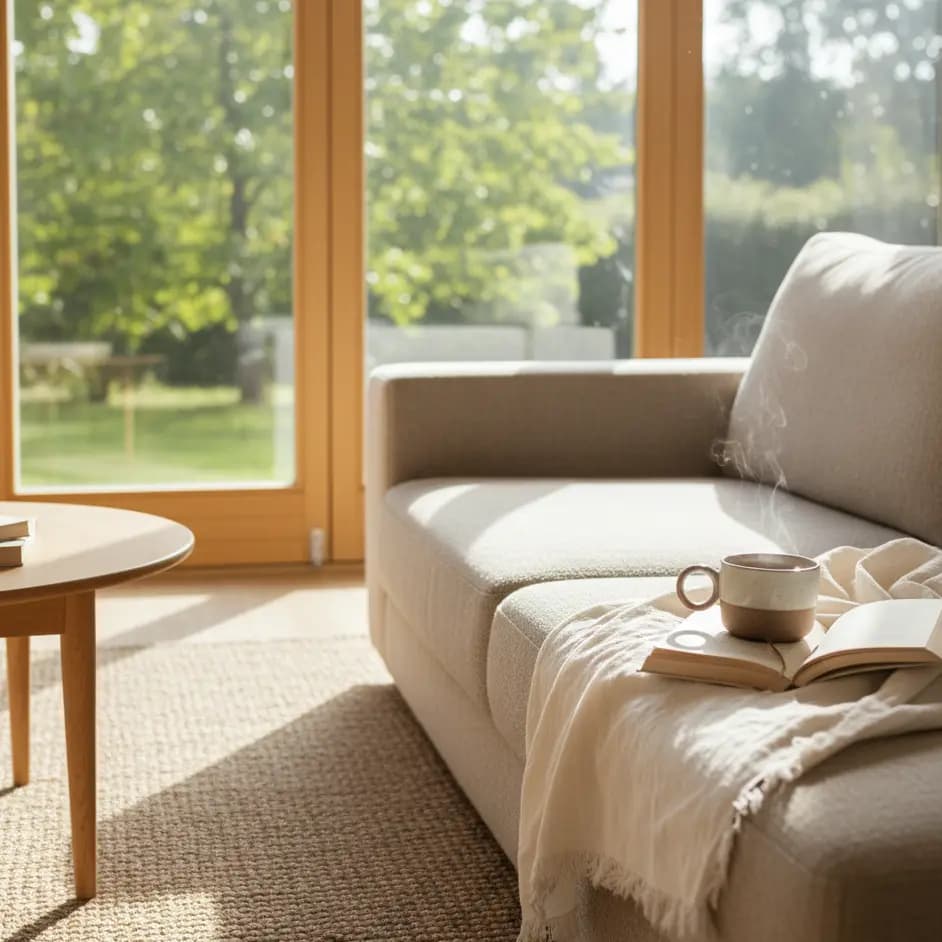
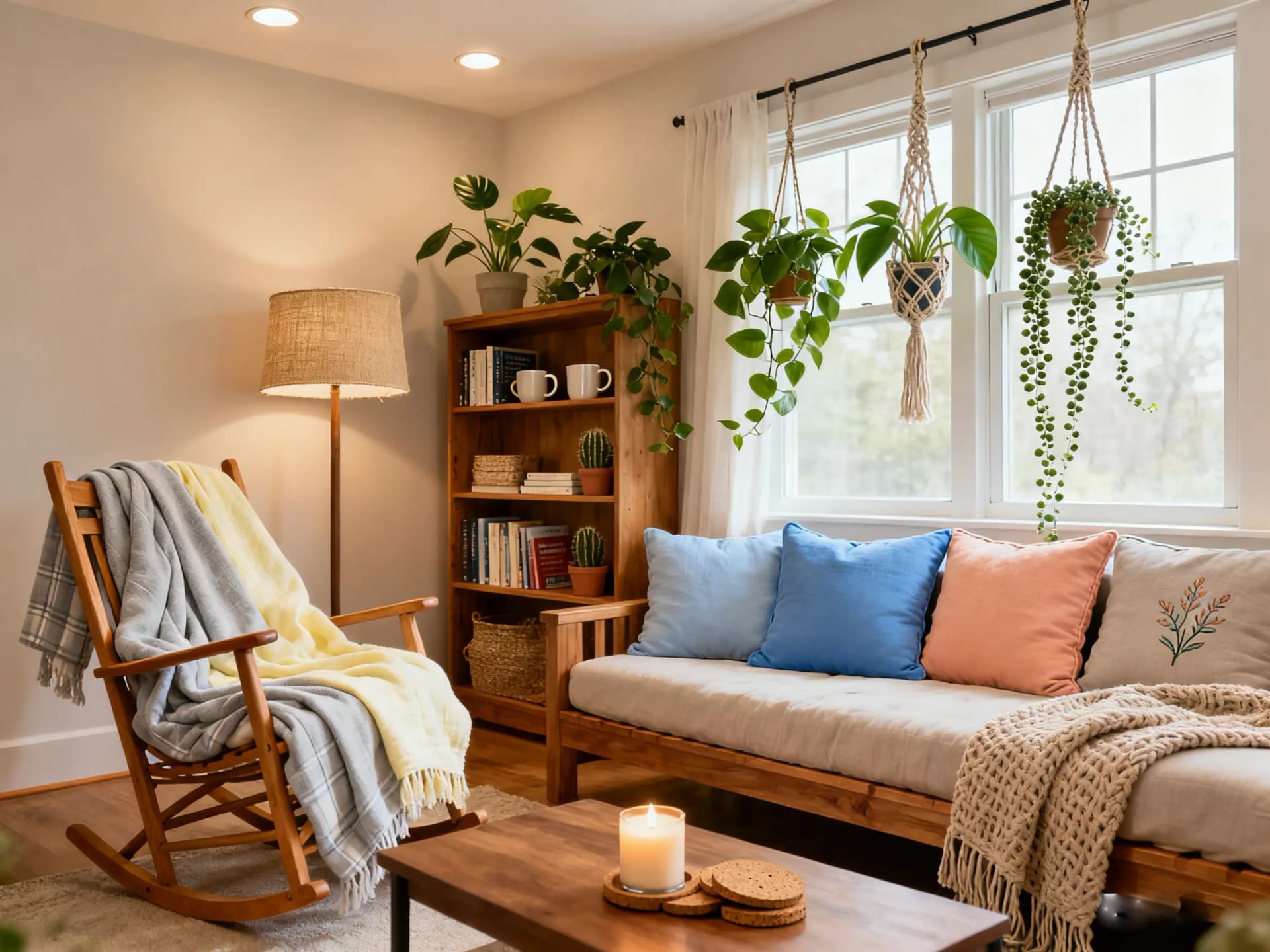
I observed it the day before as I was carrying a ceramic mug on my way out of the kitchen to the wooden desk in my corner of the living room. The sun was striking the floor at that particular slanting angle which only occurs in the late January months and in a moment, the room seemed completely settled. No new furniture was about, no scented candle burning, and there were no new delivery boxes lying about to the door. It was nothing but a silent correlative positioning of light, an already known object, the fact that I had finally gotten out the stack of mails that had been piled there all week long.
That is when I thought how frequently we have considered comfort as a commodity to be purchased. We have become trained to think that cozy is something that can be as easily added to a digital cart, be it a cozy knit, a particular type of handcrafted tea, or a sectional of a neutral shade. However, the more I look at the areas where individuals feel most at home, the more I realize that comfort of living is in fact a sense-making exercise. It is an art that is honed by paying attention and being restrained, but not a result of having a high credit limit.

The Architecture of Atmosphere
We tend to mix the aesthetic of comfort and the feeling of comfort. We are shown a picture of a room with costly textures and think that an individual within that room must experience an indescribable sense of peace. But we have all been to houses that were architecturally ideal and professionally painted, and had a sense of an odd sterile strain.
Placement Over Price
Real comfort is not much to do with the cost of the chair, but with the location of the purposeful placement of the chair. It is the discovery of the fact that a room seems better when the light is produced by three small lamps at eye level as compared to a single and aggressive lamp that is mounted on the ceiling. It is the realization that the house becomes home when it will fit the manner in which we actually move and not how we would want to be viewed.
Rooms Are Not Projects
As soon as we no longer regard our living conditions as a project that needs to be completed and begin to think about them as the environment that should be cultivated, the pressure to spend disappears. There is no need to renovate to alter the weight of a room. You have to sometimes shift the sofa six inches to the left in order to see the trees, or just come to acknowledge that you do not really need four separate remote controls on the coffee table.
The Value of Restraint
Accumulation is accompanied by a certain type of anxiety. All new things that we introduce into our homes are silent advertisements. It has to be washed, kept, arranged or worst of all, replaced. We buy into the notion that comfortable living means a steady flow of so-called upgrades, and we are subconsciously filling the house we are supposed to be constructing with clutter.
When a Room Is "Full"
I have discovered that the most relaxing places are where the eye gets to rest. This does not imply minimalism in the cold, clinical sense, it implies possessing the self consciousness to feel when a room is full. It is the power to say that this old rug is sufficient, and to say that more ornamentation would only take out of the room the essence of life.
Silence as a Byproduct
Probably the least valued aspect of peaceful life is restraint. By reducing the rate of consumption we start to appreciate the quality of what we already have. We perceive the appearance of the grain of timber on an old table, or the sensation of a certain window breeze in the afternoon. We can choose to pass on the next needless home accessory and in doing so, we offer ourselves the present of silence, visual and financial.
The Rhythm of Small Decisions
Comfort is constructed in the fringes of the day. It is present in routine which is almost inescapable and grounds us. In my case, it is the daily routine of hand-grinding coffee beans in the morning, the process that involves slow and sensual exchanges and takes me no more than three minutes of my time, yet creates a tone of leisure in the rest of the day.
Comfortable living is often nothing more than a succession of little, considerate choices:
- The decision to switch off the overhead light and use the light of the stove clock on the kitchen and a single lamp.
- The routine of having to fold the blanket at the end of the night so that it would be used in the morning the following day.
- The training of not leaving surfaces messy not to please your guests but yourself to gain mental clarity.
- The understanding that silence can be quite costly and more expensive than any sound system.
These are not products that can be purchased. You cannot buy the sensation of a clean kitchen counter at 7:00 AM, and you cannot buy the contentment of a bookshelf that includes all books you really have a purpose to read. They are not transactions, but the results of habits.

The Illusion of the Upgrade
This is the time of the upgrade. We get informed that we have a blender that is too loud, our sheets are not soft enough, our walls are of the wrong shade of white, according to the fashions of this year. This cycle develops a never-ending cycle of dissatisfaction, in which cozy can be reached with another purchase.
Newness Isn’t the Point
However, when we reflect on the places that have been the most familiar or the most homey to us, in our lives, such as the kitchen of a grandparent or the messy studio belonging to a friend, these spaces were hardly characterized by novelty. They were characterized by nature and utilization. Objects were beautiful because they were touched, because they suited the hand and because they were involved in a life that was to be lived with some measure of confidence.
When we begin to put the idea of taste over expenses we begin to seek out things with a sense of permanence. We seek materials which age without refusing to do it--stone, wood, linen, brass. These do not necessarily have to be costly but they must be long-term-planned. Even a basic wooden stool discovered in a yard sale can be more of a warm experience than a fancy plastic chair, merely by virtue of just feeling more like the real world.
Boundaries and Self-Awareness
Living a comfortable life is to be acquainted with yourself. It involves a real examination of what truly helps you feel safe and at ease, and not what a checklist of what a designed home ought to appear like.
In case you are a person who is claustrophobic in a room that contains dozens of pillows, then the cozy design of dozens of cushions is a barrier to your comfort. Also, heavy drapes, however rich, are not the solution when you are a sunlight lover. Self-care involves taking the time to know your personal sensory triggers and does not cost you a penny.
It is also associated with the establishment of limits with the external world. Home will not be a safe haven when the virtual world is left to occupy every nook and cranny. Making some places phone-free or deciding to devote the final hour of the day to a screen-free future is a design decision just as important as the color of paint. It renders a presence mood that is the end-all be-all of luxury.

The Beauty of Enough
The word has a power that is silent. It is a radical gesture of satisfaction to make a decision in a culture that believes that more is equal to better, which is that your home is already okay.
We have energy left over when we cease searching for the next thing to fix or purchase. We can spend the same energy to literally have full life in our houses, to make a real dinner, to have a nice chat, to read a book, or even to sit and be in the light change.
It is the art of comfortable life, the art of appreciation. The power to take profoundly serious pleasure in the steam of a cup, the bulk of a book one knows, and the security of a door against the windward is the power. All these do not necessitate an upgrade of lifestyle. They just have to be present so that we can see them.
I remember that there was a time yesterday with the mug and the sun. The room did not require any additional stuff in order to be ideal. I only required stopping my efforts to make it any better and merely live in it. We use most of our time trying to create a beautiful life and in the process fail to live the one we have made. We are not going to find comfort at the end of a renovation or a shopping spree. It is here, it has been here all along, under the rubbish of our expectations, till we finally made our nest.
I have understood that the most comfortable homes are not those that appear to be in a magazine, but also those which appear to belong to people living in them. These are the places, in which the inhabitants have mastered the art of stillness, and places where the life being lived is the primary to the objects. That is something one can learn, without depending on their budget, so long as they are ready to give up the excitement of the new in favor of the tranquility of the familiar.
The sun has shifted now, and the light is striking another division of the floor. The room has changed, but it is still the same. Stable. Quiet. Enough. I suppose I will keep the furniture just as it is.
Frequently Asked Questions
Is cozy living really possible without buying new things?
Yes. Cozy living is less about acquiring objects and more about how you use and arrange what you already have. Attention, restraint, and small daily habits often create more comfort than any new purchase.
How is “cozy” different from minimalism?
Cozy living is not about owning less for the sake of it. It’s about knowing when something is enough. A space can be full, warm, and personal without being cluttered or overwhelming.
What is the simplest way to make a home feel more comfortable right now?
Start with light and layout. Turn off overhead lighting, use a lamp at eye level, clear one surface, or move furniture to align with how you actually use the room—not how it’s supposed to look.
Why does buying more often make a home feel less peaceful?
Every new item demands attention—cleaning, organizing, maintaining. Over time, accumulation creates visual and mental noise. Reducing unnecessary purchases restores quiet, clarity, and a sense of ease.