I still think about that rainy Tuesday last fall. I was at my kitchen table, phone in hand, staring at my bank balance and feeling that same tight feeling people usually get on Sunday nights. The number was lower than it should have been, and I had nothing useful or exciting to show for it. Just a lot of small buys that didn’t really matter. It felt like I was working just to keep up, not to move forward.
A lot of people think budgeting means cutting all the fun out of life. No coffee, no dinners out, no small treats. But that night it hit me. Budgeting isn’t about punishment. It’s about choice. It gives you a way to spend on what you enjoy without feeling guilty or stressed later.

That’s what I want to walk you through. The simple budgeting basics that help you save money while still living well. You don’t need to give up your lifestyle. You just need a better way to manage it. And once you start telling your money where to go, it stops disappearing on you.
Beyond the Spreadsheet: What Budgeting Basics Really Mean for Everyday Shoppers
Budgeting isn't just about cold math; it’s really about your mindset and how you view every dollar you spend. I used to think being a "smart shopper" just meant buying the cheapest thing available, but I was wrong. A smart shopper looks for value, not just a low price. It’s about being intentional so you stop buying things just because you're bored or stressed.
Think about the "price-per-use" rule. I once bought a cheap $20 winter coat on clearance, and it ripped in two weeks. Then, I used a promo code to get a high-quality $100 coat for $70, and i’ve worn it for three years. That "expensive" coat was actually the better budget move. Your budget is the seed money for your life. When you stop leaking cash on junk, you suddenly have money for organic food, a better mattress, or a nice gym membership. That’s where the real joy lives.
To make this work, you have to prioritize value by focusing on how long an item will actually last you. It helps to practice intentionality by asking yourself if you really need the item or if you are just browsing out of boredom. Always remember that quality over quantity wins every time; having one good item is much better than owning five bad ones that will break.
How to Track Spending Without Feeling Overwhelmed
You can't fix what you don't measure, but you don't need a PhD in accounting to get started. I started by doing a "Three-Month Lookback," where I pulled my bank statements and highlighted everything that wasn't a bill. I saw so many "leaks," like $15 subscriptions I forgot I had and $5 convenience fees from using the wrong ATM. It was a total eye-opener for me.
You don't need a fancy system to stay on track. Some people love automated apps like Mint or Rocket Money because they track everything for you. I personally like the "Envelope Method" for things like groceries and fun money because when the cash is gone, it's gone. It keeps me honest. If you hate spreadsheets, just use a note on your phone and write down what you spend every day for a week. You’ll be shocked at how those small Target trips add up.
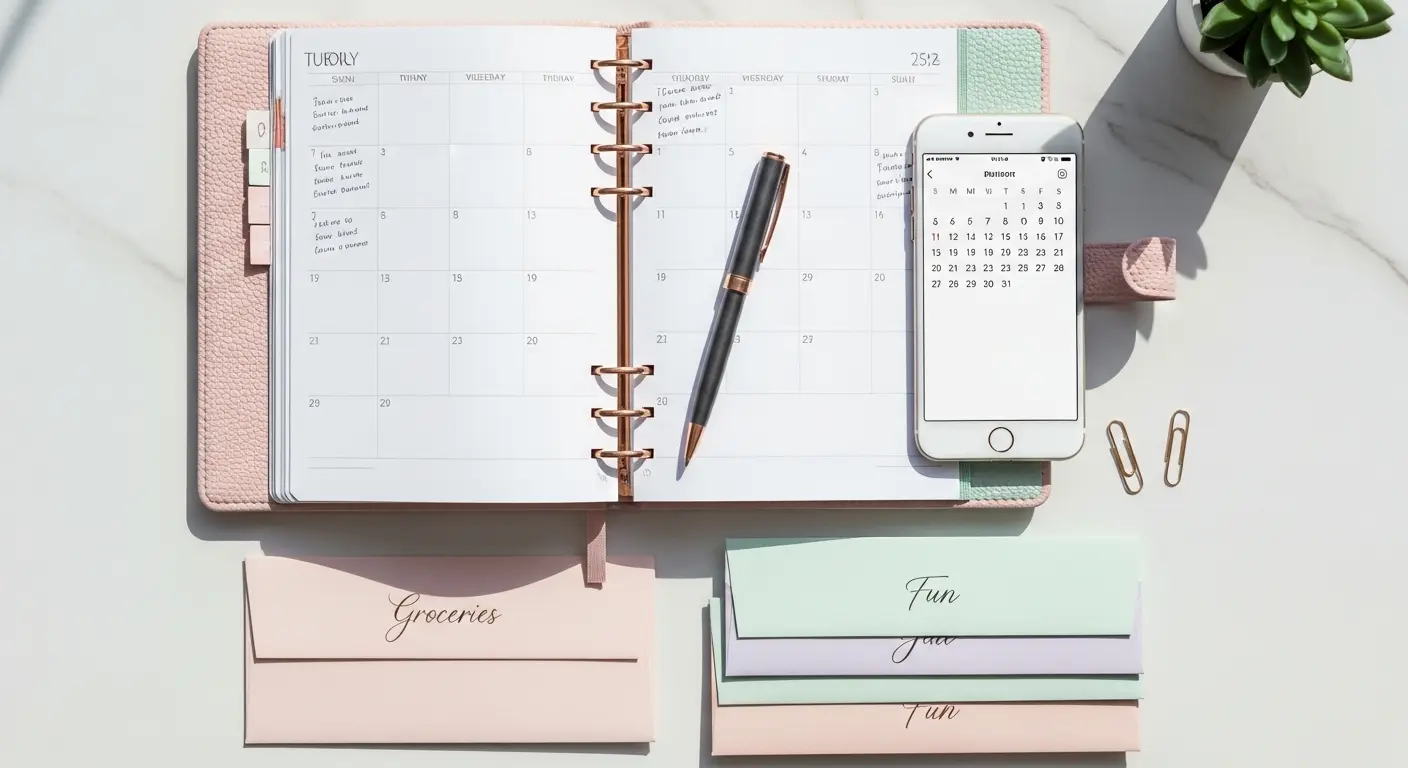
A great way to start is to audit your subscriptions using an app or a browser extension to find and cancel those old trials. You should also check your bank fees for hidden charges or delivery surcharges that eat your balance. The most important thing is to choose your tool based on what feels easy for you, whether that is a high-tech app or just a simple pen and paper.
Creating a Simple Monthly Budget That Actually Works
A good budget needs to be realistic, or you will quit by the second week of the month.
I swear by the 50/30/20 rule. It’s simple, and it works for almost everyone in the US. You put 50% of your take-home pay toward "needs" like your rent in Seattle or your car insurance. Then, 20% goes to "Financial Goals," like paying off that credit card or saving for a house.
The last 30% is for "Wants." This is the fun part. This is your dining out, your hobbies, and your "shopping sinking fund." I like to keep a small "shopping buffer" in this category. That way, if I see a huge sale on something I actually need, I have the cash ready to grab the deal.
- 50% Needs: Rent, groceries, utilities, insurance.
- 30% Wants: Self-care, hobbies, decor, and dining.
- 20% Goals: Savings and debt repayment.
How to Reduce Grocery, Household, and Online Shopping Costs
Groceries and household items are the biggest budget killers because they happen every single week. I used to wander into the grocery store without a plan, and it was a bad idea. Now, I shop the "loss leaders," which are those items on the front page of the store ad—usually meat or produce—sold at a huge discount to get you inside. I build my whole meal prep plan based on what is already on sale that week to save the most.
For things like toilet paper or laundry soap, I never pay full price. I wait for a sale and then check my store’s app for a digital coupon to use on top of it. I "stockpile" just enough to last until the next sale so I'm never caught paying retail. Online shopping is even easier to game if you use the "24-Hour Cart Rule." If I see something I want, I add it to the cart and walk away. Usually, the store will email me a 10% or 15% discount code the next day to entice me to finish. I also use sites like Rakuten or Honey to get cashback on stuff I’m already buying.
Budgeting for Fun, Self-Care, and Lifestyle Purchases
You don't have to give up your glow to stay on budget; you just have to be smarter about it. i love a good "high-low" strategy for my home. My couch was an investment, but my rugs and pillows are all from end-of-season sales at places like Target or HomeGoods. It makes my apartment look expensive without the heavy price tag. I’ve learned to decorate slowly by buying just one nice piece at a time whenever I find a perfect deal.

Self-care doesn't have to mean an expensive spa day either. I’ve learned to do my own nails and use DIY hair masks or at-home facials. When I do want a professional treatment, I look for introductory offers or local deal sites. You can also find community yoga classes that are much cheaper than a boutique studio. Remember, quality is a frugal person’s best friend. I’d rather have one pair of high-quality leggings that lasts three years than five pairs that pill after one wash. It pays to wait for sales, as luxury candles and bedding almost always go on sale in January.
How Discounts, Sales, and Promo Codes Fit Into Your Budget
The goal of a coupon is to help you buy what you need for less, not to make you buy things you don't need. I never buy electronics or furniture at full price because everything has a cycle. In the US, mattresses go on sale in May, and white sales for towels happen in January. I plan my big purchases around these months, and while it takes patience, the savings are massive. It helps to track the calendar so you know exactly when your favorite brands have their big annual sales.
I also love "stacking" my savings. If I find a pair of shoes on sale, I’ll search for a promo code and then use a cashback card. By the time I'm done, I've saved 40% or 50%. You should also use alerts to set up deal notifications for specific items you've been wanting. But be careful; a 50% off sale on something you didn't want is still 100% of your money leaving your pocket. Stay focused on your list and combine sales, coupons, and cashback whenever possible to win the game.
Common Budgeting Mistakes That Cost You More Money
Even the best budgets can fall apart if you aren't careful. The biggest mistake I made was being too strict. I tried to spend $0 on "fun" for a month, but by week three, I was so frustrated that I spent $200 on a random spree. That’s "Frugal Fatigue." You have to be kind to yourself and allow for small treats so you don't burn out. If you don't build in a little wiggle room, you're much more likely to give up entirely.
Another trap is ignoring "irregular expenses." You know your car registration is due every year and the holidays happen in December. i’ve learned to plan for these "surprises" by setting aside a little money for car repairs and gifts every single month. They aren't emergencies; they are just chores for your future self. Also, beware of "sale traps" where you buy something just because it seems like a good deal. If it wasn't on your list, it's not a saving—it's just an extra expense.
How to Stick to Your Budget Without Giving Up Comfort
Consistency is more important than perfection. I spend about 15 minutes every Sunday morning with a cup of coffee doing my "Money Minute." I look at what I spent and adjust my plan for the coming week. If I spent too much on Friday, I just eat at home for a few days. These weekly check-ins help me stay in control without feeling stressed. It’s a simple way to keep your goals in sight while enjoying your daily life.

I also automate everything I can. My savings go straight from my paycheck to a different account before I even see it. When you "set it and forget it," saving feels effortless because the money is "gone" before you can spend it. Don't forget to celebrate the small wins and reward yourself when you hit a milestone, even a small one. When i hit a savings goal for something like a new rug, I feel a sense of pride that no impulse buy could ever give me. You are in charge of your money now.
Conclusion
Budgeting isn't about being "cheap." It's about being powerful. When you master these basics, you're not just saving money; you're building a life that feels good to live. I started with one messy spreadsheet and a few crumpled coupons, and it changed everything for me. You can do the same.
Start today. Pick one category—maybe your groceries or your subscriptions—and audit it. Find one deal. Save one dollar. Before you know it, you'll be a "smart shopper" too. Why not start your first "shopping sinking fund" right now?
FAQs
Q: What is the easiest budgeting method for a complete beginner?
The 50/30/20 rule is the best place to start because it's simple to remember and very flexible.
Q: How do I budget for shopping when prices are constantly rising?
Focus on your "Wants" category and use price-tracking tools and promo codes to keep your costs down while prices go up.
Q: Is it possible to budget on a very low income?
Yes, but it requires tracking every single cent and being very strategic with community deals and grocery sales.
Q: How many bank accounts do I need for a good budget?
I recommend at least two: one for your daily spending and bills, and one for your savings and "emergency" funds.