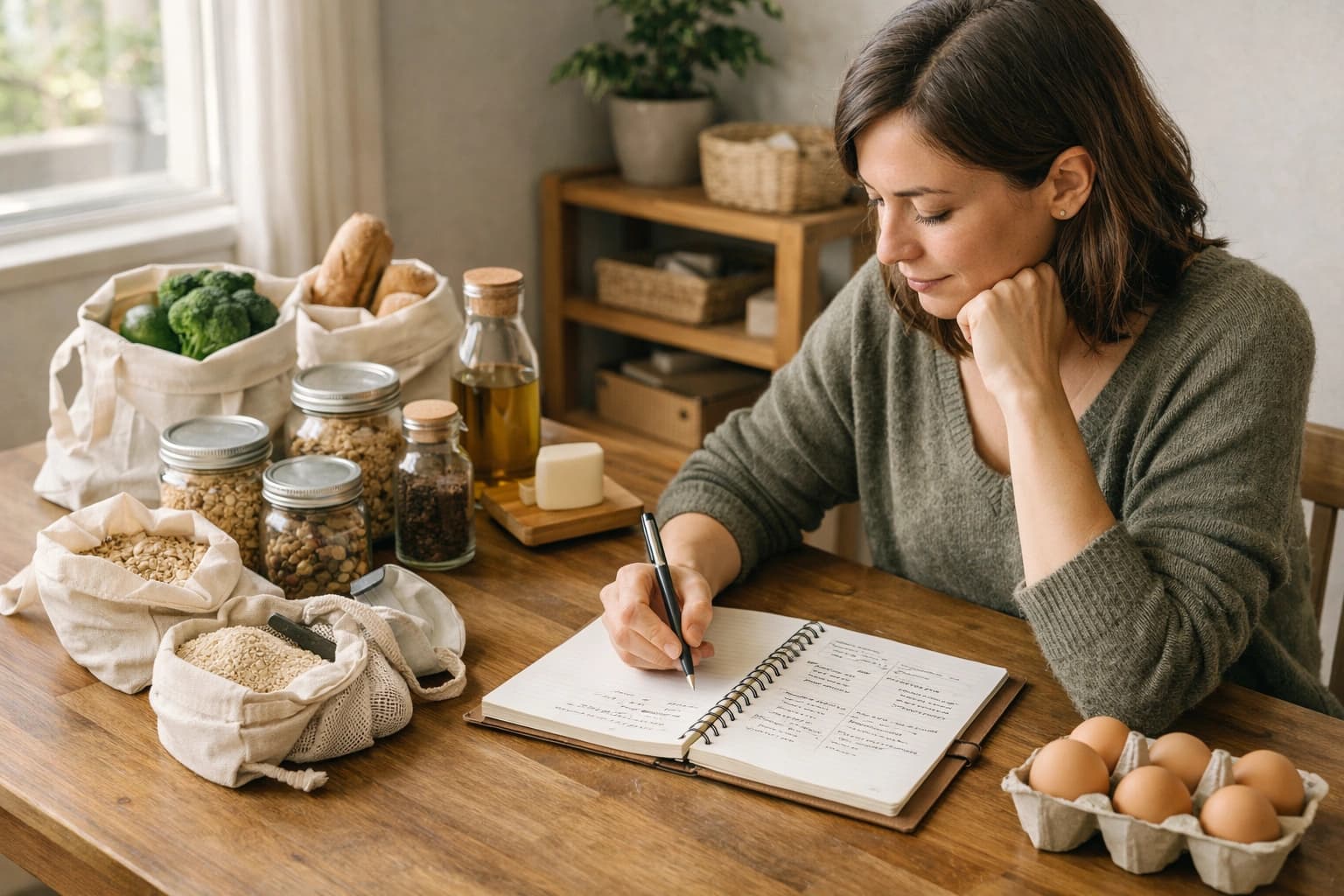
I used to believe that food waste was a natural aspect of daily life until I continued to discover greens that were slimy and jars that I did not remember at the back of my fridge. It was not only the money that got me worried, but the perception that I was doing everything that was right and yet losing food.
It is only after some time that I came to know that a fridge is more than a cold box. Diverse regions have their ways and when food is kept without consideration of airflow, temperature or humidity, they are quickly spoiled regardless of how clean the shelves appear.
As soon as I started planning on how to look good and instead planned on how to be fresh, life became different. I used less food, prepared it in a more efficient way, and utilized what I purchased. These are seven tips that I have adopted and adopted so that now I can make the food last longer in a real home kitchen.

1. Establishing Temperature Zones
There is one error that we tend to make the most, and use temperature as an example, and it is thinking that the temperature is consistent throughout the fridge. As a matter of fact, the door is the hottest since you can always feel the warmth of room air when you open the door and the back of the bottom shelf tends to be the coldest.
When you place your highly perishable goods such as milk or eggs in the door, they are exposed to regular changes in temperature. This heat shock will make the dairy become sour even days before its expired date.
Rather, I have learned to use the door as a place where I keep shelf-stable products: condiments, pickles, maple syrup, and juices in bottles. These products are durable to the infrequent burst of hot air.
The bottom shelves must be used in your most sensitive stuff. Raw meat and fish must never be displayed in any other part, but the very bottom level. This is also the coldest area besides it does not allow any accident drip to contaminate the produce or leftovers below. The way you organize the items according to their temperature requirements is that you are utilizing the mechanics of the appliance and not opposing them.
Simple Takeaway: Match the perishability of your food to the temperature of the zone. Keep dairy and meat in the back or bottom, and save the door for condiments.
2. The Transparent Container Strategy
I would have been a proponent of packaging and wrapping the leftovers in aluminum foil. The problem? If I can’t see it, I won't eat it. Leftovers are taken to die in opaque containers.
A replacement of my glass or high-quality BPA-free plastic containers to clear glasses or plastics altered my inventory management approach. It will always be in your mind when you have the sight of half-onion or the rest of that curry of Tuesday.
Transparency will make a visual list of things to do with your meals. I also like square or rectangular containers as opposed to round ones. Round bowls leave dead space in corners of your fridge, but rectangular can be stacked tightly against each other, making them use all of the square inch of the shelf space.
The main error made here is to purchase a huge volume of containers, which are identical in size. You need variety:
- Small jars for half-used lemons or a bit of leftover sauce.
- Large bins for meal-prepped grains.
Given the presence of your food on a transparent stack, you should be much more likely to consume it before it becomes a science experiment.
Simple Takeaway: Visibility equals consumption. Use clear, stackable containers so you never have to guess what’s inside a mystery foil wrap.
3. Mastering the Humidity Drawers
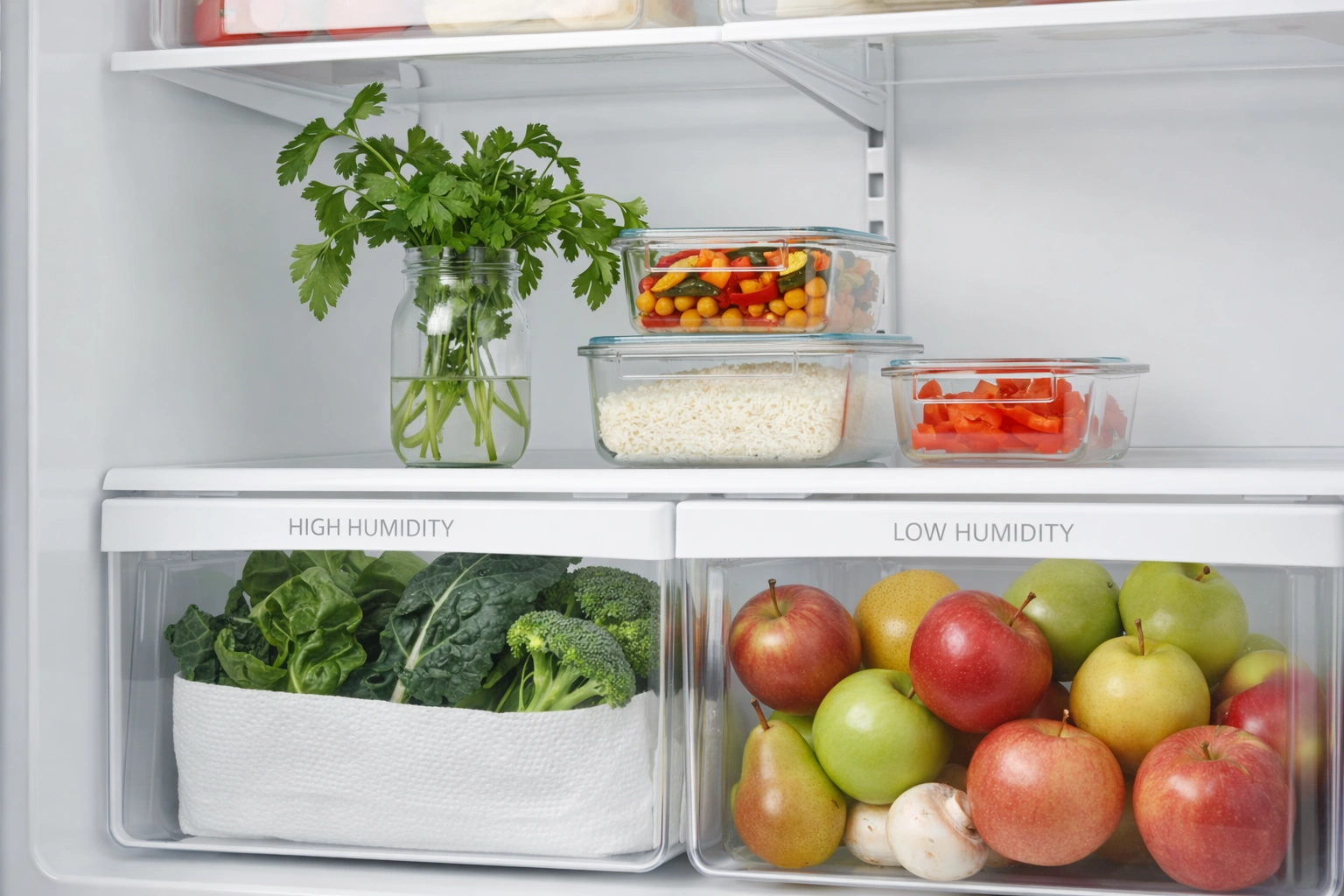
The majority of the modern refrigerators are equipped with two drawers, typically denoted as either: High Humidity and Low Humidity (or sometimes, simply as Fruits and Vegetables). I used to simply leave everything in whichever drawer there was room. It is a formula of early drying up and decay.
I have a rule in it, though, and it is as follows: High water when things get wilted, low water when things get rotten.
- High Humidity drawer must be closed (vents closed) to retain moisture. This applies to leafy greens, broccoli, and carrots and herbs. These products are fond of a wet climate and will maintain a crispy appearance much longer in the event that the air is not excessively dry.
- The vents of the Low Humidity drawer are to be open. This includes things which produce the ethylene gas such as stone fruits, apples, and pearls. When you store these in a highly humid and closed drawer, this gas becomes locked in and makes everything to ripen and rot faster.
Among tips that really work: one of the simplest tips that will help is to line your high-humidity drawer with a clean kitchen towel or a couple of paper towels. It soaks up the surplus of the sweat of the vegetables, and you get no bottom-layer that is so wet, and usually wets the lettuce head in a mass of water.
Single Action To Be Taken: Do not overlook the sliders on your drawers. Keep your willers and your rotters apart and pack years off their lives.
4. The "First In, First Out" (FIFO) Habit
The work of professional kitchens is based on the so-called system FIFO: First In, First Out. We tend to do the reverse in a domestic context. We arrive home and get a new spinach bag and push it right before the one that has lasted three days.
Of course we take the one that is the freshest first, and the older one is crowded into the gloomy hole of the back shelf. I have to resolve this, and I have developed a "Rotation Habit.
I also spend sixty seconds when I am unloading the groceries; I arrange the older ones on the front and the new ones at the back. It seems so simple, yet it is the one and the only way of minimizing food waste.
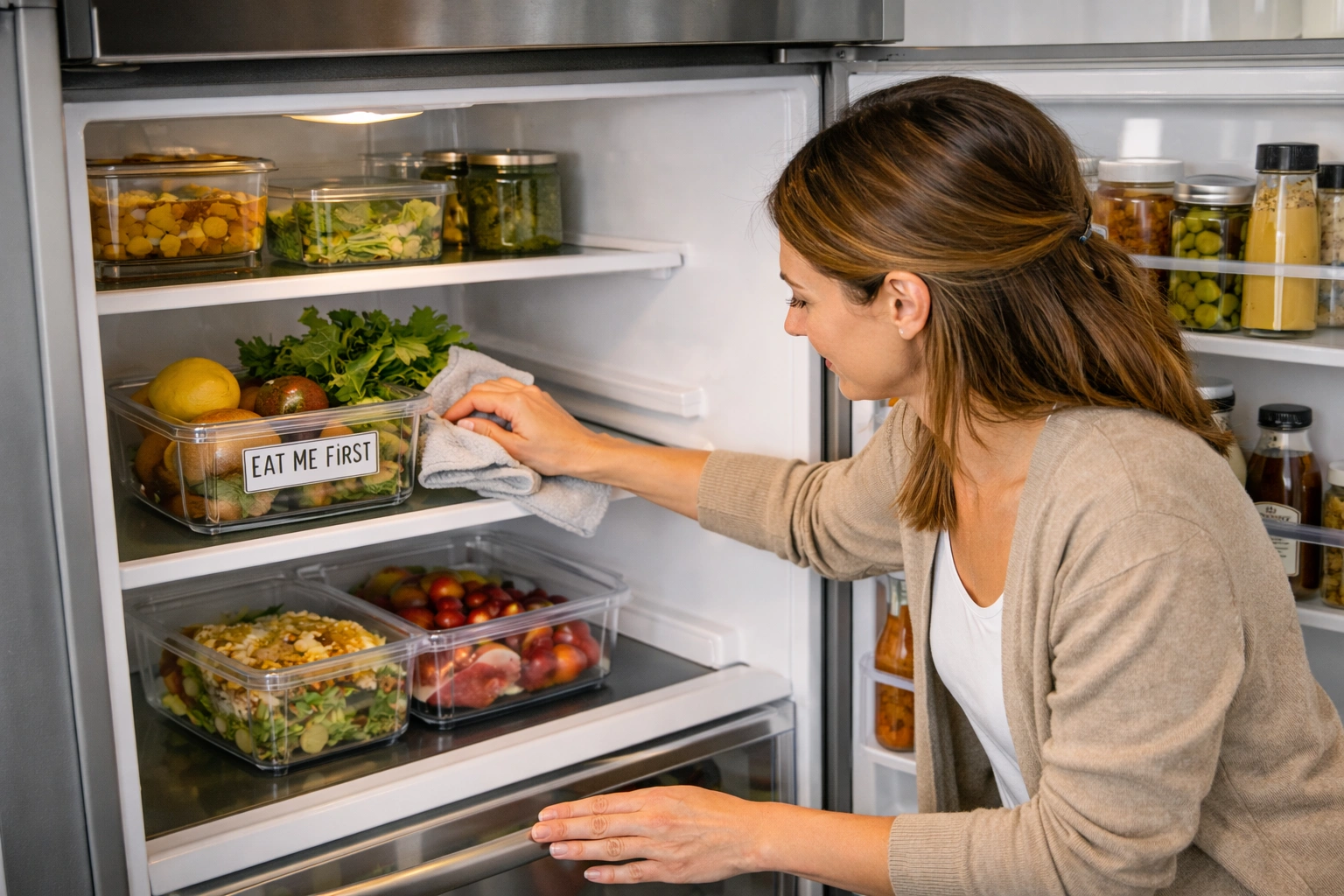
On the middle shelf, I also have a small and transparent bin with the inscription Eat Me First on it. Any engaged produce which is looking somewhat fatigued, or any leftover produce which must be used to-day, is put in that bin. It eliminates the guesswork in the question of what’s on the menu. and makes sure that nothing is forgotten till it is too late.
Basic Advice: Keep your fridge as a shelf in your grocery store. At each time you add something, get the older items to the front.
5. Proper Herb and Green Storage
It is a sad situation when you purchase a pretty bunch of cilantro or parsley on Monday and see it turn into a sloppy yellow mess by the Thursday. Majority of the population store their herbs in the same plastic bags that they were in before purchase, and this creates moisture that hastens the decay.
The hardy herbs such as: I have found the Bouquet Method to be wondrous with:
- Cilantro
- Parsley
- Asparagus
Cut off the ends and place them in a jar with an inch of water and loosely cover the tops with a plastic bag. It is like storing flowers in a vase; they remain moist and alive until a period of two weeks.
In the case of leafy vegetables such as spinach or kale, I use the "Towel and Box" technique. Take them out of the store bag and wipe them under a little water and dry, then stack them in a container lined with paper towels. The towels control the levels of moisture, and the leaves are crisp.
Easy Tip: Start to abandon the use of plastic bags to store herbs. Wet them as flowers in water or cover them with paper towels as a way of containing moisture.
6. Managing Airflow and "The Crowding Trap"
This is because we tend to believe that a full fridge means there is food in abundance that the home is well off but this is not the case since the fridge in question is over stuffed and thus very inefficient. Refrigerators operate through the circulation of a cold air. The air cannot move when you stuff all the shelves until there is not a millimeter of space.
This leads to:
- "Hot spots" where food spoils faster.
- "Cold spots" where your lettuce might actually freeze.
I have also been educated to spacing out the sides and back of the shelves with some breathing space. When you are always stuffing things in, then perhaps you need to reconsider what you are calling clutter. Do you carry five varieties of mustard? Is there three half-full jars of pickles?
The other typical error is the blockage of the air vent, commonly on the top or the back. Having an avenue through which the air passes makes the temperature stay all the same and that is the secret sauce to long-term food freshness.
Quick and Easy Summation: A full fridge is a warm fridge. Move items away to ensure that the cold air moves in the right direction.
7. The Weekly Five-Minute Reset
The world cannot have the best organization system without maintaining it. I do not subscribe to diving into the fridge every week and cleaning it thoroughly, as nobody has time to do this, but I do believe in the Five-Minute Reset. This normally occurs on the eve of garbage collection or immediately before going to make a grocery run.
In this reset, I do the following three things:
- The Wipe Down: Cleanly remove any spills or sticky rings on jars. Stains left behind may have bacteria and odors.
- The Inventory Check: See what remains. Is it possible to have that half-jar of peppers tomorrow in a frittata? Do you think the wilting kale should be in a smoothie to-night?
- The Purge: Go through and get rid of all that is actually past its prime. Storing rotten food in the fridge can in fact influence the taste and the life of the other products in the fridge as it emits gases and smells.
The habit ensures that the fridge never gets to that mind boggling position where you cannot even look into it. It maintains the airiness of the kitchen under control.
Basic Takeaway: Check-in on a weekly basis will ensure that minor messes do not create major issues and that your food stock is kept fresh.
Conclusion
A clean fridge at the end of the day, is not about perfection, it is about respecting the food that we purchase and the amount of time we invest in its preparation. When we make a little step to put the things in their right places, we are not only saving money, but saving the stress of the question of what to have tomorrow evening. and turning our kitchens into a better place to be.
Even little ones, such as not leaving your milk on the door, or putting a paper towel in your lettuce box could not seem much at the time. However, in weeks and months, the habits develop a system that sustains your lifestyle. The fridge that is clear and fresh will result in a clearer and more organized mind - and better meals.
Frequently Asked Questions
1. What is the best way to organize a fridge to keep food fresh longer?
The best way is to organize food based on temperature zones, humidity needs, and airflow. Keeping perishable items in colder areas and using proper storage methods helps food last longer.
2. Why shouldn’t milk and eggs be stored in the fridge door?
The fridge door experiences frequent temperature changes. These fluctuations can cause milk and eggs to spoil faster compared to storing them on inner shelves.
3. Do clear containers really help reduce food waste?
Yes. Clear containers make food visible, which increases the likelihood of using leftovers before they spoil. Visibility helps with meal planning and reduces forgotten food.
4. How should fruits and vegetables be stored in fridge drawers?
Leafy greens should be stored in high-humidity drawers, while fruits that release ethylene gas should be stored in low-humidity drawers to prevent premature spoilage.